
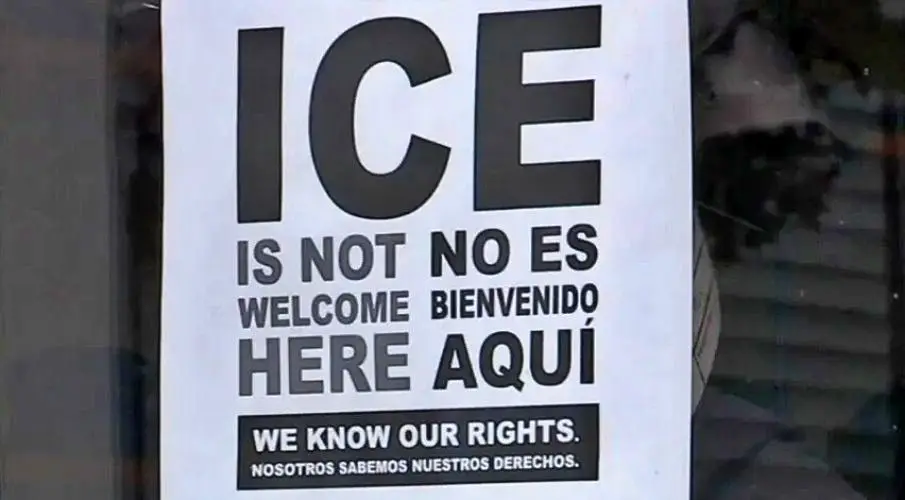
The Department of Homeland Security is expanding its search for identities behind social media accounts that monitor or criticize Immigration and Customs Enforcement. In recent months, hundreds of administrative subpoenas have been sent to Google, Meta, Reddit and Discord. The requests demand names, email addresses, phone numbers, ZIP codes and other identifying data of accounts that operate anonymously, criticize ICE or publish officers’ locations. Several companies have complied with parts of the requests. Others review them individually and inform affected users, unless a court order requires secrecy. In some cases, users receive ten to fourteen days to challenge the subpoena in court.
Administrative subpoenas do not require judicial approval. They are issued by the agency itself. In the past, they were primarily used in cases involving serious crimes such as human trafficking. Since last year, their use has increased significantly. Civil rights attorneys speak of a new intensity and a lack of oversight. The department refers to a “broad administrative subpoena authority” and argues in court that it seeks to protect officers in the field. A substantive explanation regarding individual cases has not been provided.
"We are going through a few people right now - and your name came up," one of the officers says calmly. A sentence that sounds routine, but is in truth a warning. Mike had never been arrested. There was no charge, no evidence of anything. The demonstration had been largely peaceful. But the FBI visit shows: In Trump’s second term mere participation is enough to be deemed suspicious. The background is Trump’s directive NSPM-7 - a presidential order that defines "extremism related to migration" as an indication of terrorism. Attorney General Pam Bondi supplemented the directive with her own instruction, explicitly classifying anti-ICE protests as security-relevant. Those who appear there potentially end up in the national counterterrorism databases.
“We are going through a few individuals right now - and your name came up,” one of the agents says calmly. A sentence that sounds routine, but is in fact a warning. Mike had never been arrested. There was no charge, no evidence of anything. The demonstration had been largely peaceful. Yet the visit from the FBI shows: in Trump’s second term, mere participation is enough to become suspicious. The background is Trump’s directive NSPM 7 - a presidential order that defines “extremism related to migration” as an indicator of terrorism. Attorney General Pam Bondi supplemented the directive with her own instruction that explicitly classifies anti ICE protests as security relevant. Anyone who appears there potentially ends up in the databases of national counterterrorism.
Investigations reveal: Masked proximity - how ICE penetrates private groups with false identities

(Our article from February 13, 2026)
More than 6,500 Department of Homeland Security officers and analysts can now use a tool internally called “Masked Engagement.” Behind the technical sounding term lies a simple reality: federal agents are allowed to join social networks under false identities, send friend requests, enter closed groups and thereby gain access to content that is not visible to outsiders. Until now, the department distinguished between open research, open monitoring and covert monitoring. In the latter, alias accounts were allowed to read public content but not actively make contact. Anyone who wanted to enter a private group or follow a target object required further authorization under classic undercover operations. That threshold is now being bypassed. “Masked Engagement” is declared an intermediate stage - below formal undercover operations, but above mere observation.
At the same time, the government is expanding its technical tools. ICE is increasingly using facial recognition, social media monitoring and methods for analyzing mobile phones. During protests in Minneapolis and Chicago, officers told demonstrators they were being recorded and identified. The White House border czar announced that work was underway on a database of individuals arrested for obstructing or assaulting officers. The pressure thus shifts from specific allegations to data collection.
The major platforms stand between privacy promises and legal obligations. Google states that it carefully reviews every request and pushes back against overly broad demands. Meta, Reddit and Discord do not comment in detail. Transparency reports have shown for years rising numbers of requests from governments worldwide, including particularly many from the United States. In a previous case, Twitter sued over an administrative subpoena seeking to unmask a government critic account; the subpoena was later withdrawn.
Little known – Norristown/Eagleville: Anyone who believes that nothing is happening there is making a serious mistake. Both towns are part of the greater Philadelphia metropolitan area. Every day, ICE and CBP tear families apart and traumatize children. The collection of identifying data from social media accounts often plays a decisive role here as well. (Footage from February 9, 2026)
The accounts in Montgomery County continue to post almost daily. One entry reported confirmed ICE activity in Eagleville. Another showed students from Norristown Area High School at a protest against ICE with the words: “We stand with you and are proud that you raised your voices.” The confrontation thus revolves not only around agency authority, but around the question of whether anonymous criticism of government action is placed under general suspicion.
In Germany as well, it would be a mistake to feel secure. The legal hurdles are higher, the oversight mechanisms formally stronger - but the direction is recognizable. Facial recognition, AI analysis, social media monitoring and the use of state trojans are no longer discussed as exceptions, but sold as necessary tools of modern security policy. What is still considered a narrowly limited pilot project today is gradually normalized step by step. The decisive point is not whether judicial orders exist, but how far the framework is stretched within which surveillance is considered proportionate. When public criticism, protest or digital networking are increasingly read as a “situational picture” or a “risk factor,” the focus shifts from concrete suspicion to preventive data collection.
The difference from the United States is currently less a question of technology than of pace and political culture. In Germany, surveillance is still legally framed, explained, defended, reviewed. But here too, pressure is growing to place control above freedom - quietly, legally precise, justified by security. That is precisely where the danger lies. Democracies do not lose their openness through a single dramatic break, but through habituation. When citizens no longer know whether their online comment, their protest or their network profile will one day end up in a police analysis, self censorship emerges. And where people begin to hold back as a precaution, surveillance has already achieved its goal.
Perhaps that is its true power: that it does not force us, but accompanies us. That it does not forbid us to speak, but reminds us that every word can become a data trail. Thus a new form of silence emerges, not through censorship, but through caution. One begins to monitor oneself. One weighs, deletes, rephrases. And while believing oneself to be free, one adapts.
That is precisely why we will continue to investigate. To go behind the scenes, to the places where protocols are created and systems are built. Digital freedom is not a romantic concept, but a concrete condition for dignity. Those who do not know whether they are being watched live differently. Those who do not know who reads their traces speak differently. We stand for the protection of that freedom - with the conviction that what is invisible belongs in the light.
Updates – Kaizen News Brief
All current curated daily updates can be found in the Kaizen News Brief.
To the Kaizen News Brief In English


Auf allen Ebenen mundtot machen und die Angst vor möglichen Repressalien schüren.
So funktionieren Autokratien und Diktaturen.
Aushebelung aller Bürgerrechte und dem Deckmantel der Sicherheit.
Das Einzige, was dahinter steht, ist due totale Kontrolle eines Jeden.
Um Demonstrationen, Kritik etc im Keim zu ersticken.
Die SS, der KGB ind Stasi hatten „nur“ Abhörgeräte und Undercoverpersonal.
Heute wird digital in jeden noch so kleinen Bereich des Lebens eingedrungen.
Legal oder ggf auch nicht legal.
Wenn eine Regierung derartige Überwachung als notwendige Sicherheitsmaßnahme deklariert, ist klar, dass der Schritt in die Diktatur vollzogen ist.
Jetzt liegt es an der Justiz.
Kann sie dem mit Bezug auf die Verfassung und geltende Gesetze Einhalt gebieten?
Meta, X werden den Aufforderungen nur zu gerne nachkommen.
Da muss man sich nichts vormachen.
Die Frage ist, wie werden die demokratischen Länder darauf reagieren.
Ist Ihnen das überhaupt bewusst?
Denn der Zugriff von ICE etc ist mit Sicherheit nicht nur auf die USA beschränkt.
richtig, ice greift weltweit auf daten zu, dass haben recherchen ganz klar gezeigt
Was dem User erst bewusst wird, wenn er bemerkt wie sehr er unter Beobachtung steht:
Facebook und Co wissen über Dich viel bis alles – eben weil sie Dich komplett analysieren.
Du hingegen weißt NICHTS von Deinem Gegenüber !!
Du hast nicht mal einen persönlichen ( menschlichen?) Ansprechpartner!
Kommt dann noch Palantir Technologies ins Spiel, steht man am Ende nackig im Netz – ohne sich dessen bewusst zu sein.Die Folge, man kann Repressalien ausgesetzt werden, ohne zu wissen warum. Palantir soll ja „Gefahren erkennen und angehen“ bevor etwas passiert.
Paradox: Grundsätzlich müssten sich Thier, Musk, Miller, Trump usw. demnach selbst in Haft nehmen!
Alleine die Unverschämtheit, dass Reisende in die USA nun all ihre Konten und Tätigkeiten der letzten 5 Jahre auf sozialen Plattformen frei geben müssen.
Noch dreister finde ich, dass dann nicht nur deren persönlichen Daten durchforstet werden, sondern auch von deren Freunden und Familienangehörigen!
Eine Oberstufe eines Gymnasium im Landkreis wollte im Frühsommer eine Klassenfahrt in die USA machen.
Aufgrund all dieser neuen Richtlinien wurde die Klassenfahrt in die USA abgesagt!
Mein Kind hätte ich eh nicht mitfahren lassen. Man kann nicht mehr sicher sein, dass Dein Kind wieder gesund und frei nach Deutschland zurück kommen kann!
Welche Lehrkraft will so viel Verantwortung auf sich nehmen?
Willkür sind keine Grenzen mehr gesetzt!
Hier mal ein paar Beispiele aus Deutschland – bezüglich der Kontrollen – auch durch ICE – und warum die Reißleine gezogen wird.
https://www.swr.de/swraktuell/baden-wuerttemberg/ulm/usa-schueleraustausch-abgesagt-ulm-ice-100.html
https://www.tagesschau.de/inland/regional/badenwuerttemberg/swr-muellheimer-schule-sagt-usa-reise-ab-100.html
https://www.badische-zeitung.de/dass-eine-schule-in-muellheim-eine-usa-reise-absagt-ist-verstaendlich