
There are cases in which the greatest difficulty lies not in the research, but in dealing with excess. Hardly any serious use of force today is not immediately accompanied by hundreds of fragments of information: official statements, contradictory eyewitness accounts, political instrumentalization, social media in a state of permanent agitation. The reader is not informed, but overwhelmed – and often conditioned into a form of constant outrage that makes sober assessment impossible.
Journalistic responsibility begins precisely at this point. It begins where one refuses to become part of this noise. Where content is ordered, timelines are reconstructed, and claims are bound to verifiable facts. We have always tried to live up to this standard – even if we occasionally allow ourselves pointed barbs, for example against a president who politically instrumentalizes violence. But on the central point, our work follows a simple principle: objectivity before outrage, analysis before judgment.
The death of Renee Nicole Good demands such an approach. Not because it is particularly spectacular, but because it is distinguished precisely by its reconstructability. Timelines do not lie. Acoustic traces do not lie. Image sequences cannot be argued away. Anyone who assembles them, who places seconds, positions, movements, and guidelines side by side, arrives at an unambiguous result.
This death was not only unnecessary. It was unlawful. The claimed self-defense does not hold – neither factually nor under the agency’s own standards. The shot was fired early, deliberately, from a position that reveals no immediate danger. It was discharged by an officer who was not only armed, but also trained as a firearms instructor and who knew the lethal effect of his actions.
What follows is not an indictment in the criminal-law sense. It is a factual, reconstructive analysis. It places evidence, not emotions, at the center. And it inevitably leads to the question of where responsibility begins – and where it can no longer be relativized. The death of Renee Nicole Good demands clarification, not appeasement.
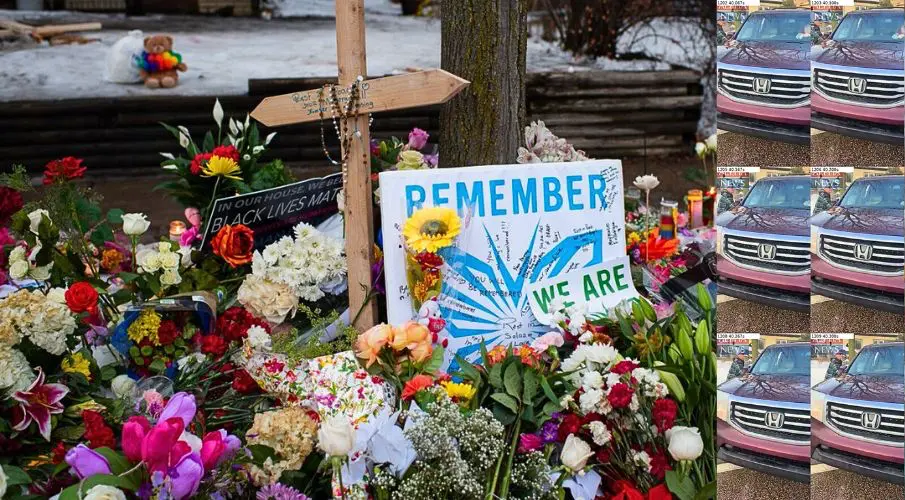
The following reconstruction is based on the systematic evaluation of continuous video documentation with synchronized audio track, frame-accurate still images, and a photographic image of the damaged windshield. In addition, the binding guidelines on the use of deadly force of the US federal agency Immigration and Customs Enforcement were consulted. The analysis follows a strictly reconstructive methodology that separately captures timeline, spatial position, movement dynamics, shot geometry, continuity of action, and regulatory framework, and then places them in relation to one another. The objective is to examine whether the documented use of a firearm is compatible with the objective prerequisites of an immediate and unavoidable danger situation.
The relevant segment of the video material focuses on a narrow time window at the end of the recording. Between approximately second 40.07 and 40.33, the involved officer is positioned on the left front area of the vehicle, in the transitional zone between the left front fender and the A-pillar. The upper body is clearly leaning forward, the distance to the windshield is small. In none of the evaluable frames of this phase is the officer standing directly in front of the bumper or in the direct path of the vehicle. Likewise, there are no signs of entrapment, a fall, or a loss of balance. The body posture indicates proximity and situational stability, not a defensive evasive movement.
At approximately second 40.59, the first clearly identifiable high-energy impulse appears in the audio track. The signal shape shows a steep rise and a short decay time, as is typical of gunshot events. In the following roughly two seconds, several additional impulses with comparable structure can be detected. The last visually reliable moment in which image content, body position, and spatial assignment can still be clearly reconstructed lies between 41.15 and 41.16 seconds. Immediately thereafter, the image loses its reference points due to an abrupt upward movement of the camera; further visual assignment of individual shots is no longer possible from this point onward.

The temporal assignment of the shot that caused the bullet hole in the windshield can be clearly narrowed down through the correlation of image material, audio track, and impact geometry. The bullet hole is located in the lower third of the windshield on the driver’s side, immediately adjacent to the A-pillar. This position is geometrically compatible only with a shot fired from a left-side close position, with the upper body leaning forward and at short distance from the glass. Exactly this constellation is visually documented in the time window from 41.15 to 41.16 seconds. An earlier shot does not sufficiently explain the impact location, and a later shot is physically incompatible with the lateral vehicle movement that begins at that time. The shot that caused the documented bullet hole can therefore, with high plausibility, be assigned to this narrow time window.

At this moment, the vehicle was moving, according to consistent image assessments and calculations, at a speed that did not constitute an abrupt kinetic threat that would objectively prevent a laterally positioned adult from stepping half a step out of the movement path. The movement dynamics of the vehicle remain continuous; a sudden extreme acceleration, an abrupt change of direction, or a targeted ramming of the officer are not discernible in the image material and did not occur. The lateral movement of the vehicle away from the officer’s proximity begins only after the last stable image moment. The shot thus does not fall as a reaction to an acute overrun, but in a phase in which the situation was objectively still alterable.
Particular significance attaches to the documented behavior of the officer himself. In the decisive phase, he holds a smartphone in his left hand while handling the firearm with the other. In police operational doctrine, the simultaneous execution of a secondary activity during an allegedly acute life-threatening situation is considered a strong indication of situational control. In real overrun or mortal danger situations, both hands are typically used for movement, cover, or evasive maneuvers. The use of a device is difficult to reconcile with the perception of an immediate, unavoidable threat.

The character of the shot fired must also be assessed based on its objective effect. A shot into the lower third of the windshield on the driver’s side necessarily acts into the vehicle interior, toward the upper body area of the person operating the vehicle. Such placement is not suitable for technically stopping a vehicle, but instead produces an immediately life-threatening effect on the occupant. In forensic assessment, such a shot is considered potentially lethal.
This assessment gains additional weight from the known qualification of the shooter. According to available information, he is a firearms-trained officer with instructional experience. For such a qualified individual, the effects of different target zones, especially shots into the vehicle interior, are not only theoretically known, but an integral part of training. Under these conditions, a shot into the windshield in the direction of the driver is not an unguided warning or deterrent shot, but an action with foreseeably lethal effect.
Under ICE’s binding guidelines, deadly force is permissible only when there is an immediate threat to life or serious bodily injury and no objectively reasonable alternative to counter that threat is available. Shots in connection with vehicles are subject to particular restrictions. Officers are instructed, where possible, to step out of the danger area or gain distance, rather than firing at a moving vehicle or into its interior. Deadly force is not intended for mere control or the prevention of flight.
Applying these standards strictly to the reconstructed situation yields a serious tension. The shot that caused the bullet hole in the windshield was fired in the time window from 41.15 to 41.16 seconds, from a lateral close position, at low vehicle speed, without demonstrable entrapment or overrun situation and with clearly available room to evade. The shot had a foreseeably lethal effect and was carried out by an officer trained for this purpose. Under these circumstances, it is not justifiable even under the agency’s own guidelines.
This reconstruction does not make a criminal-law pre-judgment. It does, however, show with high analytical density that the claimed self-defense situation cannot be reconciled with the objectively reconstructable operational scenario. The shot was fired too early, deliberately, and in a constellation in which deadly force, according to the applicable guidelines, was neither necessary nor permissible.
Updates – Kaizen News Brief
All current curated daily updates can be found in the Kaizen News Brief.
To the Kaizen News Brief In English


Danke für diese ausführliche Rekonstruktion!
vielen dank
„… Warum der Tod von Renee Nicole Good keine Frage der Meinung ist, sondern weder erforderlich, noch“ sonstwas war?
Ich schätze klare und ja auch empathische parteiische Sprache, doch das hier, nö! Dieser Head ist zu lang, zu geschwätzig. (die sorgfältige Darlegung von Abfolge ist schwer ok.)
No problem, jeder hat eine Meinung, wir dazu eine andere. Hv a good one
Danke für diesen sehr detaillierten Bericht und die akribische Rekonstruktion.
Aber trotz dieser deutlichen forensischen Beweise hält die Trump Regierung an der Darstellung von Notwehr gegen eine aggressive Demonstrantin fest 😔
MAGA auch.
Für diese Blinden ist klar, Renee Good war selber Schuld.
Die Schuldzuweisungen variieren.
Von „hat sich den Anweisungen widersetzt“ (welcher? Sofort Aussteigen oder sofort weiter fahren… widersprüchlicher geht es nicht)
„Ist auf den ICE Beamten zugerast“
„Hat schon eine kriminelle Vergangenheit“
„Ist lesbisch, das sind die irren linken woken Demokraten. Denen muss man es zeigen“.
immer „Wir“ (MAGA) gegen die Anderen.
Und natürlich sind die „Anderen“ immer Schuld.
Schade, dass es hier in den Medien nicht groß aufgegriffen wird.
..ja medien in europa, bis auf england, ist ein trauerspiel, trägt nicht grade zu mutigen bürgern bei …