
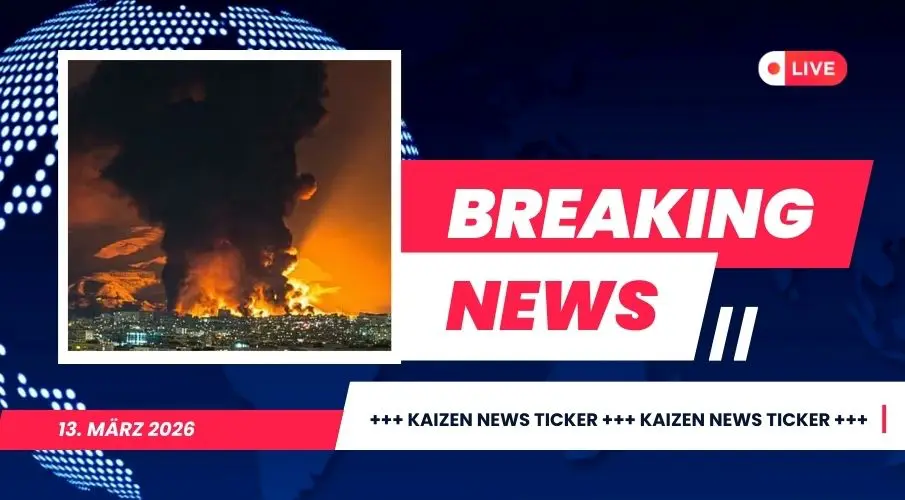
“I Know Nothing About It” – Trump’s Response to the Attack on a School in Iran!
A short scene in front of cameras is now enough to reveal the condition of the American leadership. A journalist asks Donald Trump about an attack on a school in Iran. More than 165 people are said to have died there, many of them children. The question is simple: does the commander in chief take responsibility? Trump looks briefly, appears irritated and says: “For what?” When the journalist presses further and mentions the attack on the school, the answer follows: “I know nothing about it.”
These few seconds raise more questions than any long speech. The president is leading a war against Iran, American missiles are hitting targets in the country, and at the same time the commander in chief publicly declares that he knows nothing about one of the most serious incidents, which he knew about on March 10. In Washington, concern is therefore growing that central decisions of the war are no longer under clear political control.
At the Pentagon, an internal reassessment of structures to reduce civilian harm is taking place at the same time. Critics say outdated intelligence information probably led to the attack on the elementary school. This has not been officially confirmed. At the same time, it is acknowledged that parts of the existing structures are being reorganized. Trump’s response therefore appears even more serious in this context. A president who is waging a war but allegedly knows nothing about an attack with many civilian casualties raises the question of responsibility in a new way. In the United States, a debate is therefore beginning that goes far beyond the individual incident: who is actually still controlling this war, and who will ultimately bear responsibility for its consequences.
The next update will likely not appear until later this evening (CET). A large part of our team is currently deployed across different parts of the world.
At the same time, we are working on several major efforts. We are preparing an extensive photographic documentation of the war in Iran, supporting our colleagues on the ground who are reporting on ICE-related cases, and continuing our ongoing investigations into the Epstein files. Thank you for your understanding.
The Song
A young man plays guitar and sings while people watch from a park in the distance as an oil depot in northwest Tehran burns in flames and black smoke rises after a bombing by the United States and Israel.
Excerpt from the text: "I wanted my situation to be better than this. I knew you deserved better than this. I wanted to build a better life. To your taste, how much better it could have been. A solid roof without a crack. Two bedrooms, luxurious, warm, and a bit cute. One bedroom pink, with a red bed. A chubby girl instead of a dog! I wanted your world to be colorful! To be relaxed and comfortable without any fuss!"
When Energy Becomes a Question of Survival – Germany’s Industry in the New Price Shock

Max Jankowsky is 32 years old and runs a foundry in Saxony that already belonged to his grandfather. In Lößnitz, metal presses are produced for major automakers such as Volkswagen and BMW. The operation requires enormous amounts of electricity, gas and coke, a coal based fuel. That energy now determines the survival of the company. Since the war against Iran, prices have surged again. For many factories in Europe, this is not a new experience. Energy costs already exploded after the Russian invasion of Ukraine in 2022. Even before that, however, energy in Germany was significantly more expensive than in the United States or China. The new conflict in the Middle East is now further intensifying this situation.
Since the end of February, European gas prices have risen by more than fifty percent. At the same time, the price of Brent crude oil has moved back toward the mark of one hundred dollars per barrel. For energy intensive companies this means immediately rising production costs. Germany has been trying for years to stabilize its industry. The country has already experienced two years of recession, and economic growth recently remained weak. In 2025 alone, around 160,000 industrial jobs were lost, while corporate bankruptcies increased. The situation is not yet as dramatic as in 2022. At that time Germany faced the simple threat of running out of gas after Russian deliveries collapsed. Today a large share comes from the United States and Norway. Nevertheless the dependence remains high, and storage levels are unusually low after a cold winter.
Companies are therefore trying to secure themselves better. The chemical group Covestro now purchases some energy on a long term basis and uses more renewable sources. But even there energy remains a major cost factor. For smaller companies the room for maneuver is much smaller. Jankowsky would like to replace his old coal fired furnaces with electric systems. That would reduce emissions and save costs in the long term. But the investment of around twelve million euros is almost impossible for his foundry to finance. Earlier subsidy programs were intended to support such conversions. The new federal government has abolished them. Without subsidies and with simultaneously high electricity prices, the project appears economically risky for the entrepreneur.
In many German industrial companies this sentence now sounds similar. Energy prices, geopolitical conflicts and political decisions are hitting exactly those companies that formed the backbone of the economy for decades. With Katherina Reiche at the head of the economics ministry, the impression is increasingly emerging that one of the central key positions of German economic policy has been unhappily filled. Her appointment was controversial from the beginning. Reiche returned directly from the energy industry to politics, into precisely the office that decides on energy prices, industrial policy and multibillion subsidy programs. Critics see not only a political risk in this but also a structural problem: the line between regulation and the representation of interests suddenly appears strikingly thin.
“Just a Small Detour” – Trump’s War Language Beyond Reality
Donald Trump speaks about war as if it were a short trip. In an interview the president explains that there has never been a better first year for a president. He says he has stopped eight wars, and a ninth will follow. The current war, he says, is merely a “detour,” a small detour, nothing more. The words stand in sharp contrast to the images of this war. Missiles hit cities, drones attack military bases, merchant ships are damaged in the Persian Gulf. Bombs strike Beirut, soldiers are injured in Iraq, and civilians die in Iran during attacks.
While these events produce new headlines every day, the American president describes the situation as a brief incident. In his portrayal the war does not appear as an escalation but as self presentation. Precisely for this reason the wording causes irritation. Anyone who describes a war as a “small detour” shifts the perception of reality. Decisions about military force suddenly appear like casual steps. In Washington the pressure on the government is therefore increasing. Lawmakers are demanding greater transparency about the goals, strategies and consequences of this war. Because between the president’s words and the actual situation there is now a gap that continues to grow. Trump’s statements as a whole show how far he has distanced himself from reality.
“Total Destruction” – Stephen Miller’s War Rhetoric About Iran
Stephen Miller describes the war against Iran in words that leave little room for doubt. Never in history, he says publicly, has there been such a complete, asymmetric and one sided destruction of an opponent as what is currently taking place in Iran. In this portrayal the conflict appears not as a war with risks but as already decided military superiority. This choice of words, however, stands in clear contrast to the events in the region. Missiles are striking Israel, drones are attacking targets in Saudi Arabia, military bases in Iraq are being targeted. Merchant ships in the Persian Gulf are coming under fire while new fronts are emerging.
Despite this situation Miller speaks of a complete destruction of the opponent. Language that speaks of the “total destruction of the enemy” crosses the line between political description and unrestrained war rhetoric. It dehumanizes the opponent and reduces war to an image of complete destruction that ignores the real consequences for people and civilian populations. For that reason the statement is drawing attention in Washington. When a war is described as one sided destruction, the impression arises that all resistance has already been broken. Yet events in the region show every day that the conflict continues to escalate.
“Over Six Years Old” – A Sentence From Florida’s Conference Hall
At the Republican conference in Doral, Florida, Donald Trump speaks about alleged election fraud and new rules for voter identification. While explaining why stricter controls are necessary, he suddenly introduces an example that irritates even the audience in the hall. “Your daughter has to be old enough,” the president says, “like over six years old.” The sentence appears casually in the middle of an improvised passage about election documents and identity verification. What exactly Trump meant remains unclear. His words can only be interpreted as a claim that without stricter rules even small children could confirm the identity of their parents. A clear explanation does not follow. The White House initially does not respond to questions about this passage of the speech either.
Hormuz Becomes the Key Point

The Strait of Hormuz is narrow. Between Iran and Oman, one fifth of the world’s oil flows through it, every day, without interruption, for decades. Now Iran is laying mines there. Small boats of the Revolutionary Guards are taking over the task after American forces attacked and destroyed the larger Iranian minelayers. Hundreds of these small boats are available, some say thousands. They are slow, the operation is not particularly efficient, but that is not the point. Iran is counting on laying mines faster than the United States can clear them. The possibility alone is enough to unsettle shipping companies and insurers.
Tehran officially denies that mines are being laid. At the same time Iran’s new supreme leader Mojtaba Khamenei declared that the lever of blocking the strait must continue to be used. A commander of the Revolutionary Guards had already declared the channel closed on March 2 and announced that ships would be set on fire. Since the first American Israeli attacks at the end of February, several tankers and freighters in the region have been hit. On Wednesday alone, projectiles struck three more ships.
Trump threatened Iran on his platforms that the United States would strike twenty times harder if the flow of oil were blocked. Shortly afterward he wrote that there were no reports of mines, even though American intelligence services reported the opposite. The war has reached a new level, quietly and without major announcements. A narrow waterway, a little metal beneath the surface, and the rest is handled by the hesitation of the markets.
Meloni Between Washington and Rome – A War Becomes a Political Risk

Giorgia Meloni long presented her closeness to Donald Trump as an advantage. After a visit to the White House she spoke of a “special relationship” and was the only sitting European head of government at Trump’s second inauguration. Both stood together against migration and against what they described as woke politics. In Italy this connection was long considered a sign of influence in Washington. The war against Iran is changing that calculation. While missiles strike in the Middle East and energy prices rise, Europe is feeling the economic consequences. For Meloni her closeness to Trump is suddenly becoming a political problem at home.
The start of the American attacks also caught Rome completely unprepared. Unlike some other European governments, Italy received no advance call from Washington. Defense Minister Guido Crosetto was on vacation in Dubai at the time and had to be flown out by military aircraft. The opposition immediately seized the moment. Former prime minister Matteo Renzi publicly declared that the supposed bridge between Trump and Europe had proven to be an illusion. In Italy people are now openly asking what influence this relationship actually has.
Meloni is responding with a cautious line. She avoids directly condemning the war but speaks in parliament of a crisis of international law and a collapsing global system. At the same time she emphasizes that Italy is not participating in the war. This position is a balancing act. Rome is sending naval units to protect Cyprus and supplying air defense systems to Arab partners in the Persian Gulf. At the same time the government is trying to maintain a clear distance from military operations. The domestic political situation is further complicated by a referendum on judicial reform. Many voters barely understand the complicated details of the reform and now view the vote more as a decision about Meloni herself. Public sentiment in Italy does not make her situation easier. Polls show that about two thirds of the population reject the attacks on Iran.
Meloni is therefore visibly trying to keep her distance from Trump’s closest circle. Political scientists in Rome see this as a tactical decision to secure stability at home. As long as the war appears distant, her support remains relatively stable. If the conflict expands and hits the economy harder, this war could become one of the greatest political challenges of her time in office.
Orbán’s Election Campaign Against Kyiv – A Secret Report Is Supposed to Strike the Opponent

Four weeks before the election Viktor Orbán faces the greatest political challenge of his time in office. In polls his challenger Péter Magyar with the Tisza party is ahead for the first time. Now the government in Budapest announces that it will publish a secret security report. The report allegedly proves that Ukraine illegally financed Orbán’s political opponent. Orbán himself speaks of “facts” but has so far presented no evidence. His chief of staff Gergely Gulyás merely explains that the release of the document is underway and will happen soon. Péter Magyar rejects the accusations. The conflict with Ukraine has long become the central issue of the election campaign. Orbán claims that Kyiv, the European Union and the opposition are working together to overthrow his government and install a new leadership more aligned with Ukrainian interests. At the same time the government is covering the country with campaigns against Ukraine. Posters show an edited depiction of President Volodymyr Zelenskyy with the message that Hungary will not allow him to have the last word.
Concrete actions are also intensifying the dispute. Hungarian special units recently stopped a transport containing cash and gold worth around 82 million dollars. Seven employees of a Ukrainian state bank were arrested and later expelled. The money remained in Hungary. Kyiv reacted with outrage and spoke of state terrorism and hostage taking. Hungary in turn accuses Ukraine of sabotaging energy infrastructure and interfering in the election. Orbán has also blocked new European Union sanctions against Russia and prevented a major loan for Kyiv. For him the election is therefore more than a political competition. He presents it as a decision about the geopolitical direction of Hungary.


Wenn ich Orban nur sehe, bekomme ich 🤮🤮 Sorry!
Aber dieser Mann interessiert sich für Ungarn genau so viel, wie Putin für Russland und Trump für die USA.
Nämlich gar nicht.
Es geht nur um Macht, Unterdrückung und verbreiten von Informationen ohne Belege zum eigenen Vorteil.
Für ihn ist die Ukraine ein hervorragendes Druckmittel seine antieuropäische Politik innerhalb der EU durchzuziehen.
Andere Staaten folgen, weil sie sehen, dass man damit „viel agreement kann“.
Ich hoffe nur, wenn Orban die Wahl gewinnt (nicht legitim, aber er wird gewinnen), dass Europa endlich alle Mittel gegen ihn ausschöpft.
Viel zu lange tanzt uns die Putin-Marionette auf der Nase rum.
…ich baue darauf, er wird die wahl verlieren
Hoffentlich
„Ein kleiner Ausflug“ …. wie abscheulich einen Krieg, in dem schon hunderte Menschen gestorben sind, so zu bezeichnen.
Es ist kein gemütliches Strandpicknik. Es ist Krieg.
Real und unbarmherzig.
Aber wer den Krieg,mehr wie fragwürdig, als Computerspiel oder jetzt ganz neu als Bowlingspiel darstellt, ist abseits jeglicher Realität und Moral.
Und ein Oberbefehlshaber, der angeblich nichts von dem Angriff auf die Schule im Iran weiß.
Es gibt täglich Briefing des Militär und Trump (zumindest war das bisher so) um alles genau zu besprechen.
Entweder hat Trump dabei geschlafen oder hat die Briefings gecancelt, weil er sie zu ermüdend/langweilig findet. Schließlich hat er da keine große Bühne zur Selbstdarstellung.
Außerdem entscheidet er, gemäß Leavitt, aus dem Bauch heraus
Stephen Miller’s Aussagen passen ins Bild.
Dieser Mann besteht nur aus Hass, purem Hass.
Die Rhetorik erinnert doch stark an den Österreicher mit dem winzigen Oberlippenbart und seine Konsorten.
Wie war das doch gleich? „Wollt ihr den totalen Krieg“ …. analog „vollkommene Auslöschung des Iran“ 🤬🤬🤬
… ja die videos habe ich gesehen, bowling, dartspiel usw. vollkommen krank – miller wackelt, man muss jetzt nur weiter recherchieren, aber alles eine zeitfrage, wir sind ja nur ein kleiner „club“
Aber ihr seid die Besten ❤️
Meloni… ein Fähnchen im Wind, wie sie es selber gerade braucht.
Trump Nähe versa eigenes Land, die EU.
Beides passt nicht mehr.
Aber Merz hat das auch noch nicht verstanden.
meloni ist kaum ernst zu nehmen, dass macht sie aber so gefährlich und unberechenbar
Der Song, wirklich ergreifend.
So surreal ob all der Zerstörung im Iran und Nahen Osten.
..ja, das stimmt, leider widr es bei vielen blogger als party bezeichnet, die leute feiern dasm vollkommender schwachsinn
Trump in Florida … wirr und ohne jede Logik.
Wie immer.
Aber alle applaudieren ihrem „Messias“ 🤬
…hatte er wieder seine pillen vergessen
Reiche ist eine absolute Fehlbesetzung!
Eine Lobbyistin der großen Energiekonzerne, die weiter auf fossile Rohstoffe setzen.
Selbst Fracking in Deutschland wird jetzt ins Spiel gebracht.
Fracking🤬
Anstatt fossile Unabhängigkeit zu fördern, werden mit Reiche genau solche Programme gestrichen oder eingedampft.
Ich hoffe, dass ihr die leeren Gasspeicher zum Verhängnis werden.
Obwohl ich fürchte eine andere Besetzung würde es auch nicht verbessern.
…die würden wir zu gerne recherchieren, aber wir sind so voll
Ihr müsst einfach Prioritäten setzen