
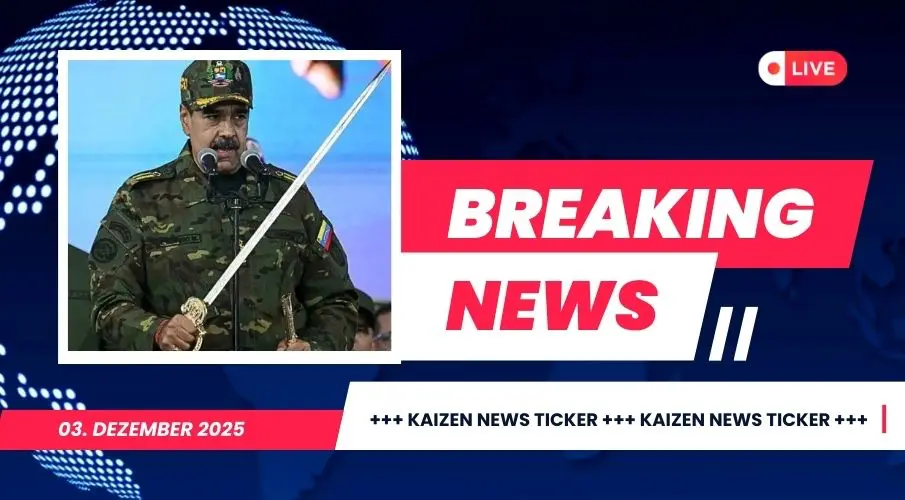
A president in his own storm as he called Vance incompetent
Donald Trump lashed out before a room full of conservative media figures as if there were no tomorrow. Even JD Vance, his own vice president, was mocked as “incompetent”, accompanied by laughter in the room, in response to a question that was actually about Tim Walz. His outbursts now hit precisely those who are supposed to stand at his side. When a candidate is publicly demeaned like this, it says more about the one doing the attacking than the one being attacked. It is a moment that shows how unpredictable the situation has become and how little respect remains within this political project.
By now, the question is who is damaging whom. Trump appears more unstable than he has in years, and Vance becomes the target of a spontaneous attack that no one saw coming. Observers speak of a leadership style that falls apart the moment loyalty is no longer enough. And while the laughter still echoed through the room, one impression remained: a president losing control – and taking his own team down with him.
Miami, Thursday – and a New Chapter in the Ukraine Talks
Donald Trump continues to negotiate through his advisers. This Thursday they are expected to meet in Miami with one of the highest-ranking Ukrainian negotiators to continue discussions on a possible path out of the war with Russia. We know from internal circles that this round is taking place. Nothing more has been made public – no agenda, no list of participants, no indication of whether the meeting is part of a structured process or merely another loose layer of talks.
What is known is only that it is a continuation of the meetings reported in recent weeks: contacts between Trump’s circle and Kyiv, while parallel diplomatic movements toward Moscow are being examined. There are no official statements from Washington or the White House. Kyiv has also not provided details. Much therefore remains unclear. How far these talks reach, whether they are conducted in the name of the U.S. government, or whether they represent only preliminary soundings, is not stated by anyone. Equally unclear is what expectations Kyiv brings into the meeting and what position Trump is having his people convey.
The fact is: the meeting is taking place. No one knows how reliable the results will be – yet the location alone shows how unusual this process is. Miami is not a diplomatic center but a campaign venue, a political stage that carries far more symbolism for Trump than any conference room in Washington or Brussels. And so this appointment is both a negotiation meeting and a political message: the decisive contacts do not run through traditional channels but through Trump’s own circle. No further information is currently available. Whether concrete proposals emerge from the talks or whether it remains another round of informal coordination will only become clear after Thursday. Until then, the only certainty is that a war that is shaking Europe is now being negotiated in a hotel room in Florida – far from the front lines, far from European partners, and far from any traditional diplomatic setting.
Republicans block health care subsidies
Resistance is coming even from within the party – Aguilar, Republican: This is the Republicans’ chance to stand up for functioning health care, to stand up for their own voters, and to stand up to Johnson and Donald Trump, who are willing to let these tax credits expire and harm people across the country.
Mike Johnson tries to downplay the pressure, but time is running out. The subsidies are expiring, many families face higher premiums, and even lawmakers in tight districts are asking for an extension. Johnson says nothing was promised – a statement that only worsens the situation. While the president claims his party is united, this dispute shows the opposite. It is a back and forth that could become costly for millions and reveals how deep the division within the party runs.
US envoy meets Putin

Steve Witkoff is sitting at the table in Moscow while Trump back home speaks of growing “respect”. The talks are supposed to lay a foundation for ending the war in Ukraine, but much remains unclear. At the same time, Selenskyj is traveling through Europe to secure allies. Both sides are talking, but every step feels like a diplomatic tightrope walk. The world watches to see whether these meetings become more than the next act in this sad drama – Also see our article: “Negotiations in the Half-Light – How Trump, Putin, and a Tearing Peace Plan Make Europe Nervous” at the link: https://kaizen-blog.org/enverhandlungen-im-halbdunkel-wie-trump-putin-und-ein-zerreissender-friedensplan-europa-nervoes-machen/
ICE operation against Somalis and Trump says Somalis “bring nothing”

Federal agencies are preparing a large-scale operation in Minnesota. The target: Somalis with existing deportation orders. Teams are expected to move through the Twin Cities and detain people whose cases have long been decided. The plans are not public, but preparations are underway. Fear is already spreading in the community, which has lived for years between integration and political instrumentalization. An operation of this scale could severely damage the social climate in the region. The president declared on camera that he does not want Somalis in the country. He claims they depend almost entirely on welfare and have nothing to offer the country. These are statements that echo earlier outbursts and are deliberately hurtful. That these comments were made in connection with a completely different incident only makes them more cynical. A government that appears determined to publicly demean specific groups is creating the conflict itself.
Defendant in the National Guard case pleads not guilty
Rahmanullah Lakanwal, himself shot, appeared via video from his hospital bed. The 29-year-old is charged with murder and other offenses. His lawyer declared his innocence while the case has already been politicized. The public sees images of a severely injured defendant while the government uses the incident to justify its migration program. The legal process has barely begun, but the political judgments are already in place.
War College experts: A second strike would be unlawful
Legal scholars openly warn that deliberately killing shipwreck survivors would be a crime. The warning comes from former military lawyers with no political ambitions. They explain that there is no legal framework that could justify such an act. It is a clear message: anyone who attacks survivors commits an act for which there are no excuses. And this warning pushes the government further onto the defensive.
Republicans lower expectations in Tennessee
Mike Johnson warns that a reliably red region could flip in a special election. The Republican candidate is under pressure while Democrats are surprisingly competitive. Johnson’s visit to the district was meant to reassure but instead revealed nervousness. The election is seen as a bellwether for the midterms. If even solid regions begin to waver, it becomes a political alarm signal for the government.
Trump wants to rebuild Dulles Airport
“We are going to completely change it and turn Dulles Airport into something REALLY spectacular. We have a great plan for it – It is not a good airport. It should be a GREAT airport, but it is a terrible airport, incorrectly designed – even though the building itself is good.” (The world is burning, Trump immortalizes)
The president announces a complete reconstruction of the airport and calls it “badly designed”. His solution: a large and expensive overhaul. Critics ask why a president is focusing on architecture in the middle of international crises, but Trump touts the project as visionary. The airport becomes the next prestige project whose costs will likely be borne by others.
Pope Leo XVI calls for de-escalation
The Pope urges the United States to choose the path of dialogue in the conflict with Venezuela. He warns against military action and emphasizes the role of the Church, which has already been trying to calm the situation. His words serve as a moral counterpoint to the rhetoric from Washington. In times of rising tensions, the Vatican reminds the world that escalation rarely provides solutions.
Democrats warn against attack on Venezuela
A bipartisan group in the Senate wants to limit the president’s war powers. They call an attack on Venezuela “a costly mistake”. The warning is unusually sharp. Even Republicans like Rand Paul are joining. The message is clear: anyone acting without a mandate endangers not only the region but the country itself.
Trump looks tired …
While the cameras were rolling, his eyes kept closing. The president later said he was “in top shape”, but the images linger. In a moment meant to project strength, he appeared exhausted. The debate about his health continues – and the attempt to downplay it seems more clumsy than convincing. At the same time, Trump’s doctor praises his numbers. The president had an MRI of his heart and abdomen in October, and according to the doctor, it was “completely normal”. The administration uses the opportunity to dispel doubts about Trump’s fitness. But the images tell another story. The president made remarks about his health that raise new questions. The medical clarification does not soothe but instead shows how nervous his circle has become.
But the story does not end there. If you go back a little more than a year, you find this television appearance by Trump again.
Trump on Biden (2024): "He has the ability to fall asleep while the camera is running... after a few minutes he is completely out, and he has cameras on him because he is the president... You will never see me sleeping in front of a camera."
Trump mocks Biden for being able "to fall asleep while the camera is running". Of all people, Trump, whose eyelids visibly struggle in every press conference as if they were asking for political asylum. Anyone who has seen his recent appearances knows this: It is not Biden who fades away there – it is a president nodding off in the middle of his own sentence. Trump’s promise "You will never see me sleeping in front of a camera" feels like one of those announcements that is disproven the moment he says it. Sometimes you do not need a fact check. Just a video and two seconds of patience.
Noem announces more deportations
The homeland security secretary announced that more people will be deported before the end of the year. She says two million have already left. Her wording sounds like battle cries. At the same time, she praises the military strikes against boats off Venezuela and claims they saved “hundreds of millions of lives”. Many in the room appeared puzzled, but no one objected.
Trump wants to “replace taxes with tariffs”
He talks about paying out “refunds” from tariff revenue, even though the numbers are nowhere near sufficient. Experts call the math fantasy, but Trump insists. The deficit is growing, tariff income is far from “trillions”. Still, the president builds a future vision that is economically unviable – but sounds good politically.
The question of lying or incompetence …
Senator Rand Paul, Republican:
“Pete Hegseth said he had no knowledge of a second strike and that it did not happen. And the next day we hear from the White House podium that it did happen. So he either lied to us on Sunday – or he is incompetent”.
GOP Senator Rand Paul focuses on a contradiction that cannot be minimized. Pete Hegseth stated on Sunday that there had been no second strike. No indications, no confirmation, nothing. One day later, the White House publicly announces the opposite. For Paul, the situation is clear: either Hegseth did not tell the truth – or he simply did not know what was happening in his own circle. Both raise questions far beyond the specific incident. It is about credibility, leadership, and the basic expectation that those speaking before cameras know what they are talking about. When two statements diverge this sharply within 24 hours, a breach of trust remains that cannot be explained away with a shrug. Reactions from Washington have so far been evasive. Hegseth avoids clear answers, and the White House refers to internal processes that are “under review”. But the contradiction remains visible. Paul uses this gap to make clear that this is not a marginal issue but an example of communication chaos that already has political consequences. Those who bear responsibility must provide transparency – and not only when pressure mounts.
Ted Lieu calls for investigation
The lawmaker and former military lawyer demands that the Justice Department investigate the second strike on the boat. He reminds that murder at sea is a crime that does not expire. His words hit the administration at its core because they make clear: if no one takes responsibility, a future administration will. This warning carries weight.
National Guard as a backdrop – criticism from Arkansas
Arkansas’ governor is sending one hundred National Guard soldiers to Washington and says they must “confront evil”. For the ACLU, this is pure political theater in uniform. The organization warns against misuse of the troops after two soldiers were attacked. Instead of analyzing causes, the administration relies on the backdrop of military strength. For the families of the victims, this brings neither clarity nor safety, but rather the feeling that the government is using genuine grief as a political stage.
Trump’s course against minimum standards in nursing homes
The Department of Health overturns a rule meant to ensure clear minimum care hours per resident. Minister Robert F. Kennedy Jr. calls it unnecessary bureaucracy, while Democrats warn that the quality of care for elderly people will deteriorate. Facilities with staff shortages may soon provide even less, while residents and caregivers are already at their limit. The decision reflects a policy that removes regulation and shifts responsibility downward – with consequences felt most by those who cannot defend themselves.


Wohlwissend, dass Trump über kurz oder lang, kein Präsident mehr sein wird, nimmt man seine Entgleisungen, Schlafanfälle und unsinnigen Dekrete einfach hin.
Denn egal was er macht, seine MAGA stehen zu ihm.
Da ist keine Erkenntnis, kein Begreifen.
Da gibt es weiter nur Schlagworte und Diffamierung. Laut aber ohne Substanz, hohl wid deren Köpfe.
Und wenn er dann nicb Migranten richtig menschenverachtend verspottet und als wertlos bezeichnet, dann schlagen die Herzen der Faschisten höher.
Zölle anstqtt Steuern 🤣🤣🤣🤣
Das gab es in den USA mal… vor sehr, sehr langer Zeit.
Vor dem Schwarzen Freitag, wenn ich micht recht entsinne
2026 wird er politisch kaum überleben …
Dann kommt Vance?
Für Trump sind die Verhandlungen zur Ukraine reinweg Vorbereitungen für große Deals, dir vor allem seine Taschen füllen werden.
Warum sonst ist Jared Kushner, sein Schwiegersohn und Privstperson, bei solchen Verhandlungen dabei?
Ukraine hat keine guten Aussichten.
…die Verhandlungen laufen, anders als behauptet, nicht gut, weil wir da sehr gute quellen haben
Die Standards für Pflegeheime absenken 😡😡😡 die Pflege ist eh heikel.
Dank der Abschiebungen wird der Fachkrãftemangel noch deutlicher.
Da senkt man halt den Standard, dann „agieren die Pflegeheime ja noch Richtlinienkonform“.
Dazu passt, dass die Berufe Krankenschwester, Pfleger, Physiothetapeuten nicht mehr offiziell als Berufe deklariert werden.
Und dass, wieder einmal, die Republikaner eine adäquate Gesundheitsversorgung blockieren.
Obwohl der Gros der Medicaid Nutzer in den roten Staaten zu finden sind.
Die Demokraten hatten leider die große Chance vertan beim Shutdown auf die Gesundheitsversorgung zu bestehen.
Und jetzt kam es genau wie erwartet.
…und der standard ist in vielen gegenden sowieso schon niedrig
Tennessee hat es leider nicht verstanden.
Es gab zwar mehr Stimmen für die Demokraten, als bei der Wahl im letzten November, aber die deutliche Mehrheit der Republikaner steht unverändert.
Trump jubelt, die MAGA jubeln …..
…ist eine rep ecke, und viele rechte dort
Den Papst kann ich nicht mehr ernst nehmen.
Wer sich bei einem Autokraten, wie Erdogan, anbiedert, ihn für seine Religionsvielfal und Menschenrechte lobt, ist bei mir unten durch.
das fanden wir auch sehr merkwürdig und konnten es auch nicht ganz nachvollziehen
Hegseth wird bleiben.
Trump „liebt“ ihn.
Stattdessen gibt es halt ein Bauernopfer. Das habe ich von Anfang an gesagt.
das ist noch offen, wir alle legen nach und ob bradley wirklich seinen kopf dafür hinhält bleibt abzuwarten