
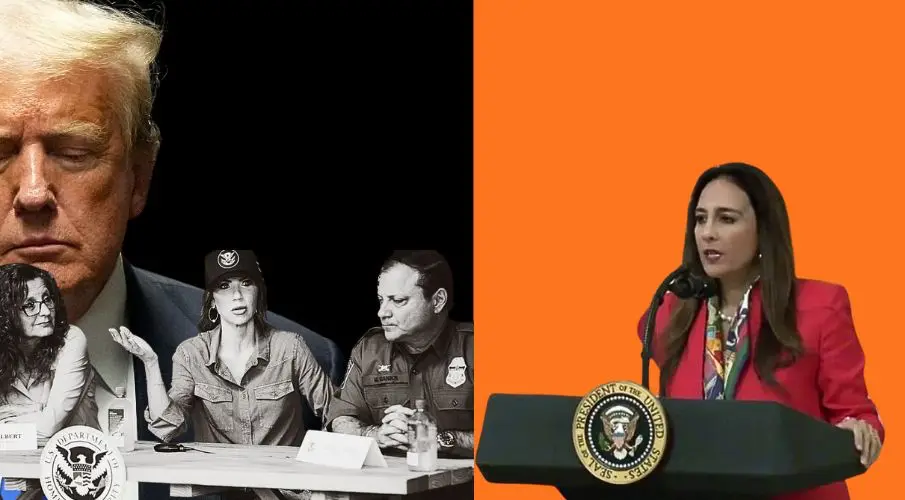
One of the most serious internal upheavals in months has shaken the US Justice Department. Following further reporting, at least four senior attorneys from the Criminal Section within the Civil Rights Division have resigned their posts, and others intend to leave their positions later this month. Their resignations are an open protest against the decision by the responsible departmental leadership not to pursue a criminal investigation into the fatal shooting of driver Renee Good by an ICE officer in Minneapolis.
The unit affected is precisely the one that normally becomes involved automatically in cases of fatal police shootings. The Criminal Section of the Civil Rights Division specializes in examining whether officers broke the law, violated internal rules, failed to de-escalate, or used deadly force without a legal basis. That it is being sidelined in this case marks a red line for the resigning attorneys. Those departing include the head of the section himself as well as his deputies - a collective step that is rare within the Justice Department.
The trigger was a decision by Harmeet Dhillon, the head of the Civil Rights Division and a Miller ally. She determined that her division would not conduct its own investigation into the ICE officer involved. According to several people familiar with the matter, this decision was the point at which the leadership of the Criminal Section could no longer go along. There had been internal doubts before, but the handling of the Good case caused the situation to boil over. In other cases, there had already been at times heated disputes within the division.
The scale of the resignations recalls an earlier rupture. In February, five senior officials from the Public Integrity Section had already stepped down after refusing to follow an instruction from President Donald Trump’s circle to drop a corruption case against then New York City mayor Eric Adams. Both cases reveal a pattern. When investigations are politically unwelcome, experienced attorneys draw consequences - and leave. A former head of the Civil Rights Division, Kristen Clarke, captures the central point of criticism. Investigating deadly police violence is among the most difficult and at the same time most important tasks of this division. For decades, its prosecutors have been nationally leading in precisely this work. That restraint should be ordered here of all places represents a break with long-standing practice.
The Justice Department rejects the accusation that the resignations are directly connected to the Minneapolis shooting. A spokesperson said the officials involved had already applied for early retirement and that any other portrayal was false. But even this explanation does nothing to diminish the political impact. Four senior leaders are leaving a key division simultaneously, in the middle of a highly controversial case of deadly force. The death of Renee Good on January 7 has triggered nationwide protests and particularly intense anger and distrust in Minnesota. The FBI’s decision to conduct the investigation alone and exclude the usual reviews by Minnesota state authorities further escalated the situation. A few days later, the state of Minnesota as well as the cities of Minneapolis and Saint Paul filed suit to stop an expansion of nationwide deportation and raid operations, which are set to be intensified even further after Good’s death.
Meanwhile, leading figures in the administration publicly staked out positions before any investigation had been completed. Vice President JD Vance declared one day after the incident that the shooting had been justified. President Trump claimed that Good had tried to run over the officer - a portrayal contradicted by video footage. The images show that the wheels of her vehicle were turned away from the officer at the moment the shots were fired. Added to this is the conduct of the division head herself. Shortly after the incident, Dhillon circulated a post on social media warning that ICE officers would use deadly force if they were rammed. This portrayal also contradicts the known video footage. For critics, this reinforces the impression that the case is not being examined with an open outcome, but that a political line is being defended in advance.
The Civil Rights Division of the Justice Department was created in 1957 to protect the constitutional rights of all people. At the beginning of the current presidency, it employed around 380 attorneys. Since Dhillon took over leadership, the division has shrunk significantly. She made clear early on that she does not see this attrition as a problem. The mission, she said, is the enforcement of federal law, not ideological projects or investigations of police departments based on statistics. The resignations following the Good case show how deep the rift has become. It is no longer just about a single decision, but about whether state violence is still being reviewed independently - or whether political loyalty determines what is investigated and what is not. In Minneapolis, this debate began with a fatal shot. In Washington, it has now reached an institutional dimension that can no longer be ignored.
Updates – Kaizen News Brief
All current curated daily updates can be found in the Kaizen News Brief.
To the Kaizen News Brief In English


Problem ist, was kommt nach ? Willfährige Erfüllungsgehilfen 🤦🏻♀️
…das wird man sehen, aktuell ist da alles möglich, grade Minneapolis ist ein Pulverfass
Ich fürchte, dass die zurückgetretenen Beamten nun von willfähigen Trumployalisten ersetzt werden.
Denen das Recht egal ist, es zählt nur, was die Regierung Trump will und vorgibt.
Der nächste Schritt in eine Diktatur 😟