
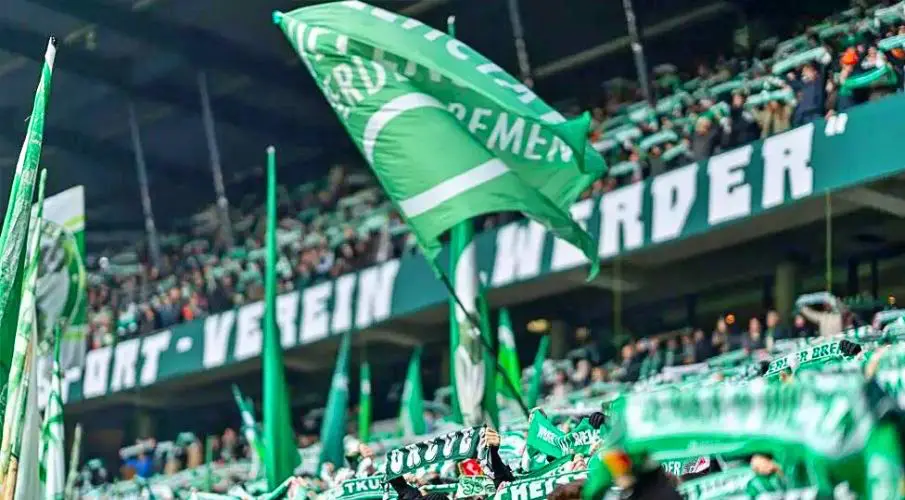
The news arrived quietly, almost like a routine statement from a Bundesliga club. SV Werder Bremen is canceling its planned tour of the United States. Two friendly matches in Minnesota and Detroit are off. But anyone who looks more closely recognizes that this is not simply a coach canceling a trip. A traditional German club is publicly drawing consequences from a situation that reaches far beyond soccer. The cancellation is a response to two fatal shootings that occurred in less than three weeks in Minneapolis. Two American civilians, Renee Good and Alex Pretti, both 37 years old, were shot and killed by federal officers. This is not only a security issue. It is a political statement.
President Donald Trump commented on January 20 about Renee Good’s death and called the shooting “a mistake” that ICE “sometimes makes.” On January 27, Trump said in an interview with Fox News that both deaths were “terrible,” but that he felt “even worse” about Good’s death because her parents were “Trump fans.” A detail that reveals the obsession of the moment: the focus was not on failures of due process or the proportionality of state violence, but on how the victim’s parents positioned themselves politically.
On February 20, Werder Bremen released a brief statement. They will not travel to the United States. A spokesperson said: “It is correct that we have canceled a planned trip to Minnesota in the United States. There were sporting, economic, and political reasons for this.” That is remarkable. A professional club does not simply cancel. It explicitly names “political reasons.”
The statement continued: “Playing in a city where there is unrest and people have been shot does not align with our values. In addition, it was unclear to us which players would even be allowed to enter the United States due to tightened entry requirements.” The second argument is practical. Increasingly strict US entry regulations, reviews of social media profiles, heightened controls - these are real obstacles for a European professional club. But the first argument is something else.
Werder Bremen did not withdraw for security reasons. That could have been the explanation, and it would have been legitimate. Instead, the club framed it differently: these circumstances do not align with our values. That means a traditional German soccer club looks at a situation in another country and says that its values are incompatible with what is happening there. It is a conscious decision not to allow itself to be used at a moment when state violence is being exercised without clear justification. Two deaths in a matter of weeks under questionable circumstances - that is enough to say: we will not play there.
There is also a sporting context. Werder Bremen is in a tense phase of the Bundesliga season. A possible relegation battle coincides with this planned trip. A transatlantic tour would have meant additional strain. So the cancellation is not only a political statement, but also pragmatism. It combines several reasons. But the political dimension cannot be ignored. The club could have justified the decision purely on sporting grounds. That would have been sufficient. Instead, it deliberately addressed the deaths.
Minnesota has thus become more than the location of a friendly match. The situation surrounding ICE operations and the domestic political escalation in the United States has now had effects beyond the region. There are discussions about security conditions, about trust in due process, about the credibility of officers who invoke self defense narratives that are not supported by eyewitnesses. A nurse becomes a suspect, then a casualty. A mother picking up her daughter from school becomes a tragic statistic.
And now a German soccer club says: we are watching this. We take it seriously. We will not appear there. That is not an insignificant event. It is a sign. A German organization is drawing concrete consequences from a situation it observes elsewhere - not for economic reasons, not because of tourism problems, but based on an assessment of values and what it means to be visibly present in a place where state authority has become questionable.
Trump wanted to know only whether the victims were his political supporters. Werder Bremen asked itself which values it would support by being present. That is a difference. And it is not a small one.
Updates – Kaizen News Brief
All current curated daily updates can be found in the Kaizen News Brief.
To the Kaizen News Brief In English


Sehr gut 👍🏻
…das stimmt und hoffentlich nehmen sich das viele als beispiel
Eure Arbeit ist fantastisch, ich bin zwar nicht in der Lage euch finanziell zu unterstützen, aber ich teile eure Artikel, immer und immerwieder 🥰
ganz lieben dank und auch ein großes danke für das teilen.