
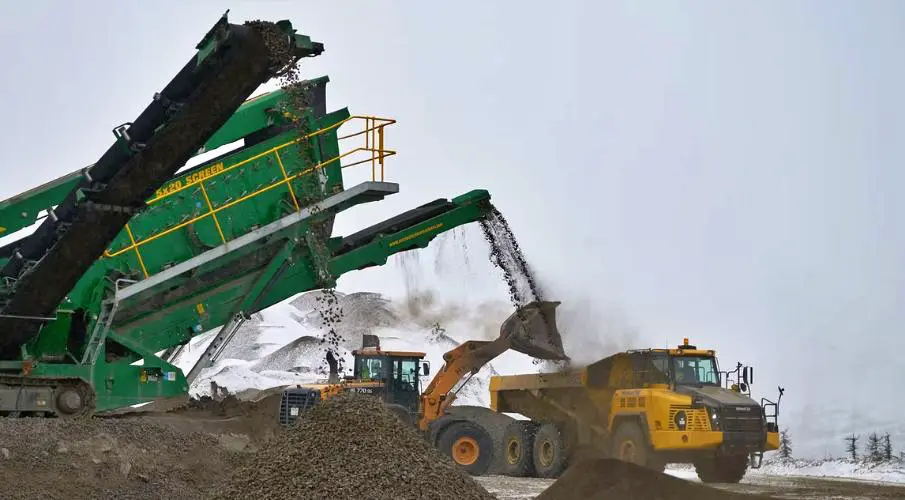
On the Chukotka Peninsula, at the far edge of Russia, a mine worth billions is being built. The Baimskoye deposit is one of the largest undeveloped copper reserves in the world. The planned complex is expected to cost 12.5 billion dollars. Moscow calls it a strategic national project. What it really is becomes clear only when one looks more closely at the ownership structure.

Abramovich sells, Kim buys
Until 2018 the deposit belonged to Roman Abramovich and Alexander Abramov. Then the Kazakh company KAZ Minerals took over - a corporation of the billionaires Vladimir Kim and Oleg Novachuk. Experience with Arctic projects? None. But capital, networks and patience - apparently enough. When the West imposed sanctions after the invasion of Ukraine, foreign ownership in Russian key projects became politically sensitive. The solution was not withdrawal. It was restructuring.

Our investigations show that the Baimsky project in Chukotka is far more than just a mine. Plans include a large open pit at the copper and gold deposit Peschanka as well as a mining and processing complex, supplemented by a new road and a year round port near Pevek for exporting the raw materials. In total more than one trillion rubles are to be invested. Financing takes place through state supported project structures with participation of the development bank VEB.RF, while the complex is part of the strategic development plan for the region until 2030.
At the same time the project shows how ownership structures were reorganized after the Western sanctions: after the sale by Roman Abramovich and Alexander Abramov control first went to the Kazakh KAZ Minerals of Vladimir Kim and Oleg Novachuk, later to the Russian fund Palmira Severa. Construction contracts ran through companies such as Vega Razvitiye, which are connected with international structures and through which billions of rubles, partly also through companies in the United Arab Emirates, were processed. There are also connections to companies in the environment of the family of Russian Deputy Prime Minister Yury Trutnev. The project therefore illustrates not only the economic importance of the Arctic for Russia, but also how international networks and state support continue to drive large resource projects forward despite sanctions.
A fund called Palmyra
The assets moved into a Russian closed investment fund: Palmira Severa. Managed by Ruskapital - a company that had previously been controlled through Rid Oil Perm. Co owner there until 2023: Dmitry Trutnev. Son of Yury Trutnev, Russia’s Deputy Prime Minister and the main official responsible for the Kremlin’s Arctic policy. That is how the architecture works.
Dubai builds the Arctic

The construction contract for the facility went to Vega Razvitiye - largely unknown in Russia, but well connected behind the scenes. Behind the company stands Nord Rim DMCC from Dubai, connected to Kim through the Kazakh RBK Bank. More than ten billion rubles flowed to Vega Razvitiye within two years. Novachuk was co founder until March 2025. Another company involved, Severnye Inzhenernye Resheniya, leads through Nomad Construction Limited to Alen Baigazin - also a business partner of Novachuk. Officially a Russian state project. In reality a network from Kazakhstan, Dubai and Moscow government circles.
Why sanctions do not reach here
Three mechanisms explain why projects like this continue to operate - regardless of what is decided in Brussels or Washington. Raw materials always have buyers. Copper, oil and gas are the foundation of the global economy. If Europe drops out, China, India and Central Asia buy - often cheaper, but in large quantities. Russia loses some margin, not the market. Structures can be adapted quickly. Sanctions target names and companies. The economy responds with new names and new companies. Funds, subsidiaries, locations in countries outside sanction regimes - the network becomes more complicated, but it does not break. The EU has so far recognized such constructions too rarely and too late. The state steps in where markets hesitate. State banks, infrastructure funds, adjusted tax rules - Russia keeps strategic projects alive
Copper for the energy transition - from the Arctic

Yury Trutnev and Oleg Novachuk at the construction site of the Baimsky GOK. What makes the Baimskoye deposit special: it is not only a mine. It is part of Russia’s plan to develop the Arctic economically and link it to Asia through the Northern Sea Route. New roads, port facilities, energy infrastructure - everything already planned. And the raw material itself ensures that demand does not decline. Copper is indispensable for power grids, electric cars and the technologies of the energy transition. The world market needs it - regardless of who extracts it and under what conditions. Russia calls Baimskoye a national project. But the money, the structures and the people behind it come from Kazakhstan, Dubai and the offices of a government family. Who really profits from the billions of the Arctic - and why is hardly anyone looking?
Updates – Kaizen News Brief
All current curated daily updates can be found in the Kaizen News Brief.
To the Kaizen News Brief In English


