
The new polling numbers, calculated as an average, summarize something that everyone in Washington now feels: the political mood is barely moving upward anymore. President Trump is staying afloat, but without any sign of momentum. And where shifts do appear, they do not point to relief. Trump’s approval stands at 36 percent in early December. His disapproval remains at 61 percent, a figure that has moved only within the range of small fluctuations for months. During the first year of his second term, this gap remained nearly constant. What matters even more than the overall number is the assessment of individual policy areas. On the economy, 67 percent disapprove of his work and only 31 percent see it positively. On immigration, 60 percent disapprove and 38 percent approve. The values for foreign policy and trade look similar. Trump’s presidency therefore appears as a stalled condition: not collapsing, but also showing no visible ability to win back groups he has lost.
A second part of the survey looks at Trump beyond his performance in office. His personal favorability, meaning whether people view him positively or negatively, remains deeply divided. Among white voters, approval and disapproval are almost equal. Among Black Americans the disapproval is clear: 66 percent view him negatively and only 18 percent positively. Among Hispanic respondents there is a marked drop compared to the previous year. Only 25 percent view him positively, while 65 percent view him negatively. This decline is likely to hurt Republicans during the campaign, as the party has in recent years placed high expectations on younger Hispanic voters.
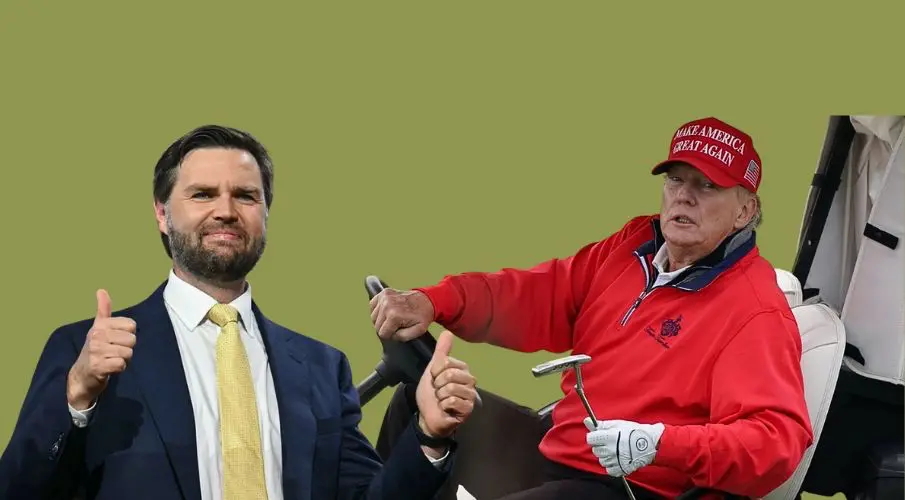
Trump’s vice president JD Vance is also far from having a stable base. When Trump presented him in the summer of 2024, many hardly knew him. More people have formed an opinion since then, but the trend is sobering: 48 percent view him negatively, 34 percent positively, and 18 percent still have no clear impression of him. The fact that a designated vice president, after more than a year in the center of national politics, still plays no role for almost one in five shows that Vance has so far failed to build either a profile or trust. The deepest unrest in the country, however, becomes visible in the question about the nation’s overall direction. About 70 percent of respondents say the United States is heading in the wrong direction. This figure has solidified over years and is now slightly higher than in September, shortly after the assassination of conservative activist Charlie Kirk. Only around 30 percent believe the country is on the right course. Since 2018 there have been only brief phases when confidence was higher, and by now a lasting pessimistic mindset dominates.
A similar picture emerges in the assessment of the economic situation. Two thirds of adults describe the situation as poor. Only 31 percent view it positively. This corresponds to the level of the late Biden years and has not improved under Trump. For a president who uses economic strength as a central argument of his politics, this number is problematic. It shows that many households do not perceive the relief Trump promises or do not trust it. Even lower is the confidence in Congress. Only 4 percent of Americans have a great deal of confidence in the legislature, while 43 percent have almost none. The rest fall somewhere in between. The pattern is consistent across all parties: Democrats, Republicans, and independents view their legislature with nearly the same level of criticism. Congress remains the institution with the lowest confidence ratings in the entire survey.
The assessments on climate, abortion rights, and general political sentiment also form a consistent pattern. Seventy-three percent do not believe that climate change is exaggerated, 69 percent consider access to abortion mostly legal, and regarding general expectations for the future, 18 percent say they do not anticipate an improvement in conditions.
This week’s data therefore does not represent sudden shifts but a political exhaustion that has built up over years. When a country that likes to see itself as a driver of change lands in so many categories at stable levels of dissatisfaction, a second message becomes clear: the American public has settled into a posture of distrust, toward politicians, institutions, decision makers, and even promises that once had the power to mobilize. The fact that these mood patterns do not yield a clear advantage for either party makes the situation even more striking. Millions of people are essentially saying: we want change, but we do not believe that anyone can deliver it. That is the real meaning of these numbers.
Many will now ask how it is possible that this man still has 36 percent approval. The answer is the same one we know from Germany: these are not protest voters, that term has not explained reality for a long time. These are people who have been intentionally bound, unsettled, and led over years into a world full of false certainties. Delusion does not arise by chance, it is the result of constant repetition, strategic simplification, and a political style that systematically undermines facts. Trump masters this technique like no one else, and the AfD lives this method almost 24 hours a day, seven days a week: daily false reports, emotionally charged claims, a way of telling stories that does not need to convince but only to trigger emotions. That is precisely why the press carries a special responsibility. It must remain reliable, research thoroughly, and consistently distinguish between what is documented and what is deliberately spread to destroy trust. At the same time it depends on readers: media literacy does not grow on its own, it emerges through practice. People must learn why false information works, how it is constructed, and what mechanisms lie behind it. Only then can the permanent confusion that populists use strategically be broken. In a time in which the boundary between truth and assertion is attacked daily, clarification is not optional, it is the only way to preserve democratic public life.
Investigative journalism requires courage – and your support.
Investigative journalism is important because it researches where others no longer go and thereby ensures that what is decisive for the understanding of reality becomes public. - for that we need your support.
Independent – Critical – For Everyone
Thank you for making our independent work possible.
Updates – Kaizen News Brief
All current curated daily updates can be found in the Kaizen News Brief.
To the Kaizen News Brief In English


