
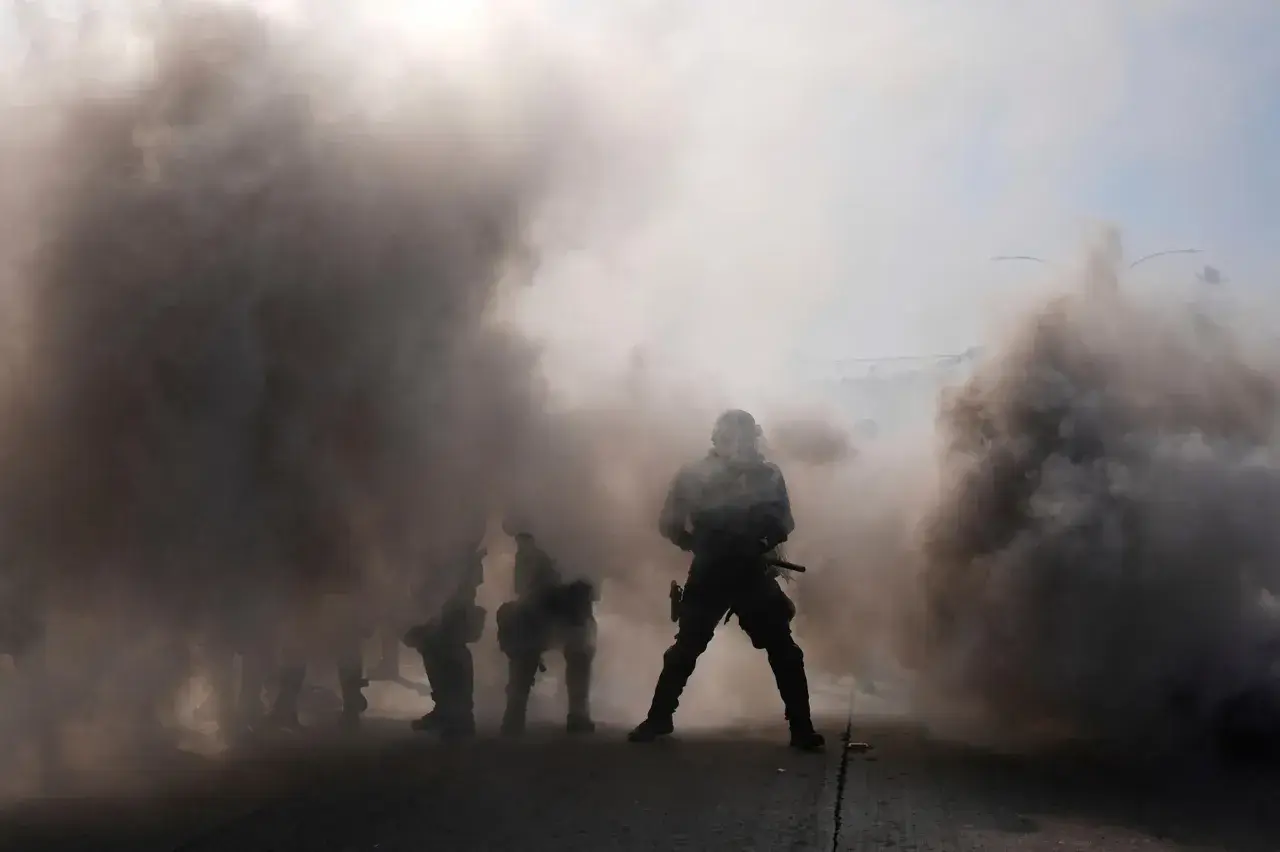
Quietly and without public debate, a new guideline has taken effect that massively expands the discretion of ICE officers. An internal memorandum, now disclosed in a federal court proceeding overseen by Judge Kate Menendez, allows deportation officers to detain people without a judicial warrant – based on a far broader interpretation of what qualifies as flight risk. Through other investigations, we already had access to the original memorandum.

An internal ICE memo dated May 12, 2025, signed by Todd Lyons, radically shifts the boundary of what is considered flight risk. A later court disclosure makes clear the consequences: officers are to be allowed to rely on the administrative removal warrant Form I-205 to enter homes – without a judicial warrant, without consent, and if necessary by force. The memo itself was reissued in January 2026 with a new date, but its content is almost identical to the ICE memo from May 12, 2025.
Until May 2025, the threshold was comparatively clear: an arrest without an administrative detention warrant was permissible only if there were concrete indications that a person would evade proceedings, for example by failing to appear in court. This logic is barely compatible with the Constitution. Under the new guidance, it is sufficient for an officer to assume that the person concerned would no longer be locatable at the place of the encounter once an internal detention order were obtained. This is more than a narrow legal adjustment. The standard shifts away from verifiable criteria toward situational assessments made on the ground. Whether someone allegedly would not remain, whether a vehicle is nearby, whether documents are deemed suspicious, or whether an instruction was not immediately followed – all of this can now suffice to justify an immediate arrest.
The basis is the administrative form I-205, not a judicial search warrant. Consent of those affected or an exigent circumstance is no longer required. The concept of flight risk is also newly defined. It now suffices to assume that a person would not be present while waiting for an administrative order. This significantly lowers the legal threshold for arrests. It also affects individuals who were not originally the target of the operation. The memo was not officially distributed, but passed along orally and then collected again. Legally, this is highly problematic. In practice, it shifts the boundary of constitutional protection of the home in favor of ICE.
Particularly explosive is that this practice explicitly also affects people who were not the target of an operation at all. The so called collateral arrests, in which individuals without serious criminal offenses are taken into custody solely for alleged immigration violations, thus receive a new legal foundation. It is precisely this form of enforcement that has triggered growing resistance in recent weeks. The document was signed by acting ICE director Todd Lyons and submitted in the context of a proceeding in Minnesota. There, the methods of federal authorities have been under intense scrutiny for weeks. In the Minneapolis region, massive operations, armed presence, and escalating situations have destroyed trust among many residents. The fatal shootings of Renee Good and Alex Pretti, both US citizens, have further intensified the criticism.
It is also striking how openly the memorandum breaks with previous interpretations. The earlier definition of flight risk is described as incorrect and unfounded. In its place comes an interpretation that effectively turns any encounter into a potential arrest situation – without judicial oversight, without a temporal buffer, without external review. Legally, the approach may still fall within the framework of immigration law. Politically and practically, however, it marks another step toward a system in which enforcement takes precedence over proportionality. The line between targeted application of the law and blanket authority to seize is further blurred.

At a time when ICE operations are already widely perceived as excessive, intimidating, and dangerous, this reads like a signal of further escalation, not restraint. What begins as an administrative instruction produces real consequences on the ground – for people who happen to be in the wrong place at the wrong time, and for a public that is witnessing how legal safeguards are gradually being lowered. The coming weeks will be hard, and that is well understood. The work continues unabated. Only through consistent disclosure, investigative reporting, seamless documentation, and at the same time concrete assistance for those affected can anything begin to change for the better.
To be continued .....
Updates – Kaizen News Brief
All current curated daily updates can be found in the Kaizen News Brief.
To the Kaizen News Brief In English


Fluchtgefahr so weit ausgelegt, dass schon ein Niesen reicht.
Jeder, aber wirklich Jeder, kann ohne Grund -reinweg durch die Annahme einer Flucht- verhaftet werden.
ICE ist damit Judikative, Exekutive und Legislative in Einem.
Quasi unbegrenzte Macht.
Quasi unbegrenzte Immunität.
Und das hat der Richterin nicht gereicht, ICE Einsätze auszusetzen?
Das reicht dem Kongress nicht um die Erhöhung des ICE Budget komplett einzufrieren und nur mit ganz klaren scharfen Regelungen weiter zu genehmigen?
Genau so etwas darf es nicht geben.
Steht es nicht über dem Gesetz?
Kann das einfach per Anordnung festgelegt werden?
Die Bürgerrechte sind damit faktisch außer Kraft gesetzt.
Wo ist hier noch ein Unterschied zu Russland? China? Nord Korea?
Ich sehe keinen mehr.
Das Ganze macht Eure Arbeit auf den Strassen schier unmöglich.
Ein Blick in die falsche Richtung und Zack verhaftet.
Auf Presse wird ja schon länger keine Rücksicht genommen.
Im Gegenteil.
Bitte passt gut auf Euch auf!
…danke dir/euch – ja, das wird spannend und aktuell werten wir hunderte von dokumenten aus