
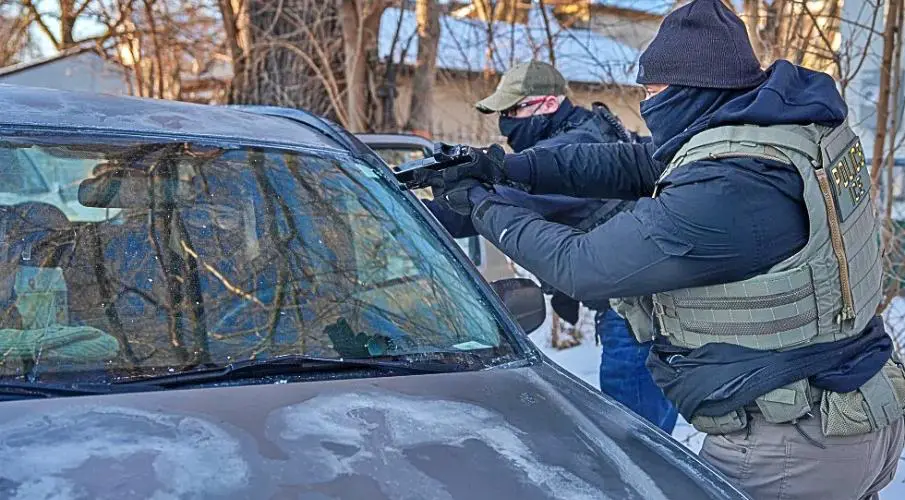
A single moment at the federal court (U.S. District Court for the District of Minnesota) in St. Minnesota has made visible how far the strain within the U.S. immigration system has now progressed. During a hearing, government attorney Julie Le openly stated that she could no longer cope with the situation. Shortly afterward, she was relieved of her assignment. The incident not only shows the pressure on individual attorneys, but reveals how heavily courts, agencies, and investigators are being strained by the current deportation policy.

The attorney Julie Le worked for the U.S. Department of Justice as part of a temporary assignment. She had previously worked as an attorney for the immigration agency. During a hearing before Federal Judge Jerry Blackwell in St. Paul, she lost her composure. She stated that she wished the judge would hold her in contempt of court so she could finally sleep for 24 hours. At the same time, she said the system was not functioning and that she was trying with her last strength to meet the requirements. A few hours later, her assignment was terminated. Officially, agency representatives justified this step with unprofessional behavior and a lack of commitment to governmental duties.
The incident is directly connected to the tightening of immigration policy since Donald Trump’s return to the White House. Agencies are carrying out increased arrests, particularly in Minnesota, where enforcement units have been conducting one of the most extensive deportation operations of recent history since early January. The consequences are clearly visible in the courts. The number of cases is rising rapidly, while personnel, resources, and procedures are not keeping pace. Julie Le had to handle at least 88 cases in less than four weeks. Judge Blackwell made it clear that overwork is not a justification for ignoring court orders. He expressed sharp criticism that people continued to remain in custody for days despite judicial release decisions. From the court’s perspective, part of the problem arises because agencies do not consistently implement judicial directives.
The attorney explained in court that she had volunteered for the assignment but had not been sufficiently prepared. She had tried to give up the assignment but had found no replacement. At the same time, she made it clear that she neither had the authority nor the ability to resolve structural problems. Her statements were unusually open for proceedings of this kind and reflected the pressure under which numerous immigration agency employees are currently working. Minnesota has developed in recent months into a center of the current deportation strategy. Parallel to the rising number of cases, internal tensions have arisen within law enforcement agencies. Several prosecutors have already left their positions. The background is not only the increasing workload, but also conflicts over the handling of fatal shootings of two civilians by federal agents. These events have further intensified the situation and strained trust within the agencies.
The unbelievable increase in the number of arrests in which those affected are detained without any recognizable legal basis is hardly manageable anymore. This is leading to a flood of emergency motions before the courts. Legal experts currently see no indications that organizational changes could provide relief in the short term. Instead, pressure is increasing on judges, prosecutors, and defense attorneys alike. The case shows how strongly political decisions influence the practical work of the judiciary. The strategy of mass deportations meets a court system that was already operating at capacity limits before the current developments. For many participants, a situation is emerging in which deadlines, legal standards, and organizational procedures can hardly be observed simultaneously.
That a government attorney publicly describes her overload in court is extremely unusual. Equally rare is the speed with which personnel consequences followed. The incident makes clear that the pressure does not only affect migrants, but also the institutions that must conduct the proceedings. Minnesota stands as an example of a development that is increasingly appearing in other regions as well. The number of operations is growing, proceedings are being accelerated, and courts must make decisions under increasing time pressure. At the same time, conflicts between agencies and the judiciary over the implementation of court orders are increasing. The attorney’s statement was not a political comment, but an insight into the daily reality of a system that is trying to handle more and more cases in ever shorter time.
Whether the removal of the attorney can solve the structural problems is questionable. Proceedings continue to increase, enforcement measures are being expanded, and courts must operate under increasing strain. This brings a fundamental question more strongly into focus: How long can a legal system function if political measures are expanded faster than organizational structures can be adapted.
Minneapolis Under Continuous Enforcement – Armed Arrests, Schools in Fear Mode, and a System Without Boundaries
Minneapolis remains under a state of exception. Federal agents arrest activists at gunpoint, enforcement columns increasingly operate covertly in residential areas, schools report fear among children and parents, while legal conflicts between courts and agencies escalate. The development shows a situation in which government measures are intervening ever more deeply into daily life while at the same time increasingly triggering legal and social tensions.

On Tuesday, federal agents stopped several vehicles in south Minneapolis. Activists had followed enforcement vehicles after reports circulated about searches in residential homes. Agents forced occupants out of their cars at gunpoint, placed at least one person wearing anti-ICE messaging in handcuffs on the ground, and threatened journalists on site with pepper spray if they approached. That did not stop anyone from documenting everything in detail. Authorities justified the arrests by claiming activists had obstructed the arrest of a man without legal residency status. The claim is fabricated and neither verifiable nor did it occur as described.
“The work of journalists in Minneapolis increasingly resembles war reporting.”
The operations also show a shift in tactics. Instead of large collection actions in parking lots, authorities are increasingly focusing on targeted arrests in residential neighborhoods. Enforcement vehicles move in smaller convoys, change routes more frequently, and operate in ways that are significantly harder to track. Within activist networks, sighting reports are now circulating more frequently than confirmed arrests. This creates an atmosphere of permanent uncertainty in which no one knows exactly where the next operation will take place.
“Minneapolis, February 3, 2026 – Armed enforcement units point weapons at civilians. (We recommend watching the recordings with sound.)”
At the same time, fear is increasing in schools. Governor Tim Walz stated that the visible use of tear gas and massive police forces has decreased, but the situation has become more troubling because pressure has shifted toward educational institutions and families. School administrators report that children are staying away from classes out of fear that relatives will be arrested. Parents are afraid to even bring their children to school.

Dr. Brenda Lewis, superintendent of a school district in the greater Minneapolis area, describes a development that even affects U.S. citizens. She reports having been followed twice by enforcement vehicles after publicly criticizing the measures. School boards have observed vehicles with tinted windows parked in front of their homes. In affected school districts, security measures have been strengthened, pickup routines have been changed, and psychological support has been expanded. Social workers are now organizing food deliveries for families and seeking volunteers to drive children to school.
The escalation is connected to a comprehensive tightening of deportation policy. After a senior enforcement commander had to leave Minneapolis shortly after the fatal shooting of protester Alex Pretti, a new coordinator took over the operations. He publicly warned that protests could have consequences in the future if they obstruct police operations.
At the same time, the legal conflict is growing. Federal Judge Katherine (Kate) Menendez had previously ruled that merely following enforcement vehicles from a safe distance does not constitute grounds for vehicle stops. More out of a guilty conscience than conviction, after Menendez issued a ruling on January 31, 2026, the consequences of which are still unforeseeable. An appellate instance, however, temporarily suspended this restriction. It is therefore unclear what limits currently apply to observation actions by activists. Meanwhile, a federal grand jury is investigating possible attempts by authorities in Minnesota to obstruct federal government measures. Cities and agencies have had to hand over extensive communication records. Local officials speak of political pressure. They state that they have nothing to hide but see attempts to use criminal proceedings against political opponents and especially journalists.

“Currently any boundaries are suspended, also facilitated by the weak enforcement capacity of the Democrats in Washington.” (Minneapolis, February 3, 2026)
Conflicts between the judiciary and immigration authorities are also visible in individual criminal cases. Two Venezuelans accused of assaulting an officer were supposed to be released according to a judicial decision. Shortly afterward, however, the immigration agency again took control of the men. The defense reports that it received no explanation as to why the release was not implemented. The defendants deny the allegations. According to the defense, neither video recordings nor witness statements confirmed the officer’s account. At the same time, a man remains in custody who is accused of spraying a lawmaker with apple cider vinegar. Prosecutors argue that attacks on politicians must be consistently prosecuted. The defense considers the act harmless and criticizes medical care in the detention facility.
The developments show a city in which lines of conflict are intensifying simultaneously on several levels. Authorities intensify operations, activists document enforcement actions, courts struggle to control government measures, schools attempt to protect children from the consequences of political decisions. Minneapolis has thus become a symbol of a nationwide development. The situation increasingly appears without limits. Arrests are carried out with military equipment, judicial decisions lose effectiveness when other agencies intervene immediately. At the same time, the number of people caught between deportation measures, court proceedings, and family crises is growing. For observers on site, only one option remains: to continue documenting the events and helping those affected whose daily lives have been completely thrown out of balance by government operations.

In parts of American media and civil society, a quiet reality is now emerging that is rarely discussed publicly. Reporters, human rights activists, and leaders of non-governmental organizations are increasingly reviewing private security strategies that were previously known almost exclusively from authoritarian states. This includes moving family members abroad or deliberately no longer making the whereabouts of relatives public. International studies show that threats against journalists no longer target only the individuals themselves, but deliberately aim at their social environment. Human rights organizations have documented for years that intimidation through family members has become a central means of pressure to stop critical reporting.

From our article: Minneapolis, nine in the morning: When the state raises weapons against observers
Worldwide, media workers go into exile every year or use protection programs because they fear violence, imprisonment, or death threats. Even though such protective measures are rarely openly discussed in the United States, behind the scenes awareness is growing that political polarization, threats, human rights advocacy, and targeted campaigns are increasingly raising personal security questions – not only for journalists themselves, but for entire families.
Updates – Kaizen News Brief
All current curated daily updates can be found in the Kaizen News Brief.
To the Kaizen News Brief In English


Das ganze ist eine von der Regierung bewußt angelegte Aktion in Verachtung von Gesetz, Demokratie, Rechtsstaatlichkeit und Menschenwürde um im Grunde eine faschistische Diktatur zu errichten und vor allem eine Handhabe (durch den berechtigten Widerstand der Bevölkerung) zu haben um die nächsten Wahlen zu verhindern und so die Diktatur zu zementieren Kann man nur hoffen, dass der Plan nicht so aufgeht. Meine Hochachtung für alle die in der einen oder anderen Art hier Widerstand leisten
… der widerstand ist so wichtig und auch die unterstützung von opfern – wenn ein land seine bürger nicht mehr schützt, dann bist du am punkt, wo du nicht zurück kannst
Flood the Zone with shit.
In dem Fall mit so vielen (unrechtmäßigen) Verhaftungen, dass die Verteidiger nicht mehr hinterher kommen.
Aber selbst die Staatsanwälte schaffen es nicht mehr.
Sehr offen hat Julie Le darüber gesprochen.
Noch schneller wurde sie abgezogen.
Eine Staatsanwältin weniger wird das Problem nur verschärfen.
Aber das ist gewünscht.
Was sagte Homan „wir machen es klüger“…..
Gefängnisse und Gerichte fluten.
So gehen Menschen im System unter.
Unterlagen verschwinden.
Trotz richterlicher Anordnungen bleiben Menschen in Haft oder werden gleich wieder inhaftiert, ohne Begründung.
Und in Washington labern die Demokraten, bekommen aber nichts hin.
Mit ICE hätten sie die Chance ein Zeichen zu setzen.
Gelder so lange einfrieren, bis die Morde an Renee Good und Alex Pretti von Behörden in Minnesota, ohne Einmischung von ICE und FBI, aufgeklärt sind.
Die Untersuchungen zur nachträglichen Diffamierung der beiden Opfer gestoppt werden.
Die entsprechenden ICE Typen suspendiert (ohne Gehalt, so ist es in der Regel bei Verdacht auf Mord üblich) und vor Gericht gestellt werden.
Aufgeklärt wird, warum richterliche Anordnungen ignoriert werden. Menschen trotz Urteil in Haft bleiben.
Überforderung des Systems und Überarbeitung der Mitarbeiter sind -wie der Richter korrekt an merkte- keine Gründe.
Der entsprechende Ausschuss alle Aussagen gehört hat.
Und vor Allem endlich klare Regeln in Einklang mit der Verfassung und geltender Gesetze für ICE.
Keine Durchsuchungen mehr ohne richterliche Anordnung.
Keine Verhaftungen mehr ohne Haftbefehl.
Menschen mit Greencard und legalen Status/laufendem Asylverfahren sind tabu. Ebenso US-Staatsbürger. Gibt es da Gesetzesübertretungen ist schlicht die normale Polizei zuständig.
Unantastbare Pressefreiheit gegenüber ICE
Ebenso das Recht eines jeden Bürgers ICE Aktionen zu filmen und zu dokumentieren.
Verbot von Masken, Pflicht zur Bodycam.
Pflicht eindeutig als ICE Mitarbeiter erkennbar zu sein.
Erst dann kann man überhaupt über das Budget von ICE reden.
Aber wie ich die Demokraten kenne, geben sie sich wieder einmal mit paar halbherzigen Lippenbekenntnissen zufrieden, denen nie Taten folgen.
Siehe die Krankenversicherung.auch da hätten sie was erreichen können.
Die Chance haben sie vergeben.
…jap, die demokraten haben einen miesen job gemacht, was auch einfluss auf richter haben könnte, weil die sich komplett allein gelassen fühlen ….
Die Demokraten haben ihren Job schon zu Bidens Zeit nicht richtig gemacht!
Trump hätte niemals wieder als Kandidat für eine 2. Amtszeit antreten dürfen!
Gründe dafür gab es in Hülle und Fülle:
Seine Verquickung mit Epstein,
seine undurchsichtigen Beziehungen nach Russland,
seine undurchsichtigen finanziellen Angelegenheiten – und hier wieder die Querverbindung nach Russland,
seinen Plan das Kapitol stürmen zu lassen,
seine ganzen Aufwiegelungen,
seinen Putschversuch,
seine Verurteilung als Sextäter,
die vielen Anschuldigungen von zig weiteren Frauen und Mädchen, die noch gar nicht gerichtlich bearbeitet wurden,
seine Versuche des Wahlbetrugs = Anrufe und Aufforderungen Stimmen zu „finden“, die es nicht gab,
die ganzen geheimen Unterlagen, die man bei ihm in Florida im Keller fand,
der Verdacht des Landesverrats….. usw.
Wenn all diese Gründe nicht ausreichen, was dann?
In diesem Versagen sehe ich die Größte Schuld der Demokraten!
Vermutlich sind die genau deswegen auch so kleinlaut?