
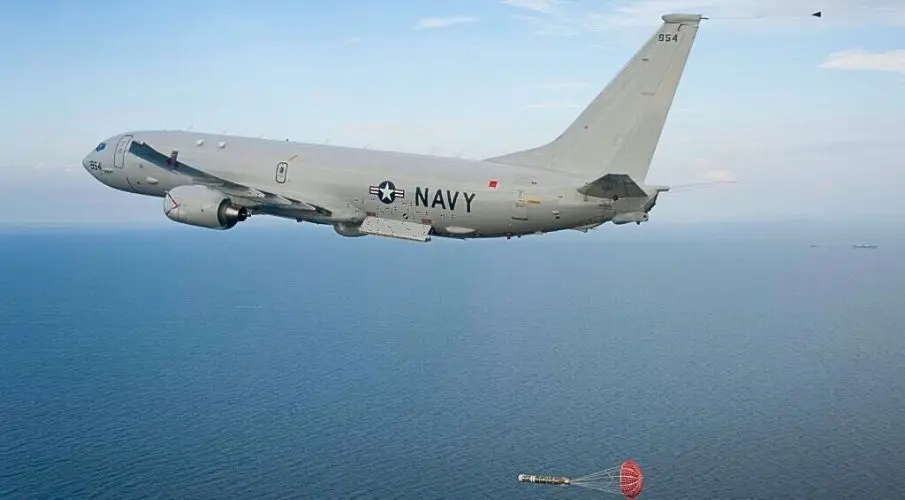
The first deadly attack by the United States on a boat that the government described as a drug smuggling vessel did not begin with a recognizable military aircraft. It began with a plane that looked like a civilian aircraft. Painted white, with no visible weapons, no military markings. The munitions were not mounted under the wings, but concealed inside the fuselage. Eleven people were killed in this attack in September. What has been publicly debated since is not only the question of the target, but the method itself – and a boundary that the law of war draws unmistakably. The government under Donald Trump justifies the boat attacks by claiming that the United States is engaged in an armed conflict with alleged drug cartels. Within this framework, the argument goes, lethal strikes are not homicides but lawful acts of war. Yet even if one were to accept this far reaching construction, one problem remains that is not open to interpretation. The law of war prohibits deception through the feigning of civilian status in order to lull an adversary into a false sense of security and then attack. This prohibition has a clear name: treachery, known in international law as perfidy.
Legal experts point out that this is precisely the offense at issue here. The aircraft flew so low that the people on the boat could see it. According to surveillance footage, after visual contact the boat turned away and headed back toward Venezuela. Whoever sees a civilian aircraft does not expect a missile strike. If that very impression was deliberately created in order to induce approach or the abandonment of flight, this constitutes a serious violation of the law of war. A former senior Air Force military lawyer put it plainly: Whoever conceals their military identity in order to use lethal force crosses a line that applies even in war. A combat aircraft may fight, a civilian appearance may not. The purpose of the rule is clear. Civility is meant to protect, not to become a weapon. What happened after the first impact weighs especially heavily. Two people survived the explosion, clung to an overturned piece of wreckage, and waved at the aircraft. Shortly thereafter, another strike followed, killing them as well and sinking the wreckage. Whether the survivors even understood that they had been the target of a missile attack is unclear. What is clear, however, is that the law of war explicitly prohibits attacks on shipwrecked persons.
After this incident, the military changed its tactics. Subsequent attacks were carried out with clearly military drones, including MQ-9 Reaper systems. In a later operation in October, two survivors managed to escape. They were eventually rescued and returned to their home countries of Colombia and Ecuador. That this change occurred is read by experts as a tacit acknowledgment that the original approach was legally highly problematic. Within Congress, questions about perfidy were raised in confidential briefings. Publicly, the issue has scarcely been discussed, because the aircraft used is classified. The debate instead focused on the second attack on the survivors. Yet the legally decisive question lies earlier: Why an aircraft that was deliberately not recognizable as military was used for a lethal attack.
The Department of Defense stated that all systems used are legally reviewed before deployment and comply with national law and international standards. It declined to provide details about the aircraft. The White House also did not comment. All that is known is that it was not a classically gray painted military aircraft. Although the plane apparently transmitted a military identification signal, experts consider that irrelevant. People on a small boat do not have the technology to receive such signals. For years, the United States has operated aircraft based on civilian platforms, converted passenger or turboprop planes that can be used covertly. Normally, these too carry military markings. That some aircraft are painted white and almost unmarked is known, but rare. For reconnaissance missions, that may be explainable. For offensive attacks, it is not.
Since the beginning of the campaign, at least 123 people have been killed in 35 attacks on boats. Many experts consider these operations unlawful regardless of the camouflage issue. Civilians may not be killed merely because they are suspected of committing crimes. An imminent threat is required. The government seeks to circumvent this threshold by broadly declaring drug cartels to be wartime enemies. Whether this construction holds is highly contested. Even if one were to accept it, the question of deception remains. A former Navy legal adviser put it soberly: What matters is whether there was a credible reason to deploy an unmarked aircraft that had nothing to do with exploiting a civilian appearance. If that reason is absent, military planning turns into a violation of the law of war. Added to this is a structural problem. Planning for the boat attacks was tightly held. Many military lawyers and operational experts who are usually involved were left out. Defense Secretary Pete Hegseth has also weakened the role of military legal advisers and dismissed senior lawyers. This removes an internal corrective that could have stopped precisely such borderline cases at an early stage.
In the end, an uncomfortable realization remains. Even in war, rules apply, especially then. Whoever bends them risks not only legal consequences, but also damages the fundamental assumption that military power is bound by law. An aircraft that looks civilian but kills like a combat system calls that bond into question. And it raises a question that cannot be answered with secrecy: whether here not only people were killed, but also a principle that had until now been considered inviolable.
Updates – Kaizen News Brief
All current curated daily updates can be found in the Kaizen News Brief.
To the Kaizen News Brief In English


Offensichtlich gibt es für Trump und seine treu Ergebenen kein Recht, das sie nicht bereit sind zu brechen. Solche Hochkriminellen gehören vor ein Gericht, am besten vor den Internationalen Gerichtshof, den sie ja auch ablehnen.
Es scheint so, das in den Vereinigten Staaten niemand ist, der dem verbrecherischen Treiben Trumps und der MAGA Einhalt gebieten kann. Ich verstehe nicht, wie so eine Bande ohne rechtlichen Eingriff ein demokratisches Land okkupieren darf.
Das erinnert mich an die grauen Männchen, die 2014 auf der Krim erschienen.
Da Männer, hier ein Flugzeug.
Gleiches Vorgehen, gleicher Rechtsbruch.
Putin wurde damals belohnt und behielt die Krim.
Trump spekuliert darauf, dass er Alle im Griff hat.
Hegseth sagt es ist „alles juristisch geprüft und entspricht nationalen und internationalen Recht“ 🤬🤬 Was für ein Lügner.
Und bis Europa,UK, Kanada, Australien diesbezüglich in die Gänge kommen, werden boch weitere Menschen bei diesen Angriffen sterben. 😟