
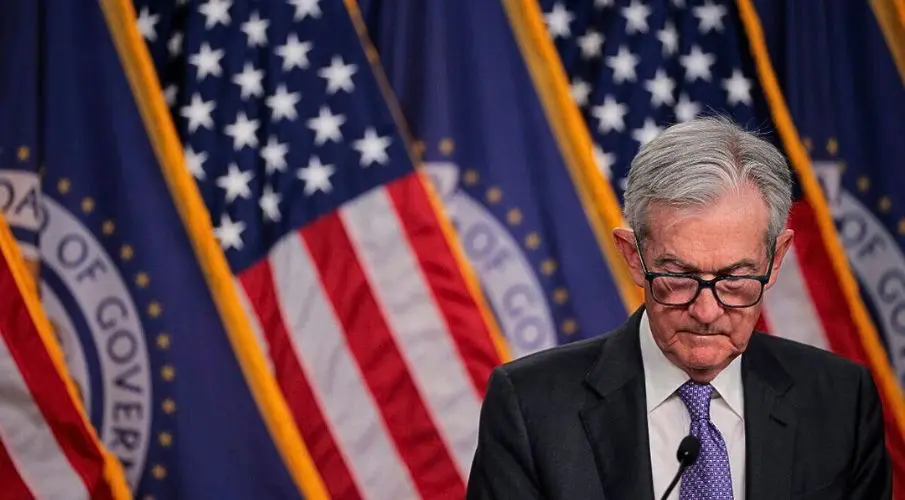
When Jerome Powell stepped before the public on Sunday, he did not choose conciliatory words. The chair of the US central bank said that the Justice Department had served the Federal Reserve with subpoenas and at the same time threatened criminal charges. The trigger, he explained, was his testimony before Congress last summer regarding the ongoing renovations of the Fed’s headquarters. What at first glance appears to be a dispute over construction costs is, in reality, an open conflict over power, authority, and the independence of monetary policy in the United States.
“The threat of criminal charges is a consequence of the Federal Reserve setting interest rates based on our best assessment of what serves the public interest, rather than following the preferences of the president.”
According to Powell, the construction work serves merely as a pretext. The threat of criminal action, he said, stems from the fact that the central bank aligns its interest rate decisions with what it believes to be in the public interest, not with the president’s political preferences. It is an extraordinary escalation in a conflict between the administration and the Federal Reserve that has been smoldering for months. The Fed is designed to operate as an independent institution, deliberately insulated from day to day partisan politics.
The political backdrop is clear. President Donald Trump has long been calling for significantly lower benchmark interest rates. Cheaper money would reduce borrowing costs, stimulate consumption and investment, and promise short term economic gains. The central bank has so far followed this pressure only to a limited extent. While it cut its policy rate three times last year and signaled further steps, it did so cautiously and gradually. For Trump, even this pace was too slow. He publicly mocked Powell and branded him with the nickname “Too Late.”
The reaction in the financial markets did not take long. At the start of the week, stock markets appeared nervous, though not panicked. The S&P 500 edged lower, the Dow Jones fell by around 150 points, and the Nasdaq also traded in negative territory. At the same time, gold prices and other assets typically sought in times of uncertainty rose. The dollar weakened against the euro and the Swiss franc - a sign that investors are not simply dismissing concerns about a politically weakened central bank.
Reactions were particularly pronounced among credit card companies. Shares of Synchrony Financial, Capital One, and American Express slid by nearly ten percent in some cases. The immediate trigger was Trump’s announcement that he wants to cap credit card interest rates at ten percent for one year. Such an intervention would directly hit the business models of these companies. Yet on Wall Street it was clear that the greater focus was not on this idea, but on the pressure being exerted on the central bank itself.
Concerns were also reflected in the bond market. The yield on ten year US Treasury bonds briefly rose to 4.21 percent. Investors fear that a Federal Reserve under political pressure might no longer fight inflation consistently over the long term. Although yields later eased again, the spike underscored how sensitive markets are to signals that call monetary policy independence into question.
Trump himself sought to keep his distance. In a brief television interview, he said he knew nothing about the investigations into Powell. Asked whether the proceedings were intended to influence interest rate decisions, he responded evasively and denied this. The explanation failed to convince many observers, especially given that the president has been attacking the central bank head on for months and has simultaneously attempted to push individual members of the Board of Governors out of office.
For decades, the independence of the Federal Reserve has been regarded as one of the central pillars of US economic policy. The idea is straightforward: a central bank must be able to make unpopular decisions, even when they slow growth in the short term or interfere with political ambitions. Only in this way can inflation be kept under lasting control. If this independence is undermined, the risks include a loss of confidence, higher financing costs, and a long term weakening of economic stability.
Senator Thom Tillis announces that he will withhold his consent from all nominations to the Federal Reserve - including the upcoming replacement of the chair - until the investigations are concluded.
At the same time, resistance is growing even within the Republican Party. Senator Thom Tillis openly accused the president of instrumentalizing the Justice Department to pressure Jerome Powell and the central bank. If there had been any remaining doubts about whether advisers around the administration were actively working to dismantle the independence of the Federal Reserve, Tillis said, those doubts had now been removed. No longer just the autonomy of the central bank was at stake, but increasingly the credibility of the Justice Department itself. Tillis announced that he would block the confirmation of any future candidate for the Federal Reserve Board - including the upcoming replacement of the chair - until this legal dispute is fully resolved. This gives the conflict a new dimension. It is no longer confined to the relationship between the administration and the central bank, but now directly affects the institutional processes of Congress and illustrates how deep the rift has become. Republican Senator Lisa Murkowski said that if the Justice Department seriously considered investigations over cost overruns in construction projects to be appropriate - something hardly unusual in the public sector - then Congress in turn must scrutinize the department’s actions. The risks, she said, were too great to ignore. If the central bank were to lose its independence, Murkowski warned, the stability of the financial markets and the entire economy would be at stake. After a conversation with Powell, she wrote that it was obvious the investigations amounted to nothing more than an attempt at intimidation.

Support for the central bank is also coming from the public. Polls show that a clear majority of Americans - across party lines - favor a politically independent Federal Reserve. Approval is particularly high among Democrats, but even two thirds of Republicans oppose greater political control over monetary policy. Trust in the institution is not absolute, but the desire for distance from day to day politics is clearly evident.
For Jerome Powell himself, the escalation could have paradoxical consequences. His term as chair ends in May, but his position as a Fed governor runs until 2028. Observers consider it possible that, precisely in the face of political pressure, he could choose to remain on the Board - partly to deny the president the opportunity to reshape it entirely according to his own preferences. Beyond this conflict, other corporate news also moved the markets. Fashion retailer Abercrombie & Fitch plunged by double digits after issuing a disappointing earnings forecast. Walmart gained after it was announced that the company would be added to the Nasdaq 100. Gold prices climbed to yet another record high. Internationally, markets were more upbeat, particularly in Asia, where hopes for additional economic stimulus in China fueled gains.
Yet all of these developments were at times overshadowed by a question that reaches far beyond individual stocks: How far may a government go in order to bring an independent institution into line. The subpoenas issued by the Justice Department and the hinted threat of criminal prosecution of the central bank chief mark a point at which this question is no longer theoretical. It touches the foundation of the American economic system - and the answer will determine whether trust or political influence sets the tone.
Updates – Kaizen News Brief
All current curated daily updates can be found in the Kaizen News Brief.
To the Kaizen News Brief In English