
After two days of negotiations in Abu Dhabi, representatives of Russia, Ukraine, and the United States ended the talks on February 5, 2026 after only a few hours. Publicly, all sides predictably described the meetings as constructive and announced further rounds of talks. Tangible results, however, largely failed to materialize. If one is honest, the word “failed” would better describe this entire farce. Only a prisoner exchange was announced, while the decisive points of dispute remain unresolved and the war is approaching its fifth year.

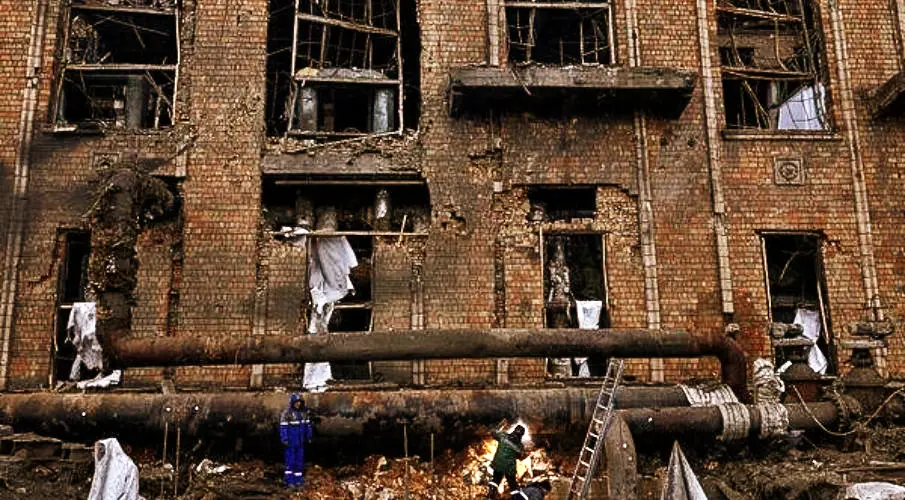
The delegations had met with the press-ready goal of achieving progress on the two central lines of conflict: the future of the territories in eastern Ukraine occupied by Russia and security guarantees for Ukraine after a possible end of the war. Behind closed doors, it remained unclear which positions were specifically exchanged. A clear message instead came immediately before the start of the talks from Russia itself, when massive attacks on the Ukrainian power grid during an icy winter once again exposed the vulnerability of civilian infrastructure.
Representatives of the Ukrainian side described the talks as constructive, but in their public statements focused more strongly on the organization and mediation by the United Arab Emirates and the United States than on concrete negotiation results. The U.S. side also attempted to present the result as a success. Special envoy Steve Witkoff stated that Russia and Ukraine had agreed on the exchange of 314 prisoners of war. Shortly after the conclusion of the talks, both sides indeed exchanged 157 prisoners each. Such exchange operations, however, have taken place regularly for years and are not considered a political breakthrough.
In parallel, U.S. European Command announced that it would resume high-level military dialogue with Russia. This decision underscores that Washington continues to attempt to keep communication channels open, even though little progress is visible on the political level. At the same time, this development stands in the tension between military deterrence and diplomatic rapprochement.
Expectations for the talks had already been subdued. Russia sees itself as militarily advantaged despite high losses and therefore feels little pressure to make concessions. Around twenty percent of Ukrainian state territory remains under Russian control. The territorial advances of the Russian army are progressing slowly, but accelerated slightly in the last months of the previous year.
The Kremlin continues to adhere unchanged to the goals that were already formulated at the beginning of the large-scale invasion. Russia demands full control over the Donbas, consisting of the regions of Luhansk and Donetsk, although Ukraine continues to hold parts of the territory. During the talks in Abu Dhabi, Russian representatives reaffirmed this position and additionally demanded that the international community recognize the Donbas as Russian state territory. This demand remains unacceptable for Ukraine and its supporting states and marks one of the largest blocking points on the path toward a possible peace agreement.
The current negotiations illustrate the limits of diplomatic initiatives by the Trump administration. While Trump had promised during the election campaign that he could end the war within 24 hours, the talks have now been ongoing for months without visible convergence on the fundamental conflict issues. Instead of concrete political solutions, symbolic progress and technical agreements dominate, which hardly influence the course of the war itself.
The situation shows how far apart the positions of the conflict parties continue to be. Russia pursues a strategy of transforming military reality on the battlefield into political negotiating power. Ukraine, in turn, demands security guarantees that are intended to secure its state existence in the long term, while at the same time seeking to prevent the loss of additional territory. The United States is attempting to mediate between both sides without so far being able to create a foundation for a comprehensive ceasefire.
The talks in Abu Dhabi therefore stand as an example of the current state of international diplomacy in the war in Ukraine. Progress is emphasized publicly while the fundamental questions remain unresolved. The prisoner exchange brings relief to individual families, but changes neither the military situation nor the political front lines. As long as Russia does not abandon its territorial demands and Ukraine does not receive security guarantees, a comprehensive peace agreement remains far away. That is the final and most important conclusion of a round of talks that one day will go down in history as a lie.
Updates – Kaizen News Brief
All current curated daily updates can be found in the Kaizen News Brief.
To the Kaizen News Brief In English


Über den Gefangenenaustausch komplett gescheitert.
Keiner sagt es.
Jeder aus anderen Gründen.
Russland, damit es den Anschein hat, dass es um Frieden geht und Europa weiter hinzuhalten.
Selensky um die minimal Unterstützung der USA nicht zu verlieren und um zu zeigen, dass die Ukraine zu Gesprächen bereit ist
USA weil es um den möglicgen Gesichtsverlust von Trump geht.