
There is a moment in a person’s life when he reads something and in that instant knows that everything will be different. Trump knows it as Jamieson Greer, his trade representative, slips him a note while he stands behind a podium in the East Room of the White House, in front of governors and cabinet members. The Supreme Court has ruled. Against him. This is not a political blow, it is something more personal. Trump has talked about tariffs since the 1980s. For him they are not merely policy, they are an obsession, a philosophy, a way of thinking. Tariff is my favorite word in the whole dictionary, he said just yesterday in Georgia, in a voice that sounded like someone defending something that belongs to him.
Now it is gone. Or it is gone if one believes what the Court says.
The decision is six to three. Chief Justice John Roberts, appointed by Bush, writes the majority opinion. Trump appointed two of the justices who vote against him - Neil Gorsuch and Amy Coney Barrett. The others, Thomas, Alito, Kavanaugh, vote with Trump. That is the arithmetic. But the arithmetic is not what matters. What matters is that a court, the highest court in the country, says that Trump has gone too far. He used an emergency statute from 1977, the International Emergency Economic Powers Act, known as IEEPA. The law does not even contain the word tariffs. And yet Trump said he could under it unilaterally impose tariffs on almost every country in the world, without asking Congress, without waiting, without asking anyone else. The Court says no.

The words on paper are clear. Trump exceeded his authority. Congress has the power over taxes. That is the Constitution. That is the system. But Trump is not someone who stops at no.
In the White House press room, an hour later, the lights are dimmed. It is intentional. A spokesperson writes online: Trump will not be stopped. Dark MAGA. It is a reference to Dark Brandon, a viral joke that Biden supporters made into something and that Trump supporters made into something with Trump. The lights are dark blue and gold. The stage is set.

Trump comes out and he is angry. Not loudly angry, but the kind of angry where you understand that something is boiling inside and he cannot let it out, not completely. He has a paper in his hand, and as he reads, the words are hard, personal, insulting. He calls the justices who ruled against him fools. Lapdogs. He says he feels embarrassed for their families. Gorsuch and Barrett. Two people he appointed. And now they say he has no authority. And then something strange happens. While he speaks, while he attacks the justices and praises the others and criticizes Congress for not using its power, he also says something else. He says it does not matter. He says he has other methods. Other laws. Section 122 of the Trade Act of 1974. Section 232, Section 301. He says these laws are even stronger than what he used before. The Court, without perhaps intending to, has shown him that he is even more powerful.
Section 122 (Trade Act 1974)
Allows temporary measures in cases of substantial balance of payments problems. Limited to 150 days. Designed as a short term emergency tool. Not a permanent, freely designed tariff regime.Section 232 (Trade Expansion Act 1962)
Allows tariffs for reasons of national security. Requires an investigation by the Department of Commerce. Already used for steel and aluminum tariffs.Section 301 (Trade Act 1974)
Erlaubt Maßnahmen gegen „unfaire Handelspraktiken“.Erfordert eine formelle Untersuchung durch den USTR Verfahren ist administrativ gebunden und dauert. Handelsbeauftragten-Amt des Präsidenten. Die USTR ist eine eigenständige Behörde im Weißen Haus, zuständig für Außenhandelspolitik, Handelsabkommen und Verfahren wie Section 301
And then he does it. He announces a new tariff. Ten percent on all countries. Effective immediately. This is not a plan, it is a reaction. It is: you want to tell me I cannot do it under IEEPA? Fine, I will do it another way. That same evening he posts a long statement on Truth Social. It is aggressive, it is justification, it is also a little grand. He writes that the Court has actually given him more power, not less. He writes that he can now block an entire country, impose a full embargo. Why is he allowed to do that but not impose tariffs? The logic is twisted, but it is also somehow consistent if you live inside Trump’s head.

But while Trump triumphs in Washington, while he dims the lights and delivers his speech for history, something else is happening in the country. People begin to understand what these tariffs really mean. Linda Schlesinger-Wagner, who owns a women’s clothing store, estimates that the tariffs have cost her one million dollars so far. That is from China. One hundred percent of her clothing comes from China. She has not raised prices. Now, with the new tariffs, she will have to. She tells a reporter: He will find a way to implement it. That is not hope, that is recognition. Another businessman who makes mattresses tried to absorb the tariffs himself. The materials come from India, from Pakistan. In November he raised prices. Now, after the Court has ruled, he hopes the tariffs are gone. But something in his head says no. He tells a reporter: In my head the tariffs are still there. That is not paranoia. That is experience.

There are also the farmers. The American Farm Bureau Federation, under its president Zippy Duvall, writes a letter to Trump. They understand that he is trying to create a fair playing field. But the farmers are suffering. Harvest costs are at record highs. Prices are falling. They ask Trump to seek another path. It is a polite letter, but it is a begging letter. It is a letter from people who understand that power does not lie with them. How far has America sunk under Trump that people who help feed a country must write begging letters
“And then there is the politics. In Illinois Governor JB Pritzker announces a bill: eight billion six hundred seventy eight million dollars.” That is what he says the tariffs have cost Illinois. The bill is stamped: Overdue - delinquent. A joke, but not entirely. It is a governor saying: This is your fault, pay it. Nevada is similar. State Treasurer Zach Conine asks for two billion one hundred million dollars back. For the citizens of Nevada. Because, he says, the tariffs are one thing - an illegal tax that ordinary people have paid without knowing it.
Meanwhile Treasury Secretary Scott Bessent speaks at a conference in Dallas. He says the new tariff strategy will generate roughly as much money as the old tariffs. Maybe not exactly the same, but roughly. That is reassuring if one wants to believe it. But the problem is that the old tariffs have already been spent. In the budget. In the promises. A trillion dollar hole in the budget, economists say. A trillion.

Trump has lived on tariffs for a year. They are not only policy, they are financing for other things. He promised to spend five hundred billion dollars on a super army. He promised two thousand dollar checks for ordinary Americans. He promised to cut federal taxes. And all of that is supposed to be paid for with tariff money. Now the money is gone. Or it is gone if one believes what the Court says.
The world reacts. Mexico is nervous. The economy minister says: I do not know how this ends. Mexico just made a deal. The tariffs were supposed to remain at certain percentages. Now it is unclear whether that deal still stands. Brazil, by contrast, celebrates. The vice president says the decision strengthens negotiations. Only two weeks earlier Brazil had been hit with tariffs of forty percent, while other countries received ten. Now it is fair. Or it is fairer.
Japan is also unsettled. The government agreed to invest five hundred fifty billion dollars in America, and in return receives fifteen percent tariffs. That is the offer. Now it is unclear whether the offer still applies. South Korea is similar. They agreed to invest three hundred fifty billion and receive fifteen percent tariffs. Taiwan has visited Washington six times with trade negotiators. They believed fifteen percent was fair. Now it is unclear.
The European Union made a deal a year ago. Fifteen percent tariffs, and the EU will buy seven hundred fifty billion dollars of American energy. Six hundred billion more in investments. It is a deal where both sides believe it is fair. Now it is unclear whether the deal still applies, what it was ever worth. The German Chamber of Commerce and Industry warns that uncertainty for German companies with US business remains high, as the American government has other trade policy instruments available besides the invalidated emergency tariffs, to which German firms must now adjust. Canada is also confused. Ninety percent of Canadian exports are tariff free under NAFTA, the new USMCA agreement. But the sectoral tariffs, fifty percent on steel, twenty five percent on cars, are still there. And those have nothing to do with IEEPA, so they are not affected by the Court. That is a difference. An important one. Because it means many of the tariffs that truly hurt Canada are still in place.
India made a deal, just two weeks ago. Eighteen percent tariffs instead of fifty. India promised to buy five hundred billion dollars of American goods. That is a large agreement. But now it is unclear whether it stands. Italy is unsettled. The country sells more wine to the US than to any other market. Nineteen billion euros per year. A quarter of all Italian wine exports. And now the Italians say: This ruling is not a victory. It is the beginning of a new uncertainty. There is a risk that tariffs will be reintroduced through other channels.
But the strangest thing is what is happening within America itself. A small group of Republicans in Congress applaud the Court. Mitch McConnell, the god of Kentucky, says the Court is right. Congress has the power. That is the Constitution. Another senator, Susan Collins of Maine, says only Congress has the authority. Another, John Curtis of Utah, says the founders’ system still works.
That is strange because these people are Republicans. They should have stood with Trump. But they stand with the Constitution. Or they think they are the same thing. Republican Senator Lisa Murkowski of Alaska regards the Supreme Court’s ruling as a clear rebuke to the president and a strong reminder that his power has constitutional limits. The Constitution explicitly assigns authority over trade and tariffs to Congress, she emphasized; even if the legislature remains inactive, executive measures must be clearly grounded in law. The ruling is therefore a good signal for separation of powers and institutional balance in the republic.

Wall Street reacted surprisingly calmly to Trump’s defeat before the Supreme Court: the S&P 500 rose 0.7 percent, with the Dow Jones and Nasdaq also advancing. Apparently many investors had anticipated such a ruling, which prevented larger disruptions. Bond yields remained largely stable, indicating neither inflation euphoria nor debt panic. Individual stocks moved differently, while weaker economic data and rising inflation further fueled debate about possible interest rate cuts by the Federal Reserve.
And then there are the businesses. A suitcase manufacturer named Eagle Creek hopes to recover more than five hundred thousand dollars. A toy store hopes the tariffs are gone. A wine importer named Victor Owen Schwartz, one of the plaintiffs in the Supreme Court case, says it is impossible to describe the feeling. It is the feeling of justice. It is the feeling that the world makes sense again.
But it is over almost immediately. Trump announces new tariffs. Ten percent on all countries. With Section 122, a law from 1974 that has never been used before. In other words, Trump is not interested in what the Court says. He is interested in imposing tariffs. And if one path does not work, he will try another.
The real problem is that no one truly knows what will happen now. Economists are unclear. Some say prices will likely not fall, even if tariffs disappear. Companies have raised their prices, and companies do not simply lower prices. They keep the extra profits. That is experience. Michael Pearce, an economist, says that any gain from fewer tariffs will be offset by a long period of uncertainty. The economy is not ready for gains when uncertainty rises.

And there is the question of refunds. Has the Court said that the government must return the money that people paid through tariffs? One hundred to two hundred billion dollars. That is an enormous sum. Treasury Secretary Bessent says it could take years to resolve. Justice Kavanaugh, who voted with Trump, says it would be chaos. Massive chaos. Thousands of companies would go to court. Everyone would fight for their money. It would take years. Maybe five years, Trump himself says. Maybe longer.
There is also the question whether ordinary people, consumers, will receive any money back at all. Economists say no. The tariffs are paid by importing companies, which pass them to retail chains, which pass them to consumers. But who can prove that he paid a portion of tariffs? No one. Only the importers have the paperwork. So only the importers will receive money back. Ordinary people will receive nothing. That is unfair, critics say. That is also likely, realists say.
And then there is something else. Trump said the new tariffs will last only one hundred fifty days if Congress does not extend them. That is a small detail, but it is important. It means Trump cannot enforce all his tariffs at once. He must ask Congress for help. And Congress, especially Republican senators, are not sure they will help. Mitch McConnell has already said the Court is right. Congress has the power. Other Republican senators have concerns. They do not want their farmers to suffer. They do not want their companies to suffer under tariffs. They want trade to function.
That is the real boundary. It is not whether Trump has power. It is whether the country holds together when Trump tries to use that power. It is whether Republicans follow Trump or whether they follow the Constitution. It is whether the Court is actually power or whether it is only words that a president can ignore if he decides that his goal is more important.
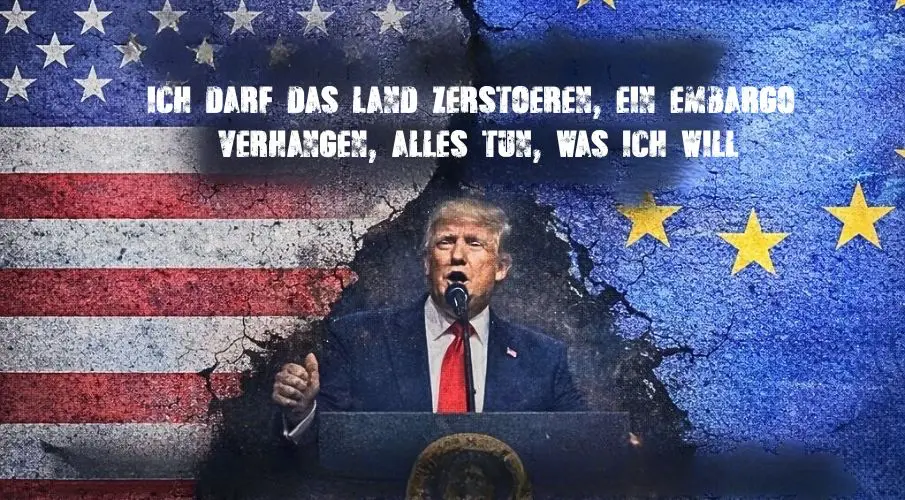
“I am allowed to destroy the country, impose an embargo, do whatever I want - but I am not allowed to impose small tariffs?”
That is the real moment. It is not the moment when the Court decides. It is the moment afterward, when Trump stands up and says he will not give up. “I am allowed to destroy the country, impose an embargo, do whatever I want - but I am not allowed to impose small tariffs?” That is the moment when the world understands that a court decision may not be enough to stop a man who has dreamed of one thing for half a century. It is the moment when uncertainty does not end, but begins. A moment that shows that everything that is built, everything that stands, everything people consider secure, can still be negotiated, still be challenged, still be at stake. It is not a victory and it is not a defeat. It is only a day when one man says to another: No, this is not how it works, and the other man replies: Wait and see.
Updates – Kaizen News Brief
All current curated daily updates can be found in the Kaizen News Brief.
To the Kaizen News Brief In English


