
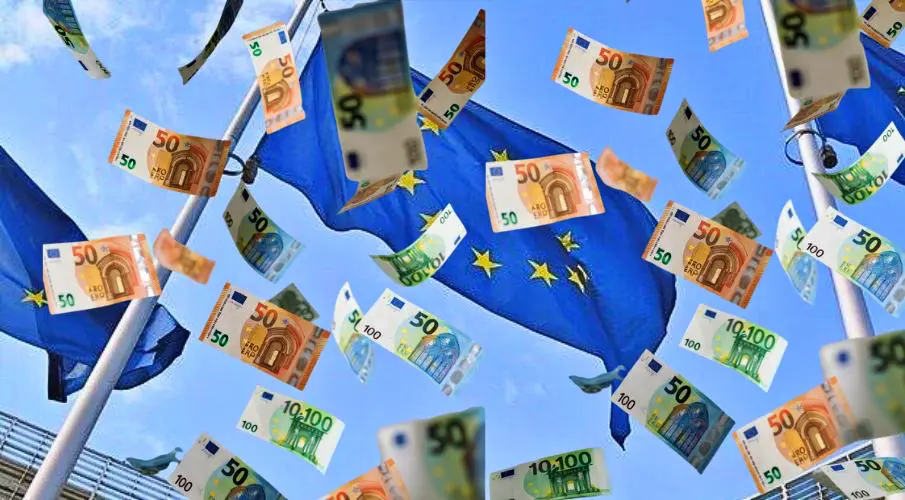
Brussels loves rules. Brussels loves transparency. Brussels loves telling others how things should be done. Only when it comes to its own institutions does it suddenly become complicated. At the General Court of the European Union in Luxembourg, something is currently being argued that you could hardly make up: the European Court of Auditors - the very body that is paid to oversee EU funds - is itself in court. Because it refused investigators access to its staff. Over possible corruption.
The reasoning of the court’s lawyers was remarkably direct. The allegations were not serious enough to endanger the institution’s reputation. That is roughly like a suspect telling a judge that the offense is too minor for an investigation. Normally, it is prosecutors who decide on the severity of an offense. Not the people concerned themselves. But in Brussels, that apparently is open for discussion.
The beginning: 2021
The starting point was an investigation by the French newspaper Libération in 2021. Several cases of possible misuse of expense allowances at the Court of Auditors came to light. One of them concerns Klaus Heiner Lehne, the former president of the institution. Lehne had rented an apartment in Luxembourg together with three members of his cabinet. In reality, he is said to have stayed there only rarely. The apartment nevertheless enabled those involved to receive a foreign residence allowance - money that is actually intended for officials who genuinely work outside their home country. The European Public Prosecutor’s Office began investigating in 2022. And encountered resistance. Again and again. Until it eventually sued the Court of Auditors itself.
The European Public Prosecutor’s Office is led by Laura Kövesi, a Romanian jurist who has pursued significantly more cases since taking office in 2021 than her predecessors. In doing so, a pattern has emerged that increasingly concerns her: EU institutions tend to protect their own members from investigations. The European Parliament has recently been no exception. Parliament President Roberta Metsola declared that she would not accept members being targeted without a solid basis. What constitutes a solid basis, in her interpretation, appears to be determined by the Parliament itself.

The result is a cycle that keeps itself running. Investigators want to examine whether there is enough evidence for charges. Institutions respond that there is too little indication for an investigation. Without an investigation, no evidence. Without evidence, no investigation. Very convenient.
Another point makes the problem even more severe. Members of many EU institutions are subject to a special legal protection. Under European rules on privileges and immunities, national investigators cannot simply proceed against EU officials or office holders. In practice, this means that the respective institution must decide itself whether to lift that immunity. If it does not, an investigation often stalls before it has properly begun. At the same time, the European Public Prosecutor’s Office operates without its own investigative authority. It depends on national police forces and the cooperation of EU institutions. If those very institutions refuse to cooperate, every investigation automatically becomes slower - or comes to a complete halt. What has been created is a system in which those being controlled decide whether they want to be controlled.
Who writes the rules, and for whom
At the same time, a debate is underway in Brussels about who is actually responsible for the often criticized EU bureaucracy. Petra Hielkema, chair of the European Insurance and Occupational Pensions Authority, has a clear answer: not Brussels. Laws are often relatively clear at the beginning. Only during political negotiations do they become more complex, because member states want to enforce exceptions and special rules. What later appears in the media as Brussels bureaucracy often originated as a wish list from national capitals. It is an uncomfortable truth that is not welcomed in Berlin, Paris, and Vienna.
The European Commission is meanwhile working on simplifying tax reporting obligations for companies. A reduction of one quarter is the declared goal. Large technology corporations and international companies applaud. Organizations such as Corporate Europe Observatory and the European Ombudsman, on the other hand, warn that less transparency creates new gray areas - and thus makes tax avoidance easier. Where international financial flows actually go would then become even harder to trace than today. It is an old question that Brussels has never really answered: who truly benefits from simplification?

What investigations have uncovered
Investigations into the market for carbon credits show a similar picture. The market is growing rapidly. Companies buy certificates, offset emissions on paper, and meet climate targets in their accounts - often through forest protection programs or similar projects. The starting point of our own investigation was the certifier Verra, an organization that is among the most important bodies worldwide for issuing such carbon credits. Through programs such as the so-called Verified Carbon Standard, projects around the globe are registered and later used by companies to offset emissions on paper. A closer analysis of individual projects, however, revealed how difficult it is to actually verify many of the claimed reductions. Some projects exist mainly in certificate registries and reports, while their real climate impact is barely measurable. In other cases, local communities come under pressure because protection programs suddenly restrict access to land or resources.
It is exactly at this point that the investigation led further to Europe. Because many of these certificates are used by corporations that operate within the European Union or must present their climate accounts there. This inevitably brings into focus the question of what role EU institutions play in the political classification and regulation of this market. Who decides which certificates are recognized, which standards apply, and which controls actually take place? The deeper one looks into these structures, the clearer it becomes that a complex network of regulation, lobbying interests, and political decisions has formed around this billion dollar market. And that is precisely where the real problem of transparency begins.

Germany could be more affected by a questionable carbon credit market than many other countries. Hardly any major economy has aligned its energy and industrial policy as strongly with climate targets as Germany. For companies, this means that reducing emissions is not only a political goal but an economic necessity. Accordingly, many corporations also rely on certificates to balance their accounts and meet climate commitments. If it turns out, however, that some of these certificates produce little real reduction, Germany is hit twice. On the one hand, the climate accounts of companies and entire sectors could be based on assumptions that do not hold in reality. On the other hand, German industrial companies are simultaneously investing billions in new technologies, energy efficiency, and the transformation of their production. If other actors can offset their emissions far more cheaply through questionable certificates, a competitive disadvantage arises. That is exactly why scrutiny of this market is so politically explosive: what was intended as a tool to accelerate climate protection could, in the worst case, turn into a system that makes genuine transformation more expensive and rewards statistical solutions.
Anyone who believes these questions concern only European authorities overlooks a broader pattern. In several international markets, investigations are currently showing how difficult it has become to control global economic structures at all. This is particularly visible in global food markets. Economist Anastasia Nesvetailova of the UN organization UNCTAD has shown that a small number of trading corporations control a significant share of global supply - while increasingly taking on financial risks that were once reserved for banks. If this system begins to falter, a crisis could emerge whose consequences would make the financial crisis of 2008 look like a rehearsal. No one in Brussels talks about that. At least not out loud. Remarkable, is it not?

Another area also shows how complicated control has become. Investigators around the NATO procurement agency NSPA are currently examining a corruption scandal involving defense contracts. Millions are said to have flowed through intermediaries to secure contracts. Investigations brought the European defense group Czechoslovak Group into focus. One of its subsidiaries, the Spanish ammunition manufacturer Fábrica de Municiones de Granada, was already excluded from new NATO tenders last July on suspicion of corruption. The parent company never publicly communicated this. The question that arises from this is simple: how strict is oversight over international subsidiaries really - and who is watching?
Will there be consequences?
The ruling in Luxembourg is expected later this year, possibly before the summer. If the court supports the Court of Auditors, other EU institutions will effectively receive a free pass. If it strengthens the prosecutor’s office, it will open the door for more investigations within European authorities. This is about more than an expense dispute and an apartment in Luxembourg. It is about whether transparency in Europe truly applies to everyone - or only to those who are not currently under scrutiny themselves.
It is exactly at such points that our work begins. Where power becomes self contained and the public is excluded, it is worth taking a closer look - thoroughly. The Kaizen Blog does that. Not because it is easy. This work is demanding, it takes time, it costs more than one might think. But it is necessary - for a society that should know what is being decided in its name.
Updates – Kaizen News Brief
All current curated daily updates can be found in the Kaizen News Brief.
To the Kaizen News Brief In English


