
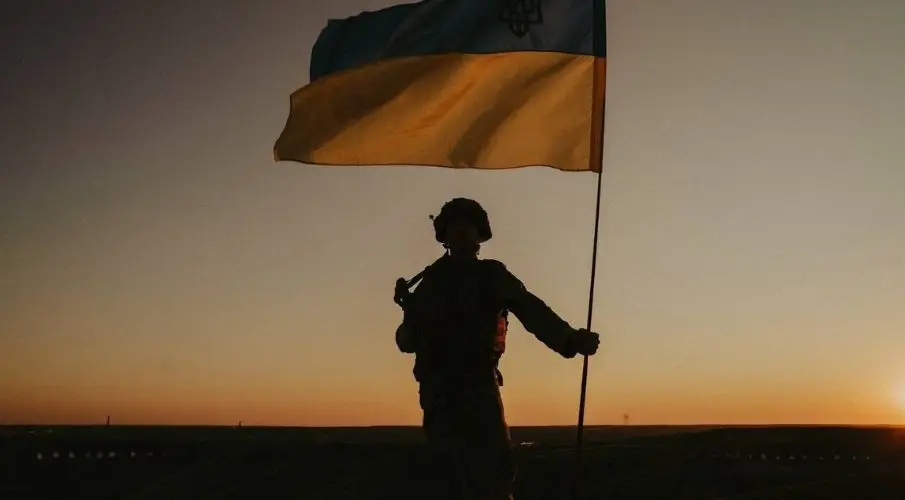
Volodymyr Zelensky made it unmistakably clear in Kyiv that the revised peace proposal from Washington still contains the demand his country will never accept: withdrawal from the Donbas. Put differently, the United States is proposing a compromise that would not be a compromise for Ukraine. Zelensky said the territory that Kyiv still holds should, according to the American proposal, become a “free economic zone” without Ukrainian or Russian troops, while Russia would be allowed to remain in the occupied areas. At the same time, it remained unclear who would actually administer this territory. For Zelensky, it is clear that such a model entrenches the aggressor’s power and punishes Ukraine, even though it is the country that was attacked. “If you talk to us about a compromise,” he said, “then you must offer a fair compromise.”

The Ukrainian proposal, developed by Kyiv together with European partners, has now been delivered to Washington. Two points are central to it: security and clear lines. Ukraine demands guarantees that are legally binding and can exist only with the approval of the US Congress. Without these guarantees, no agreement is possible, not after a war that has shown for nearly four years how quickly Russia can strike again. The Kremlin continues to demand that Ukraine give up enormous territories, shrink its army and keep its distance from NATO, all points that would leave the country defenseless.

According to Zelensky, Russia has offered only minimal withdrawals in several regions, in Dnipro, Kharkiv and Sumy. At the same time, Moscow wants to freeze the front lines in Zaporizhzhia and Kherson. Ukraine, however, demands that the entire front line be stabilized in the event of a cease-fire, including the Donbas. Any decision on territorial concessions would have to be presented to the citizens, through elections or a referendum. This requires security, and that does not exist at present.
While Kyiv holds to its position, European states are trying to steer Trump away from a peace model that favors Russia. Friedrich Merz confirmed that European and Ukrainian negotiators had sent the White House their own proposal. The call between Trump, Merz, Macron and Starmer was described as “hard”. Trump himself spoke of “pretty strong words”. His impatience was even more open. They did not want to “waste time”, he said. “Sometimes you have to let people fight.” A sentence that reveals much about the thinking in the White House and little about the reality of a war with tens of thousands of dead. Starmer had just led a video conference with more than 25 states willing to help with reconstruction after a potential agreement. Participants emphasized that this is a decisive moment for Ukraine but also for Europe’s security. At the center was the question of whether frozen Russian assets could be used for financing. At the same time, Zelensky negotiated with American government officials and business leaders about a reconstruction plan. Present were, among others, US Treasury Secretary Scott Bessent, Jared Kushner and BlackRock CEO Larry Fink. Zelensky made clear in his video message afterward: “When there is security, everything else follows.”

As diplomacy and pressure intersect, the situation at the front is intensifying. Russia is attempting to strengthen its position through attacks along the entire line. Pokrovsk, contested for months, is on the verge of full capture. During the night, Russia again struck Ukraine’s energy infrastructure, while Ukrainian drones carried out attacks on Russian territory. The Russian Defense Ministry reported the downing of more than 280 drones, including many heading toward Moscow. All four airports of the capital had to close for hours.
Merz, Starmer, Macron – and a Trump who refuses to show up
Karoline Leavitt über Präsident Trumps Frustration im Russland-Ukraine-Krieg. ES IST ZEIT, DASS ER ENDET! – „Er ist es LEID, Meetings nur um der Meetings willen. Er will KEIN weiteres GEREDE … Er will TATEN! Er will, dass der Krieg EIN ENDE hat!“ (Jeder weiss wieso – Anmerkung der Redaktion)
Europe is pushing for a meeting in Paris, but Trump is holding back. He wants to come only when “real opportunities” exist, while the White House complains about the allegedly slow progress of the talks. Kyiv continues to refuse any surrender of land in Donbas, including areas where Russia never gained a foothold. Selenskyj is trying to secure his own position without completely alienating Washington. Europe stands more united than ever to prevent an outcome that would undermine its security. And a president in Washington appears increasingly irritated by a reality that refuses to bend to his tempo. Zelenskyy meets with a coalition of more than 30 states while Washington pushes for quick concessions. Europe warns against a peace that only invites future attacks. Kyiv wants an agreement but not at the price of its own territory. Trump appears increasingly frustrated because reality does not follow his choreography. Europe is closing ranks to give Kyiv support while Russia shows no movement at all. The talks are becoming a milestone for who ultimately sets the course for Ukraine – Kyiv or Washington.
Trump speaks openly about his frustration and declares he is “sick of meetings.” While Europe relies on diplomacy, the White House demands quick signatures instead of slow rapprochement. Zelenskyy attempts to balance Trump’s pressure without destroying his own position. Moscow shows no movement, which makes the entire construct even more fragile. Public impatience from Washington becomes a political weapon. At the same time, the impression grows that Trump is losing patience with a war he does not even superficially understand. A world dependent on painstaking security is confronted with a president who pushes for speed as if it were a campaign event.
Foreign Minister Sergey Lavrov said that Russia had “no timeline” for ending the war. Others may speculate about spring or 2026, he said, “we are not occupied with that.” A sentence that clearly shows how Moscow sees the timing of a cease-fire as a political lever and how clear it is to Kyiv why the current American ideas are insufficient.
The negotiations continue and so does the war.
Investigative journalism requires courage – and your support.
Investigative journalism is important because it researches where others no longer go and thereby ensures that what is decisive for the understanding of reality becomes public. - for that we need your support.
Independent – Critical – For Everyone
Thank you for making our independent work possible.
Updates – Kaizen News Brief
All current curated daily updates can be found in the Kaizen News Brief.
To the Kaizen News Brief In English


Ach….Trump is sick about meetings….und Selenskji soll seine „sickness“ verstehen…
Selenskji, der diesen unsäglichen Krieg ertragen muss! Gerade Selenskji hätte mehr als genug Grund, „sick about this war“ zu sein…. Aber er beklagt sich nicht, er bleibt standhaft für sein Land und seine Mitbürger….
…der ist sowieso weg von dieser welt. er gehört abgesetzt, denn der mann ist krank