
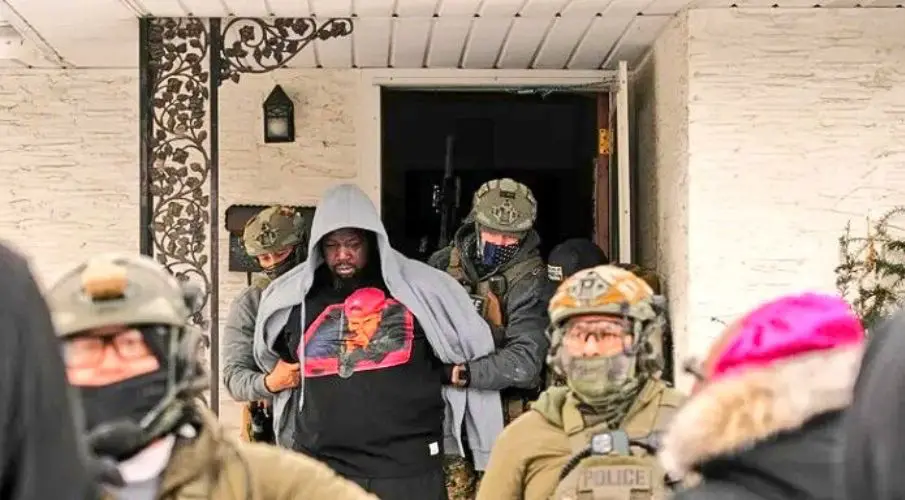
Federal Judge Patrick J. Schiltz of the U.S. District Court for the District of Minnesota has done something that is rare in its clarity: he has personally summoned the leadership of the immigration authority to court, as a consequence. The acting head of Immigration and Customs Enforcement is to explain why people remain in detention even though courts have ordered their hearings. And why court orders appear to have no effect, why access to detainees is barely possible. We speak here from our own experience, that in some cases we waited eight hours and were then expelled from the facility, or searched for people for days because allegedly no A-number existed yet, or the detention facility number was said not to be known.
Every person held by ICE is managed through several numbers that serve different purposes. The most important is the A-number. It is the personal identification number and accompanies the individual throughout the entire immigration system. Files, detention decisions, applications, and possible deportations all run through it. The A-number remains in place regardless of where the person is located or what stage the proceedings are in. In addition, there is the case number, also called the EOIR number. It does not belong to the person, but to a specific court proceeding before an immigration court. If someone has multiple proceedings, multiple case numbers exist as well. Complementing this is the detention facility number. It is an internal number of the respective place of detention and serves exclusively to record where a person is currently being held. If someone is transferred, this number changes. Taken together, these identifiers therefore describe different things: who someone is, which proceeding is underway, and where the person is currently being detained.
The tone of the judicial order is calm, but unmistakable. For months, the court had shown patience, even though the federal government had sent thousands of officers to Minnesota to arrest people without making even minimal preparations for the foreseeable wave of applications, lawsuits, and detention reviews. The consequences had been known. They were ignored nonetheless. Specifically, the issue concerns detention review hearings. People were detained, courts set deadlines, the administration promised remedies - and then failed to comply once again. The judge notes that it was repeatedly assured that the obligation to comply with court orders was acknowledged. Yet the violations continued. That, he states, has now forced him to take a step he himself describes as extraordinary.
Extraordinary is not only the summons of an agency head. Extraordinary is the finding on which it is based. When a court determines that milder measures have been tried and have failed, there is little room left for excuses. Then it is no longer about an administrative mishap, but about structural failure. About a practice that has detached itself from the legal framework. The fact is that in Minnesota more than 80 percent of detainees are innocent people, including many children. Just yesterday, Trump instructed the so-called border coordinator to take control of the escalated operation in Minnesota after a second fatal incident involving federal officers occurred within a single month. At the same time, courts are considering motions by the state and cities seeking to halt the massive wave of searches and arrests. Legal and political escalation are now proceeding in parallel.
This becomes particularly clear in the individual case the judge names. A man whose name is abbreviated for protection reasons - Juan T.R. - received a court order in mid-January for a detention review within one week. Days later, he was still in custody. Not because of new facts, but because the order was simply not implemented. If he is released, the judge states, the personal summons will be withdrawn. Otherwise, it will not. This is more than procedural law. When the executive branch fails to execute judicial decisions, the balance of power begins to slip. The rule of law does not function through good intentions, but through compliance. Those who detain must explain themselves. And those who ignore orders must be held to account.
In Minnesota, it is now becoming visible what happens when enforcement is accelerated without considering legal protection. Courts become a corrective, not out of principle, but out of necessity. That a judge resorts to the sharpest measure is not a sign of activism. It is a sign that other means have failed. The question hanging over these proceedings is simple and uncomfortable at the same time: does the law apply even when it is inconvenient? Or only when it suits?
To be continued .....
Updates – Kaizen News Brief
All current curated daily updates can be found in the Kaizen News Brief.
To the Kaizen News Brief In English


Aber was passiert, wenn die Anordnungen weiter ignoriert werden.
Die Vorgeladenen nicht erscheinen?
Trumps Regierung sie weiter schützt.
Wer ist dann da um all die Judikative umzusetzen?
Wenn die Exekutive auf Bundesebene total auf Trumps Linie ist und zum Teil auch auf Staatenebene Trumps Linie folgt.
Wer ist dann noch da, dass Recht, was gesprochen wird, umzusetzen?
So löscht man Demokratie und manifestiert Diktatur.