
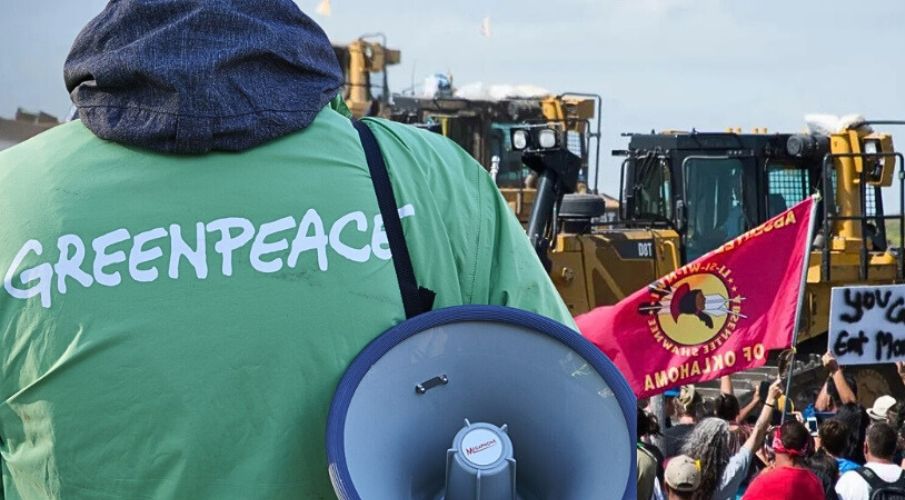
A verdict is handed down. Harsh. Relentless. And perhaps more consequential than the blunt moralism of a jury ruling can grasp. It strikes Greenpeace - but it concerns us all. It is not only about 600 million dollars. It is about a principle. About language. About the right to raise one’s voice. About the last, sometimes only protection of the individual against power: the word.
The background? In 2016, thousands of people protested - Indigenous groups, environmentalists, activists - against the construction of the Dakota Access Pipeline. The protests, near Standing Rock in the U.S. state of North Dakota, became a symbol of resistance against the ruthless destruction of nature and culture. Greenpeace publicly supported the protests - with words, with reach, with symbolic force. Energy Transfer, the company behind the pipeline, saw this as a targeted campaign against its interests. It sued. Seven years later, in 2023, the decision comes. A court in North Dakota - a state that has no anti-SLAPP laws, meaning no protective mechanisms against lawsuits intended to silence critics - declares one of the most well-known environmental organizations in the world liable. Because it supported a protest movement. Because it allegedly was responsible for a pipeline construction company in the United States suffering reputational damage. Because its sympathy for Standing Rock - a place where Indigenous people stood up for water, land, and dignity - was interpreted as economic harm.
A company triumphs. And the reaction? Applause. Not for justice. But for the new weapon. A precedent, as attorneys from all camps now say - from law firms, universities, NGOs. The message: Blood in the water. Because now, as Thomas Julin, an experienced First Amendment attorney, explains, every corporation will ask itself: Why don’t we sue as well? Why not drag critics into court, into bankruptcy, into silence? Why not instrumentalize a system that was once created to deliver justice - and not to suppress opinion?
If even Exxon celebrates, if oil companies hail the ruling as a tactic, if social networks are flooded with comments that see this verdict as a tool of intimidation - then one has to ask who in this country is still safe to speak. Greenpeace had lawyers, money, reach. And yet collapse looms. But what happens to small groups, to activists without a law firm, without millions, without press? The ruling was legally clear. But morally? Civilizationally? Perhaps a Pyrrhic victory that one can celebrate - if one is willing to pay a price greater than 600 million dollars: the price of free speech.
The ACLU warns, the Foundation for Individual Rights warns, even conservative jurists warn. And yet, the signal has been sent. The front shifts. Away from an open society. Toward a tribunal of interests that no longer debates but calculates. If the lawsuit becomes a club, then the courtroom becomes a battlefield. And the word loses its protection.
Friedrich Dürrenmatt once wrote: The worst of all dictatorships is the dictatorship of the decent. One might add: The most dangerous form of justice is the one that can no longer be questioned.
This ruling, many say, is only the beginning. And it is not just an attack on Greenpeace. It is an attack on the right to be inconvenient. On the human right to remain inconvenient. The Heritage Foundation will clap its hands. The think tanks will applaud. And some business lobbyist will lean back in his leather chair, satisfied. But the fight is not over. It has only just begun. And the ruling - as American as it may appear - could soon have an impact on this side of the Atlantic as well. Because when language falls, it falls everywhere.

Investigative journalism requires courage, conviction – and your support.
Please also strengthen our journalistic fight against right-wing populism and human rights violations. We do not want to finance ourselves through a paywall so that everyone can read our research – regardless of income or origin. Thank you very much!


