
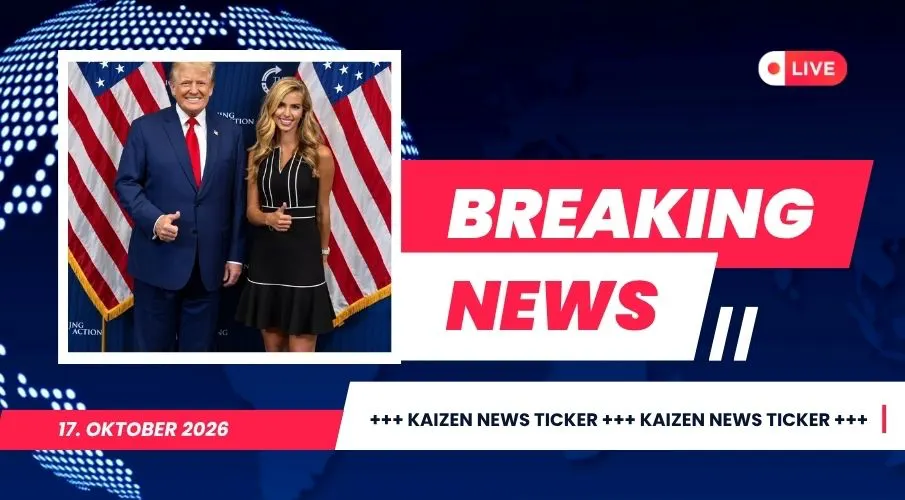
Today in our news briefs: Four stories that could hardly be more different.
In Indonesia, orangutans are suffocating in devastating wildfires. Sampurna died with blackened lungs. The fires are destroying vast stretches of forest as desperate wildlife rescuers struggle to save the last survivors. Hungary is ending Orbán's years-long blockade of Ukraine, opening the way for further EU membership negotiations. Greenland is standing up to Trump's attempt to grab its natural resources and opposing the destruction of its marine environment. And Zelenskyy gets an entire room laughing in Brussels when he's asked about Trump's attempts to shift the blame. But behind that laughter lies a bitter reality: Washington is putting pressure on Ukraine while Putin's war continues to claim lives.
Sampurna Died With Blackened Lungs: Indonesia's Forests Are Burning, Orangutans Are Suffocating in the Flames

Sampurna lay on the ground of a palm oil plantation in Indonesia. The orangutan was gasping for air, his body writhing in pain. When rescuers found him on August 30, his condition was already life-threatening. Less than 12 hours later, he was dead. During the examination that followed, veterinarian Karmele Llano Sanchez discovered unusually dark lungs. She compared their condition to those of a heavy smoker. Sampurna had no way to escape the smoke. His death represents a catastrophe that has been tearing through the forests of Borneo and Sumatra since July.

Indonesia is experiencing its worst wildfires in 10 years. A severe El Niño weather pattern is making the drought worse. According to government warnings, the fires could continue through November. Between January and July alone, around 202,000 hectares of land burned. Official figures for the following months are unavailable. Environmental organizations estimate that at least another 600,000 hectares have been destroyed since then. For comparison, fires destroyed nearly 960,000 hectares in 2015. The smoke has now reached Singapore and parts of Malaysia. Schools have had to close, and respiratory illnesses are on the rise.

The situation for the orangutans is particularly desperate. Their 3 species are found only on Borneo and Sumatra. The rescue organization Yayasan Inisiasi Alam Rehabilitasi Indonesia (YIARI) is now caring for 90 animals at its facility near Ketapang in West Kalimantan. Since August, its staff have rescued 49 orangutans. Over the previous 3 years, they had rescued just 3 to 5 annually. The numbers tell the story of a forest offering its inhabitants less and less protection.

More than 200 people work for the foundation, including veterinarians and firefighters. After receiving reports of endangered animals, rescuers use drones to survey the fire zones. Rescue teams then often drive for hours through devastated landscapes. Tranquilizers and capture nets allow them to bring the great apes to safety. Even at the rehabilitation center, smoke hangs in the air. Some rescued animals have since been returned to safer forest areas. Karmele Llano Sanchez has worked in Indonesia for more than 20 years. She warns that the consequences could continue long after the fires. The remaining forest areas are getting smaller and smaller. As a result, orangutans are losing food and habitat. Starvation could eventually become just as deadly as the fires. Animals are already fleeing onto palm oil plantations, where they face danger once again.
For now, the rehabilitation center still has enough space. How long that will last, Sanchez doesn't know. Nobody can reliably estimate how many more orangutans may need to be rescued. As the flames continue consuming the forests, injured animals wait in medical cages for their next treatment. Sampurna never got that chance.
(Photos: Victor Fidelis Sentosa, Willy Kurniawan)
Orbán's Blockade Falls: Hungary Opens Ukraine's Path to Europe

For years, Viktor Orbán stood in Ukraine's way as it sought to join the European Union. Now his successor, Péter Magyar, is sitting down with Volodymyr Zelenskyy and agreeing to something that had become almost unimaginable under the previous government: Both countries want to resume cooperation. At their first official bilateral meeting in Brussels on October 16, the 2 leaders agreed on renewed talks between their ministries and reciprocal official visits. Behind the diplomatic friendliness lies a political break with years of Hungarian obstruction.
Budapest had already dropped its opposition to continuing Ukraine's EU membership negotiations on October 7. On October 13, the European Union subsequently opened 2 additional negotiating areas: the internal market, and competitiveness and inclusive growth. That means 4 of the 6 areas are now open. Zelenskyy thanked Magyar for ending the blockade. Kyiv hopes to open the remaining 2 areas before the end of the year.
The price of this rapprochement largely came down to minority rights. For years, Hungary had accused Ukraine of restricting the rights of the Hungarian-speaking population in Transcarpathia. On October 12, the Ukrainian parliament passed amendments to its education law, allowing national minorities more opportunities to receive instruction in their native languages. That was exactly what Budapest had been demanding. After the meeting, Magyar said both governments wanted to continue discussing the protection of their minorities. Hungary was also prepared to use its diplomatic resources to help achieve a ceasefire and lasting peace. Trade issues were discussed as well, particularly agricultural products. Dates for the reciprocal visits still need to be agreed upon.
Since Magyar took office in April 2026, Hungary has been changing its approach toward Kyiv. The demand for additional guarantees protecting minority rights remains in place. But the years-long blockade with which Orbán repeatedly held up Ukraine's accession has fallen. While Russia continues waging war against Ukraine, at least one door is opening in Brussels, a door Kyiv had been left waiting outside for far too long.
Trump Declares Greenland His Property, but Its Parliament Throws a Wrench Into His Resource Plans

Donald Trump is already talking about "our new and beautiful Greenland," as though the enormous island in the North Atlantic belonged to him. On October 14, he grandly announced the imminent start of extensive exploration for oil and other natural resources. Supposedly, enormous quantities of easily accessible oil lie beneath the island, more than in almost any other region of the world. He also claimed Greenland was unmatched in its military importance to America and Europe. Greenland's government immediately contradicted him. No new permits for oil and gas exploration have been issued since 2021. Industrial production of those resources has never taken place on the island at all. Trump is already talking about the spoils while the people who live there are still deciding what may happen to their land.

Greenland's parliament has now voted unanimously in favor of a resolution calling for a temporary halt to deep-sea mining. The government is supposed to draft a corresponding bill. The ban is intended to remain in effect until December 31, 2029, with the possibility of extending it for another 2 years. The government also supports the resolution and plans to introduce the legislation during the spring 2027 parliamentary session. That means mining has not yet been legally prohibited. But every member of parliament has come out against rushing into exploiting the seabed. WWF's Greenland branch welcomed the decision. Protecting the oceans and the livelihoods of the population must be taken seriously, particularly when new forms of resource extraction threaten them. Deep-sea mining could damage fragile marine habitats and endanger biodiversity. For an island whose people are closely connected to the sea, such consequences go far beyond economic calculations.
Just 1 month ago, the United States reached a security agreement with Denmark and Greenland that provides for a stronger American military presence. Now Trump is already claiming the island as his own through his choice of words and announcing resource exploration that the local government opposes. Greenland is a self-governing territory within the Kingdom of Denmark. The people who live there still decide its future. And an American president who apparently already considers the map his deed of ownership won't change that.
Zelenskyy Gets Brussels Laughing: He Answers Trump's Blame Game With Silence
A question about Donald Trump, a long look down at the podium, and suddenly the whole room bursts out laughing. At the EU summit in Brussels on October 16, Volodymyr Zelenskyy was asked whether the American president was making him the scapegoat for his own political troubles. The reporter pointed to Trump's declining popularity and high diesel prices in the United States. The war Trump started in the Middle East also appeared to be going differently than he had hoped. With just weeks to go before the American midterm elections, pressure on the White House was growing. Zelenskyy fell silent, looked down at his notes, and finally looked up with a smile. Everyone in the room burst out laughing. "This is my answer," the Ukrainian president said.
Behind that laughter are decisions whose consequences in Ukraine are anything but funny. Just 2 days earlier, the country's access to Starlink satellite internet had been restricted without warning. According to reports, Elon Musk had previously visited the White House to discuss those restrictions. A person familiar with the events claimed that Musk and Trump had been involved together. At the same time, Trump stepped up his public attacks on Zelenskyy because Ukraine was continuing to bomb Russian oil refineries. Washington had previously eased sanctions on Russian oil in an effort to lower American diesel prices before the midterm elections.
While Putin continues his war of aggression, the very country defending its cities against Russian missiles is now coming under pressure. Ukraine's attacks on Russian refineries target sources of revenue that Moscow can use to finance its war. Trump, meanwhile, wants cheaper fuel for American drivers. The military necessity of Ukraine's resistance is being measured against gasoline prices during an American election campaign.
European heads of state and government once again stood behind Ukraine at their meeting. Whether everyone present shared Zelenskyy's unspoken answer politically cannot be determined from their laughter alone. But the moment was clear enough. Trump is blaming Kyiv for economic difficulties while his own decisions are drawing growing criticism. Zelenskyy didn't need a long explanation. One glance at his notes was enough, and everyone in Brussels got the joke.


