

Today in our brief news:
8,755 children in Trump's immigration detention facilities, including 562 babies and toddlers under the age of 4. 22,565 deportations of minors. And our investigations into this are far from over.
While Trump claims he deserves no fewer than 8 Nobel Peace Prizes, drone strikes on Russian Yandex data centers are partially knocking out digital services in 6 countries. Meanwhile, Republicans in Washington are growing increasingly worried about losing the Senate in November. If that happens, Trump could be in for a nasty surprise when it comes to his judicial appointments.
8 Nobel Peace Prizes for Trump? The President Blames Norway

Donald Trump has once again missed out on the Nobel Peace Prize, and apparently Norway is now supposed to pay for it. After the Nobel Committee awarded the prize to South African human rights lawyer Navi Pillay, the American president posted a nearly 600-word complaint on his Truth Social platform at 11:39 PM Friday. He had ended 8 wars and therefore deserved 8 Nobel Peace Prizes, Trump declared. The decision was an "indelible stain on Norway." On Saturday, he continued his attacks. The idea that someone else might receive an award for peace now seems to be treated as a personal insult inside the White House.
Trump pointed to the return of Israeli hostages, the capture of former Venezuelan leader Nicolás Maduro, and the supposed elimination of Iran's nuclear program. Yet neither he nor the United States had received the Nobel Peace Prize. His list, however, had some serious flaws. Several conflicts Trump claims to have ended are still ongoing, including the fighting between Israel and Hamas and between Israel and Iran. Indian Prime Minister Narendra Modi also contradicted Trump's claim that Washington had settled the conflict between India and Pakistan. The United States had not been involved in the ceasefire. Trump also shared someone else's post describing Pillay as a declared enemy of America and Israel.
The award for Pillay is likely to sting Trump particularly badly. The former judge in South Africa and at international courts investigated war crimes and later headed the United Nations' human rights work as UN High Commissioner. Most recently, she led a UN commission of inquiry that concluded Israel had committed genocide against Palestinians in the Gaza Strip. Israel rejects that finding. The Norwegian Nobel Committee honored Pillay's commitment to an international legal order intended to make peaceful conflict resolution possible and increasingly under pressure. That very legal order is something Trump himself has repeatedly attacked. His administration imposed sanctions on judges of the International Criminal Court, where Pillay previously served. Pillay herself, however, is not under US sanctions.
Back in January, Venezuelan opposition politician María Corina Machado, the previous year's Nobel Peace Prize winner, had presented Trump with her medal. He later described the gesture as a wonderful expression of mutual respect. Of course, that didn't mean she could transfer the actual award to him. Pillay learned of her honor while attending an international lawyers' conference in Nuremberg. Addressing an applauding audience, she responded to Trump's long-standing desire for the prize with dry humor: "If you applaud a little more, maybe I'll share the prize with Trump." The White House did not immediately respond to a request for comment on his attacks against the decision. The president, meanwhile, had already worked out his next calculation: 8 wars ended, 8 Nobel Prizes deserved. Apparently Norway owes him quite a bit.
3 Attacks, 6 Countries Affected: Russia's Digital Infrastructure Breaks Down in Multiple Places

Three drone strikes on data centers belonging to Russian technology company Yandex within 4 days, and suddenly even everyday things stop working. Following the attack on a facility in Vladimir on October 11, disruptions spread across 6 countries. In Russia, people temporarily couldn't order taxis, pay for purchases, or have groceries delivered. Even real-time public transportation information disappeared from digital maps. Electric scooters were also temporarily unavailable for rent in some places. Numerous Yandex services were affected, including Yandex Go, Yandex Pay, and Yandex Music. The movie streaming service Kinopoisk and connected smart home technology using the Alice voice assistant also suffered partial outages.
Things became especially unpleasant for businesses that run their operations on someone else's servers. At Dodo Pizza, customers temporarily couldn't order delivery or pickup, and in some cases, even ordering inside the restaurant stopped working. Orders that had already been paid for but not delivered were supposed to be refunded. Electronics retailer M.Video reported disruptions to its website and app. Supermarket chains including Magnit and Lenta were also affected. Banks and transportation services experienced problems as well. Some companies pointed to outages at a cloud computing provider without explicitly naming Yandex. In St. Petersburg, even Pulkovo Airport's website was temporarily unavailable. Planes continued taking off and landing. At car rental company Delimobil, new customer documents temporarily had to be checked manually.
The consequences for government agencies are even more serious. At 6 AM Moscow time on October 11, Russia's agricultural watchdog placed 2 nationwide information systems into emergency operating mode. "VetIS" is used to monitor animal products such as meat and milk. Its connected "Mercury" system tracks their journey from producer to store. "Saturn" monitors the use of pesticides and other agricultural chemicals. Since March 2026, it has also been used to notify beekeepers about planned pesticide applications. The agency attributed the disruptions to a power outage in the Vladimir region. However, it did not confirm any direct connection between these government systems and Yandex Cloud.
People outside Russia also had to deal with the consequences. In Kazakhstan and Kyrgyzstan, taxi bookings and delivery services were only partially working. In Uzbekistan, some customers couldn't check fares or track bus movements. Belarus reported problems with ride services and food orders, while Armenia also experienced outages in Yerevan. Yandex explained that its technical infrastructure was distributed across several countries. If an important component failed, it could affect users whose data was stored on servers in completely different countries. Quite a remarkable dependency that only becomes apparent when the screen stops responding.
The technical damage is substantial. According to its own outage report, Yandex Cloud lost 2 server locations simultaneously: ru-central1-a in Vladimir and ru-central1-b, which had already been down since the attack on Sasovo on October 8. The remaining locations, ru-central1-d and ru-central1-e, continued operating. Numerous databases could be switched over, while others remained inaccessible or allowed users only to read existing data. Writing data to S3 storage partially failed, and the Yandex Monium monitoring system was out of service. Even contacting technical support was only possible on a limited basis. Yandex advised customers to switch to other data centers.
Sasovo was also home to the "Chervonenkis" and "Lyapunov" supercomputers, while the "Galushkin" computer was located in Vladimir. Whether these systems were damaged remains unknown. On October 9, another attack hit the data center in Kaluga, where several technical units failed completely. Yandex had already reached agreements with other providers to accelerate the transfer of affected customer services. By mid-2026, 64,000 customers were using the company's cloud computing services. How many are affected now remains unclear. On October 10, Yandex had already updated its contractual terms to include a liability exemption for extraordinary events, explicitly including drone strikes and missile attacks. The company had therefore already expanded its legal protection before the next data center was hit the following day.
Trump Could Lose His Last Line of Support: The Senate Might Make Him Pay for 2016
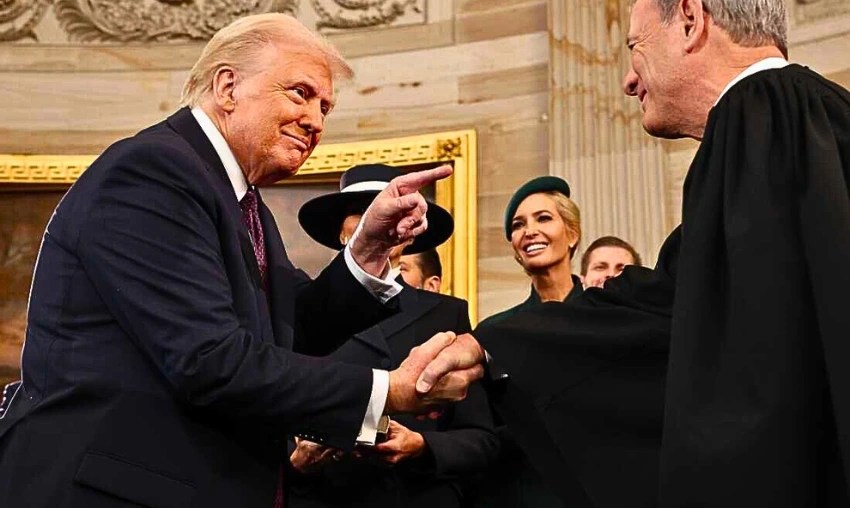
Donald Trump has grown accustomed to the Senate rubber-stamping his personnel choices, or at least organizing the necessary majorities to get them through. That convenience could end in January. Democrats have a chance to take the Senate away from Republicans in November's congressional elections. They still need to gain 4 seats, including at least 2 in states Trump won by double-digit margins in 2024. The election remains wide open. But the mere possibility is enough to have Republican senators publicly talking about the end of Trump's political freedom to do as he pleases.
The reason lies with the Supreme Court. If Justice Samuel Alito were to retire or another seat became vacant, Trump would have to get his nominee through a potentially Democratic-controlled Senate. Chuck Schumer has already announced his intention to block additional judges from Trump's political camp. Speaking at an event with Democratic donors, Barack Obama warned that another Republican majority could give Trump 2 additional years to reshape the federal courts according to his wishes. Senator Ted Cruz fears Democrats could leave a vacant seat unfilled all the way until the end of Trump's term.
The fact that Republicans are outraged about this carries a certain historical irony. In 2016, their then-majority leader Mitch McConnell refused to hold a vote on Merrick Garland, Barack Obama's nominee. The seat remained vacant for more than 1 year. Only Trump was allowed to fill it, with Neil Gorsuch. Democratic Senator Ruben Gallego explicitly points to that move and wants to apply the same standard. Republicans could now find themselves defeated by the very political weapon they demonstrated how to use. Since Clarence Thomas was confirmed in 1991, no Senate controlled by the opposing party has confirmed another party's nominee to the Supreme Court.
John Thune is already warning about tax increases and supposedly socialist policies. Josh Hawley paints a picture of complete paralysis: no judicial confirmations, no new cabinet secretaries, possibly not even a budget being passed. John Kennedy considers the confirmation of a Trump-appointed justice under a Democratic majority about as likely as someone mistaking him for Brad Pitt. Senator Darline Graham is even explicitly campaigning for a Republican Senate majority by raising the possibility of Alito retiring. The prospect that others might soon exercise the very same parliamentary rights Republicans have claimed for themselves for years is causing an astonishing amount of anxiety.
Democrats would face limits, too. Even with majorities in both chambers, they would often need additional Republican votes to override Trump's vetoes of ordinary legislation. In the Senate, most measures require 60 votes to end a filibuster. John Fetterman and Angus King oppose eliminating that threshold. Tim Kaine is therefore working on budget legislation that could reverse cuts to Medicaid and food assistance. Ruben Gallego has raised the possibility of taxing data centers and artificial intelligence. Chris Van Hollen is also calling for policies that deliver concrete improvements for people before the 2028 presidential election. Peter Welch would even be willing to confirm professionally qualified Trump nominees.
Trump has already come up with 2 responses to the possibility of losing power. On the one hand, he says he wants to block Democratic legislation. On the other, he says he could probably make deals with Democrats. What remains of those ideas will be decided in November. A Democratic Senate majority could launch investigations into Trump and his family and compel testimony through subpoenas. His appointments would suddenly become negotiable. And hanging over every vacant judicial seat would be the memory of Merrick Garland. Republicans showed in 2016 just how long a door can be kept shut. Now they're afraid of finding themselves standing on the other side.
Still a Hell of a Lot of Work to Do: 8,755 Children in Trump's Immigration Detention Facilities, Including 562 Babies and Toddlers

The American immigration enforcement agency ICE has detained 8,755 children since Donald Trump returned to the White House. Among them are 562 babies and toddlers who aren't even 4 years old. Children who are just learning to speak, whose entire world revolves around being close to their parents, and who now show up in the records of a deportation agency. The figures run through August 8, 2026. They describe a development that is shocking even against the backdrop of America's immigration policies, which have been controversial for years. In total, 8,592 children were arrested by ICE. In July 2026 alone, there were more than 1,100. Compared with the same period the previous year, arrests of children more than doubled in the first half of 2026. Washington likes to talk about strict enforcement of immigration law. Meanwhile, detention records list children, the overwhelming majority of whom have neither been convicted of a crime nor charged with one. Violations of immigration law in the United States are predominantly civil matters. For the minors affected, that distinction means little once the door of a detention facility closes behind them.
The development becomes particularly clear when looking at daily detention figures. While an average of 23 children were held in ICE custody each day in 2024, that number rose to an average of 198 under Trump's second administration. At times, the number of minors held simultaneously exceeded 500. The curve in the government's detention statistics shoots sharply upward after Trump takes office. It later drops again but remains far above the figures from previous years. Behind those movements are children whose whereabouts can change with a single administrative decision. How long individual minors are detained cannot be determined from daily occupancy figures alone. That's precisely why the distinction matters: 8,755 is the total number of children affected, while 198 represents the average daily detention population. Both figures tell the story of the same administration, but from different sides of its policies.
The picture becomes even harsher once the children leave detention. In 54% of recorded releases from detention, the outcome was deportation from the United States. Only 27% ended with release inside the country. Another 15% were recorded as voluntary departures. That word deserves special attention. A decision can be labeled voluntary on a government form while the family involved has spent weeks dealing with the consequences of a threatened deportation. However, the figures do not reveal whether or under what pressure any individual departure took place. What the statistics show, first of all, is how rare release within the United States has now become. Under previous administrations, it had long been the most common outcome for children in immigration detention. Under Trump, that relationship has fundamentally changed.
In total, the federal data analyzed records 22,565 deportations of children since Trump's return. A large share involves minors apprehended immediately after crossing the border. But 1,460 deportations followed the apprehension of children inside the United States. These may include children who had been living with their families in the United States for years, attending school there, and whose everyday lives had long since become American. The number of such deportations has increased substantially compared with previous years and also significantly exceeds the corresponding figures from Trump's first term. The distinction is considerable. Apprehending a child at the border and taking a child out of an established family life that has existed for years are 2 different things. The administration includes both in its deportation statistics.
The figures are based on official records obtained from ICE by the Deportation Data Project through public records requests and court proceedings. Researchers from the universities in Berkeley and Los Angeles are involved in this research project. For arrests and detention stays, children are counted only once in the overall totals, even if they were affected multiple times. For deportations, however, every individual deportation event is counted. In addition, government records contain only birth years, not complete dates of birth. Age calculations were therefore deliberately conservative. The actual number of minors affected is likely higher.
562 babies and toddlers under the age of 4 in American immigration detention. You have to read that number several times to grasp what has become government practice under Donald Trump. Children who have neither committed a crime nor made any decision about entering the country are being held by a federal agency. A total of 8,755 minors since he took office. And 22,565 deportations of children. Behind every one of those numbers are decisions made by adults, carried out by government agencies and politically accounted for in Washington. Under this administration, the United States has grown accustomed to conditions that would immediately trigger international investigations and fierce protests in any other country. Here, they're sold as successful immigration policy. And while Trump talks about national security, children sit in detention whose only supposed offense is being in this country with their parents.
To be continued ...


