
On February 10, Donald Trump disclosed that he had purchased between $1 million and $5 million worth of shares in Axon Enterprise, the company that manufactures TASER conducted energy weapons, along with police body cameras and law enforcement software. Two weeks later, U.S. Immigration and Customs Enforcement, ICE, announced that it was seeking a contractor for a procurement that appeared to be tailored specifically to the products of that very company. The sequence of events became public on Monday.
The contract is substantial. It would run for five years, carry a value of $220 million, and include 17,800 conducted energy weapons, unlimited ammunition cartridges, and a broad range of support services. If awarded, it would quadruple ICE's current inventory while replacing roughly 4,300 devices already in service. The solicitation explicitly calls for the transition to the TASER 10, replacing older models that were likewise manufactured by Axon. It specifies technical requirements unique to that model, including an operating range of approximately forty-five feet and ten individually targetable probes. Government procurement specialists say those specifications effectively exclude every competing manufacturer from the outset.

That is precisely why conflicts of interest involving a president matter. The disclosure shows that Donald Trump purchased up to $5 million worth of Axon stock on February 10. Two weeks later, ICE issued a solicitation for approximately $220 million worth of TASER devices. Whether coincidence or not, precisely this kind of timing raises the question of whether a president should hold substantial individual stock positions in companies whose business can be directly affected by decisions made by his own administration.
Our reporting shows that the purchases were overwhelmingly made in the range of $1 million to $5 million per position, pointing to an exceptionally large investment portfolio. Nearly every disclosure carries the notation, "Notification Received Over 30 Days Ago: Yes." That means the transactions were not disclosed promptly after they occurred. Further reporting also found that the applicable filing deadlines were not properly met.
Following the announcement, Axon's stock surged by more than twenty-two percent, even though it remains down by more than one quarter over the course of the year.
The concern voiced by Jordan Libowitz of the bipartisan watchdog organization Citizens for Responsibility and Ethics in Washington is difficult to ignore. Trump, he said, invested in a company whose business expands whenever his own administration intensifies immigration enforcement. Deborah Fleischaker, who served as ICE's Acting Chief of Staff under the previous administration and now advises UnidosUS on immigration policy, described the situation as a warning sign. She said it is unwise to own stock in a company directly affected by decisions made by the very government one leads. She added that she would have stayed far away from any impropriety, and even from the appearance of one.

The solicitation came at a time when ICE and other agencies within the Department of Homeland Security were preparing to receive tens of billions of dollars in new funding under the legislation Republicans gave the self-congratulatory title One Big Beautiful Bill Act. The White House rejected any suggestion of wrongdoing. Press Secretary Anna Kelly said there were no conflicts of interest and that Trump's investments were being managed by independent third parties.
Yet the sequence of events alone raises a question about the integrity of the office. A president whose newly disclosed financial holdings include a major investment in a manufacturer of law enforcement equipment is leading an administration that is expanding immigration enforcement while one of its own agencies is moving forward with a massive procurement of that manufacturer's products. Melanie D'Arrigo, executive director of Campaign for New York Health, put it bluntly on Monday. Trump, she said, purchased up to $5 million worth of stock in a company seeking an ICE contract that specifically requires products only that company supplies. That, she said, is corruption. There is a reason, she added, why Trump dismissed the government watchdog responsible for investigating corruption and conflicts of interest at the highest levels of government.

This case does not stand alone. Democrats on the House Oversight Committee and several watchdog organizations have now compiled lists documenting dozens of alleged and substantiated conflicts of interest that they say have enriched Trump and his family by billions of dollars during his second term alone.
Another case became public on Sunday. Trump and Commerce Secretary Howard Lutnick reached a $1 billion agreement with Kazakhstan to develop one of the world's largest untapped tungsten deposits, a metal essential for warheads, fighter aircraft, semiconductor chips, and countless other technologies. We had already reported on June 29 in our news briefs under the headline, Tungsten for the Sons: How Trump and His Commerce Secretary Turned Kazakhstan Into a Family Business. Within weeks of the project taking shape, investors connected to Dominari Securities, a firm partly owned by Donald Trump Jr. and Eric Trump, acquired a twenty percent stake in a company tied to the Kazakh tungsten venture. Lutnick's sons are also reported to have helped raise capital for one of the project's financial backers, a role expected to earn them millions of dollars. Former Labor Secretary Robert Reich described the corruption as breathtaking.

What emerges here has an old name. Niccolò Machiavelli argued that a republic is not corrupted because bad people live within it, but because its institutions no longer bind private interest to the common good. As long as those bonds endure, a republic can withstand personal ambition. Once they break, public office becomes spoils, and the law becomes a tool in the hands of the person who wields it. That fracture is on full display here. A nation is not property to be used at the discretion of its steward. It is a public trust. Anyone who removes the watchdog responsible for holding him to that distinction has already made his choice.
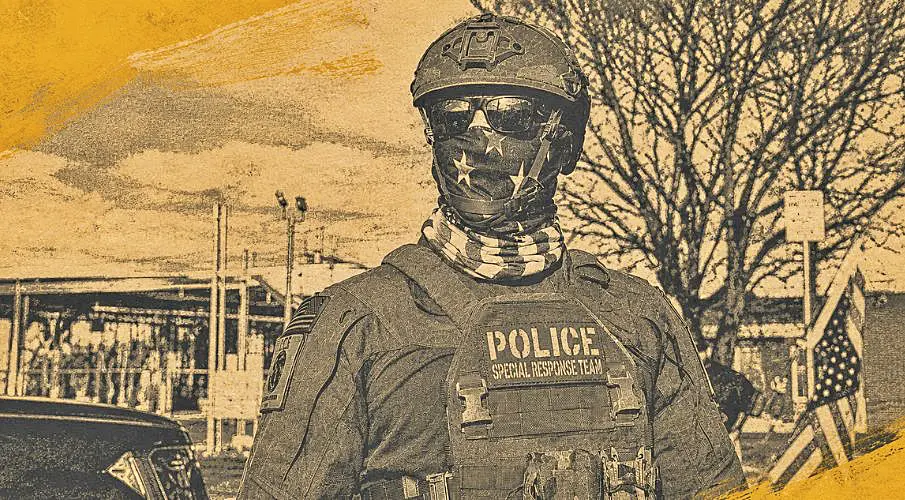
What ultimately sets this case apart is its subject. It is not about a construction project or a distant mine on the Central Asian steppe. It is about a weapon that forces human beings to the ground with an electric shock, aimed at people facing deportation. The more aggressively the agency acts, the more of these devices it needs, and the more valuable the president's financial stake in their manufacturer becomes. That is how a cycle is created in which power and profit reinforce one another. At the end of that calculation stands a sentence that one hesitates to write, yet comes closest to the plain truth. Every act of pain inflicted by the state becomes another entry on the profit side of the ledger for the man directing it.
Updates – Kaizen News Brief
All current curated daily updates can be found in the Kaizen News Brief.
To the Kaizen News Brief In English


