
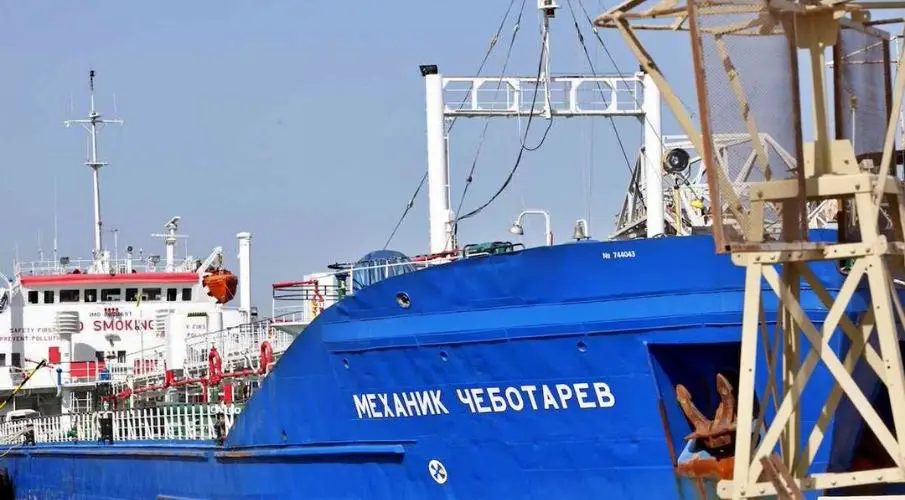
Russia is shifting its export route. Not openly, not directly, but through transfers at sea. Tankers meet off coasts, transfer cargo, and then part ways again. What arrives afterward has a different origin, at least on paper. The sanctions remain, the trade continues. The pressure comes from multiple directions. The European Union has enforced its embargoes, traditional routes have broken down. At the same time, the winter ensured that only ice-class vessels are allowed to enter Russian ports. Other tankers remain outside. Those who want to sail require escort by icebreakers. That slows everything down.
The solution is a detour. Ice-capable tankers make short trips from Russian ports such as Ust-Luga. The cargo is then transferred at sea. Off Port Said, off the coast of Togo, later also off Morocco. From there it continues to Asia, especially to Singapore. In January, 240,000 tons of naphtha change hands this way. In February, it is more than 200,000 tons. In March, additional tankers head toward transfer points near Augusta in Italy. The effect is visible. Routes become shorter, vessels are used more efficiently. The shortage of tankers is bypassed. At the same time, a system is emerging that is less controlled. The transfers take place at sea, often under difficult weather conditions.
This development was clear. Transfers are nothing new. But their frequency is increasing, the conditions are becoming worse, and the origin of the cargo is being deliberately obscured. As a result, the risk rises on multiple levels. More accidents, more collisions, more violations of sanctions.
The dangers are known. As early as 2020, Russia’s then Minister of Natural Resources, Dmitry Kobylkin, proposed banning this practice. In a letter to Vladimir Putin, he referred to more than 600 incidents in the Black Sea. Oil spills, marine life dies, chemical substances enter the water. Large tankers in particular are considered a risk. In the event of an accident, the damage would not be reversible. Despite these warnings, the method is now being expanded. What used to be a controlled operation is becoming a tool to bypass restrictions. The transports continue, only organized differently.
At the end stands a system that works, but at the expense of safety and the environment. The cargo arrives. The risks remain at sea, and so will the reporting in the weeks ahead.
To be continued ...
Updates – Kaizen News Brief
All current curated daily updates can be found in the Kaizen News Brief.
To the Kaizen News Brief In English


Diktatoren, Autokraten und Möchtegernkönige interessieren sich nicht für Menschen und Umfeld.
Gibt es einen großen Tankerunfall… „Pech gehabt“
Die Reichen sitzen fernab, fühlen sich weder betroffen noch zuständig.
Leiden werden wieder die Anderen.
Die Umwelt, die Meereswelt, die Menschen die direkt an den Küsten leben und arbeiten. Wie Fischer.
Bei der drastischen Ausweitung dieser Umladungen ist es keine Frage des ob, sondern wann es ein großes Unglückgeben wird.
mit unabsehbaren Folgen. 😞.
👍