
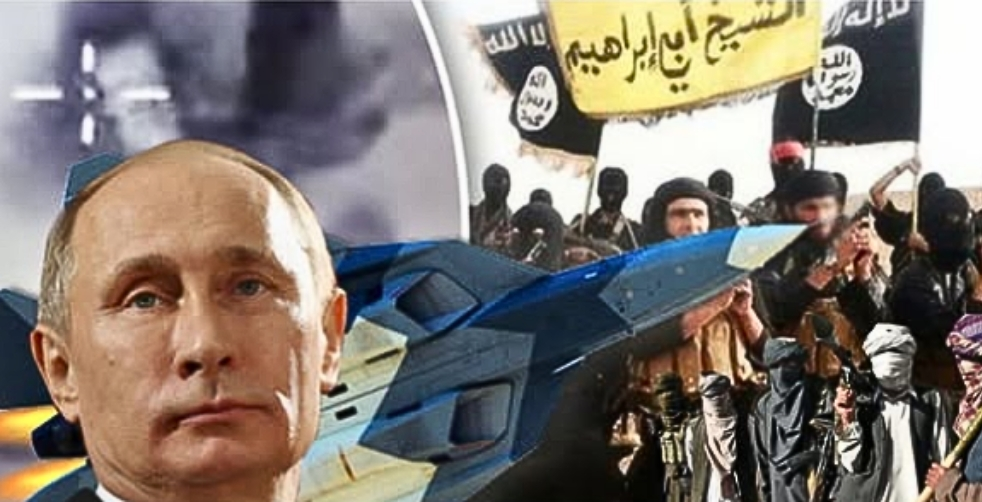
Al Qaeda is anticipating a third world war. And the organization does not plan to stand on the sidelines. A paper published in January 2026 under the title “The Future of Islam in Light of the Current Global Upheavals,” circulated through Arabic language channels of Al Qaeda in the Arabian Peninsula, describes a world moving toward a comprehensive conflict. It cites a more aggressive U.S. foreign policy, the war in Iran, the confrontation between the West and a bloc consisting of China, Russia, and Turkey, a breakdown of the alliance between America and Europe due to Donald Trump, as well as economic and religious crises as fertile ground for major wars.
The document is full of propaganda. Nicolás Maduro is invoked as proof of an alleged loss of faith in the West, Donald Trump is described as a foolish pirate who wants to remain in power even after the end of his second term. Yet behind the polemics lies a clear intention. Al Qaeda does not merely want to wait for the collapse of the existing order but to accelerate it. The goal is global jihad, the weakening of Western influence in Muslim majority states, and the gradual replacement of existing regimes with its own structures.
Anyone who believes the organization is a relic from the days of Osama bin Laden underestimates it. Reporting, including on Iran as a possible safe haven, as well as the current UN report on ISIS and Al Qaeda, explicitly warn against writing Al Qaeda off. The leadership is less visible than before. Saif al Adel, an Egyptian veteran, is considered the emir, yet even this role has never been officially confirmed. Many fighters do not know the top leadership; they follow local commanders. It is precisely this loose structure that forms part of its resilience.
Al Shabaab in Somalia and Kenya exploits clan conflicts, presents itself as a protector of smaller groups, and distributes humanitarian aid. In Mali, the affiliate controls larger areas than the government, collects taxes, runs courts, organizes security. In the Islamic Maghreb, Al Qaeda intervenes in political disputes and presents itself as an opponent of corrupt elites. In Pakistan, it recruits with the promise of strong order in a state suffering from economic and political crises. In Afghanistan, there are close ties to the Taliban.
After the defeat of the so called Islamic State in Syria and Iraq, Al Qaeda has regained its position as the leading jihadist organization. While ISIS relied on maximum brutality and an immediate caliphate state, Al Qaeda has chosen a different path. No demonstrative massacres for self promotion, but gradual infiltration of local structures, alliances with less radical groups, even tactical arrangements with Shiite Houthi militias in Yemen. “While Al Qaeda relies on power vacuums, Russia is also pursuing a strategy beyond classic alliances.”
The Enemy of My Enemy – Why Russia Cooperates with Islamists, and Why That’s No Accident
It begins with a sentence, spoken without irony but with full severity: “This is not Norway.” Margarita Simonyan, chief propagandist of the Kremlin, justifies the torture of a terror suspect. A Russian security officer had cut off the man’s ear after the attack on the Crocus City Hall concert venue in Moscow. The images went around the world. But for Russia it is no embarrassment. It is a demonstration. One that shows how far the state is willing to go and with whom.
Because Russia is no longer merely the authoritarian remnant of the Soviet empire. It is a system that moves in the shadows of order while forming alliances with those once considered mortal enemies: Islamist terrorist groups.
The next lines are not fiction. They are reality.
Hezbollah and the Houthis – The Shiite Arm of the Kremlin
Since Russia entered the war in Syria in 2015, groups such as Lebanon’s Hezbollah and Yemen’s Houthis have been not only fellow fighters on the battlefield but geopolitical partners. Together with Iran, Russia organized military operations, relied on shadow fleets for oil exports, and blocked UN resolutions against these groups. The Houthis attack commercial ships in the Red Sea under Iranian guidance, yet Russian ships remain untouched. Whoever is on the “white list” may pass. That is how pragmatism made in Moscow works.
Hamas – The Old Partner Still Breathes
Even during the Soviet era, Moscow supported Israel’s enemies across the Arab world. Today, that legacy lives on. The Kremlin courts Hamas leaders, supplies them with weapons—including, according to Ukrainian intelligence, arms captured from Ukrainian battlefields, and blocks UN Security Council resolutions condemning the group. Russia did not denounce the October 7 massacres, the murder of Israeli families, the abduction of children. Why would it? Hamas is useful in the war against the West. That’s what matters.
The Taliban – From Enemy to Resource Broker
After the U.S. withdrawal from Afghanistan in 2021, the moment of the opportunists arrived. Russia, which officially still listed the Taliban as a terrorist organization, began talks, first covertly, then openly. The Duma is now debating their removal from the terrorist list. The reason is as simple as it is cynical: Afghanistan possesses mineral resources worth billions of U.S. dollars. The Taliban cannot extract them alone. Russia stands ready. The former enemy becomes a resource partner. History knows no morality.
ISIS: The One True Enemy
Only one group remains outside this circle: the Islamic State. ISIS, and especially its Afghan branch, openly fight Russia. The attack on Crocus City Hall with more than 140 dead is only the latest example. ISIS needs no deals. No diplomacy. They believe only in their caliphate. And Russia stands on their enemy list. At the very top.
The Command Behind Red Walls
And while Russia cultivates its network of terror, a leaked document has surfaced that reveals how this system of violence is structured. It’s a classification guide from the U.S. intelligence agency ODNI, specifically section 3.4.3: Military Planning. A single line is enough to unmask an entire logic:

(U) Information providing indication or advance warning that the US or its allies are preparing an attack.
This information is “Top Secret.” Marked “NOFORN” - not to be shared with foreigners, not even with allies. Advance warning is the greatest asset of modern war architecture. Because war does not begin with bombs, but with spreadsheets. Whoever is prepared, wins.
And Russia? It knows this logic all too well. It doesn’t speak of it. It lives it. By waging wars while feeding others. By turning terrorists into partners and values into weapons. By dissolving the line between state and non-state actors altogether.
What Remains
Russia chooses its partners not by principles, but by utility. That is no coincidence. It is strategy. And it costs lives in Ukraine, in Israel, in Afghanistan, in Russia itself.
You can ignore this world. You can watch it with cynical detachment. Or you can name it, on behalf of those who no longer have a voice.
Today the organization claims to have up to 25,000 fighters. In 2001 it had around 500 members. When ISIS controlled large parts of Syria and Iraq in 2015 and 2016, 15,000 to 20,000 fighters were enough to dominate an area of more than 100,000 square kilometers. Numbers alone are not a measure of security.
Recruitment takes place wherever states fail. Sermons in mosques, encrypted messengers, the dark web, specially developed computer games, videos on storage media in regions with weak internet access. Adam Gadahn, an American convert, entered the network through an organization disguised as a charity. Ibrahim Khalil, a figure within the European structure, moved in criminal circles, searched for uranium on the black market and simultaneously recruited new followers.

In Mali, Al Qaeda controls more territory than the government of the country.
In Mali, Somalia, and Yemen, Al Qaeda effectively replaces state functions. In Syria, the affiliate officially dissolved after the fall of Bashar al Assad, yet parts of the fighters remained active. With the withdrawal of the United States and the political reorientation under Ahmed al Sharaa, the organization could once again gain influence. The leadership’s calculation is clear. A global conflict would create power vacuums. Al Qaeda has learned to fill such gaps. It does not rely on a single major strike against Washington or Brussels, but on lasting entrenchment in regions marked by corruption, violence, and political failure.
A third world war is not a certainty and, despite all the problems, remains far away. But the readiness of a well networked organization to benefit from global instability is real. Al Qaeda is not passively waiting for chaos. It is working to draw strength from it.
Updates – Kaizen News Brief
All current curated daily updates can be found in the Kaizen News Brief.
To the Kaizen News Brief In English


Und Trump setzt immer noch auf Putin als guten Freund und Verbündeten 🙈
Selbst der depperte Hegseth müsste doch in nüchternen Momenten erkennen, was da läuft.
Oder glaubt er tatsächlich, dass Trump der gesalbte ist und die Soldaten unter göttlichem Schutz stehen?
Das soll er dann mal den Familien der Gefallenen erklären.
Oder werden die Gefallenen kurzerhand zu nicht genug Gläubigen degradiert?
Hegseth meint, es gibt keine Atheisten in der Armee.
Doch, die gibt es.
Genau wie Muslime, Juden, Hindus o.ä.
Wird er sie nach und nach aussortieren?
Eine „reine Evangelikale Gottesarmee“ errichten?
Klingt wie der fanatische Traum von Hitler nach einer Arierarmee.
Noch kann die USA, vor allem aus wirtschaftlichen Gründen, auf die Nahost Staaten „zählen“.
Aber wie Du schreibst.
Al-Quaida schiebt sich immer mehr in arabische Strukturen.
Und nicht nur in die.
Gestützt durch Russland … wobei auch Russland merken wird, dass diese Bündnisse nur bestehen, so lange sie Al-Quaida nutzen.
Russland ist kein „Bruder“., sondern ein nützlicher Verbündeter gegen den Westen.
Die IS wird auch nicht untätig bleiben.
Trump setzt auf Deals, Deals, Deals und sich selber.
Er begreift nicht, welche Gefahr von diesen Strukturen, verstärkt und beschleunigt durch den Iran Krieg, ausgeht.
Trump reduziert Überwachungen, Behörden die alles dolumentieren werden eingestampft, der Geheimdienst quasi nur in Richtung China gelenkt.
Der Iran Krieg ist ein massive Brandbeschleuniger.
Und keiner will es be merken.
Alle schauen nur darauf, rass der Krieg beendet wird.
Danach „Business as usual“.
👍
Da gibt es sicher viele die nach Vergeltung rufen und es werden immer mehr.
…davon ist leider auszugehen