
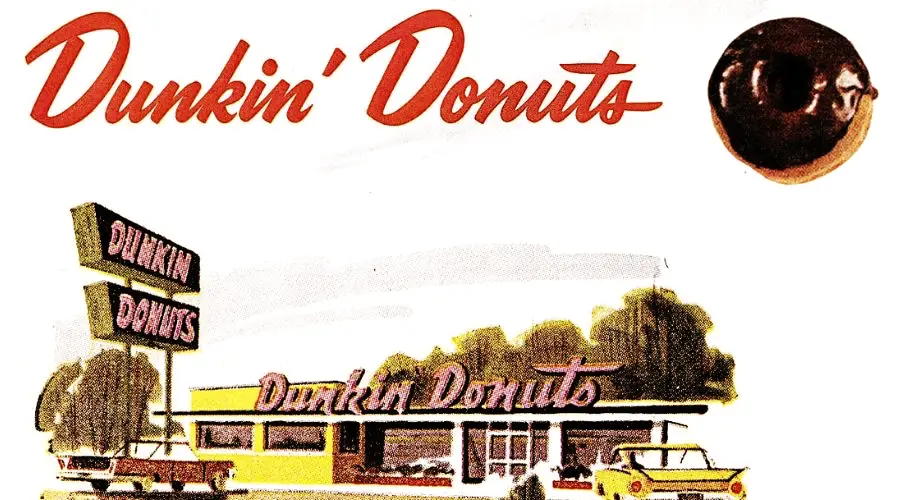
Robert F. Kennedy Jr. has fought many conflicts. He has attacked vaccines, fallen out with parts of his own family and repeatedly made headlines with radical positions. But what he is now setting in motion as American health secretary strikes a particularly sensitive nerve: he is taking on one of New England’s most beloved everyday brands - the coffee chain Dunkin’. At an event in Austin last week Kennedy raised a question that immediately triggered a political and cultural reaction in the United States. Dunkin’ Donuts and Starbucks would be asked to demonstrate that it is safe when a young girl drinks an iced coffee containing 115 grams of sugar. His assessment left little doubt: he does not believe the companies will be able to present such data.
We do not need more diet drugs. We need kitchens turned back on. Teach people to cook again and you lower costs, reduce disease and end the poison coming from fast food restaurants
The reaction came immediately, especially in Massachusetts, where Dunkin’ has long been more than a coffee chain. Around the Kennedy family compound in Hyannis Port there are at least eight locations within a radius of five miles. For many people the daily cup there is as much a part of life as the commute to work. Even within the family itself the brand is present. Joe Kennedy, a former member of Congress, is known for a coffee routine in which up to four espresso shots are part of the order.

The first Dunkin’ Donuts opened in 1948 in Quincy in the state of Massachusetts.
The political response followed quickly. The governor of Massachusetts, Maura Healey, reacted publicly with a clear message: “Come and get him.” Other users on social media picked up the tone and circulated images of Ben Affleck, Matt Damon and Tom Brady in tracksuits in the brand’s orange and pink colors. Democratic representative Richard Neal commented dryly: “A damn bad idea.”
Kennedy’s department is trying to frame the conflict differently. A spokesman for the Department of Health explained that the secretary is focusing on making the American food supply more transparent and grounded in science. Americans have a right to know what is contained in their food and how ingredients are evaluated.
Behind the dispute stands a larger political initiative. Kennedy wants to change a decades old rule that allows food companies to classify certain additives themselves as safe. This practice carries the name “generally recognized as safe.” Companies can use ingredients without having to inform the US Food and Drug Administration. Since December the White House Office of Management and Budget has been reviewing a possible new regulation.
At the same time a formal submission is before the Department of Health that could also place pressure on the food industry. The former head of the Food and Drug Administration, David Kessler, submitted a so called citizen petition last August. It calls for a reevaluation of widely used ingredients. Kessler argues that there is no longer sufficient scientific evidence to continue classifying heavily processed refined carbohydrates as harmless. Such substances are found in many industrially produced foods and are linked to weight gain, heart disease and type 2 diabetes. Kennedy himself has however signaled that he does not necessarily want to resort to direct bans. In the television program “60 Minutes” he said his agency does not necessarily want to regulate ultraprocessed foods. The goal above all is that people understand what they consume.
The conflict shows how quickly political initiatives in American daily life can collide with cultural loyalties. Dunkin’ has an almost cult like following in New England. Many customers drink their iced coffee there even in the middle of winter. The possibilities for individual orders are so extensive that the company once declared there are more than 15,000 ways to configure a coffee. The brand was even part of the political routine in Washington. Between 2006 and 2011 Dunkin’ Donuts were served in the so called White House dining facility operated by the US Navy. Staff members from Massachusetts in particular regularly reached for them.
Kennedy’s attack on sugar rich drinks therefore touches not only a debate about nutrition. It strikes a cultural habit that millions of Americans live every day. That is exactly why the reaction is so intense. In New England this dispute is not only about sugar levels in an iced coffee. It is about identity, everyday life and about who in America decides what is written on the cup.
Updates – Kaizen News Brief
All current curated daily updates can be found in the Kaizen News Brief.
To the Kaizen News Brief In English


Da hat Kennedy mal recht!
Du bist was Du isst – trinkst.
Gesundes Essen und Trinken würde die Krankenkasse vor den Kosten etlicher Volkserkrankungen mehr schützen.
Einige Forscher argumentieren, dass die „Zuckersucht“ eher mit der Abhängigkeit von Koffein oder Nikotin vergleichbar ist als mit harten Drogen.
Und in diesem Falle hat man es also gleich mit Koffein UND Zucker zu tun!
Zucker aktiviert das Belohnungssystem im Gehirn und führt zur Ausschüttung von Dopamin, was ein kurzfristiges Glücksgefühl auslöst. Dieses System wird auch durch Drogen aktiviert, weshalb der Vergleich oft gezogen wird.
Kleiner „Scherz“ am Rand : An der heftigen Reaktion der Verbraucher erkennt man den Suchtfaktor.
Zucker, in größeren Mengen, ist ungesund
Daran besteht kein Zweifel.
Aber hier zwei Ketten anzugreifen, schießt über das Ziel weit hinaus.
McDonalds bleibt, trotz ungesundem Angebot selbstverständlich unangetastet.
Warum?
Weil Trump es liebt.
Ebenso so seine zuckerhaltige Cola.
Man sieht deutlich, dass es hier leider weniger um die Gesundheit, als um Politik geht.
Wenn, dann muss man Alle (Hersteller, wie Restaurantketten) dazu verpflichten entsprechende Angaben zu machen.
Als sicher, da gebe ich Kennedy recht, dürfte gar nichts von Firmen deklariert werden.
Aber ein Gesundheitsminister, der Koks vom Toilettensitz geschnupft hat, dessen Regierung Umweltauflagen faktisch abschafft, der Wissenschaft leugnet und Impfstoffe für unnötig hält, den kann ich nicht nur nicht ernst nehmen.
Der ist absolut inkompetent und gefährlich..
…kann ich nur zustimmen