
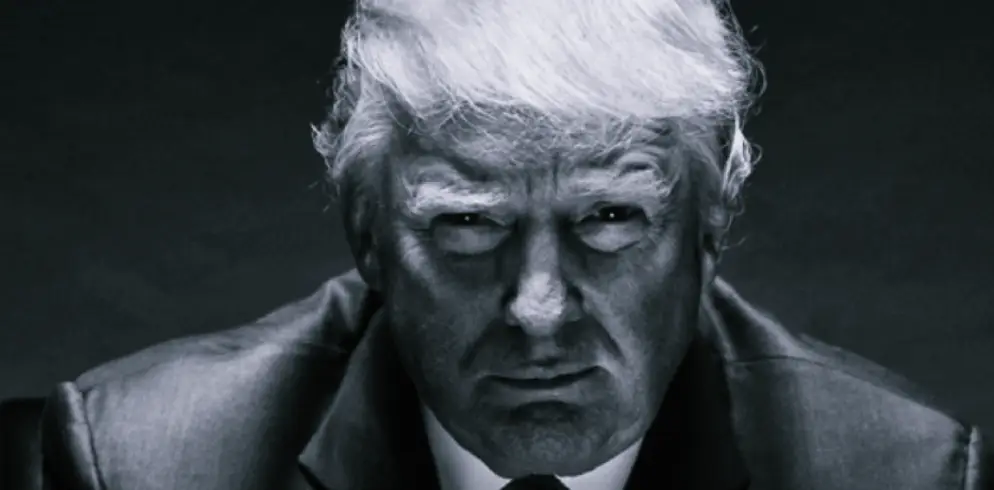
Donald Trump is further escalating his tone. Despite the Supreme Court’s decision striking down large portions of his sweeping import tariffs, the president is warning other countries against questioning existing tariff agreements. Any country that tries to “play games” with the ruling will face significantly higher tariffs than those that were only just agreed upon. The threat is unmistakable: anyone seeking to renegotiate will ultimately pay more. As early as Saturday, Trump announced that he wanted to raise the global base tariff to 15 percent. Immediately after the ruling, he had initially mentioned 10 percent. Now he is raising the stakes. The message is directed at governments in Europe, Asia, Latin America - at all those who had hoped the Court had placed tight limits on the president. Trump signals the opposite. He continues to view tariffs as his central instrument of power in trade policy.
On Friday, the Supreme Court struck down the levies that Trump had imposed under a 1977 emergency law. That statute had allowed him to impose additional import taxes on nearly every country. The justices made clear that this sweeping application was not sustainable. But Trump is responding not with retreat, but with maneuvering. Even before his State of the Union address, he signed a new executive order. It allows him to impose a blanket 10 percent import tariff on goods from around the world - without congressional approval. This measure is set to take effect on Tuesday, the same day he speaks before both chambers. Although the new legal basis is more limited in time and scope than the emergency authority previously used, politically the effect remains the same: the president retains control over a central lever of global economic relations.
That Trump does not interpret the ruling as a defeat, but as a reason to escalate, is evident in his latest statement. He makes clear that he does not view trade agreements as binding compromises, but as instruments of pressure. Anyone attempting to invoke the Court risks new punitive tariffs. The conflict thus shifts from the legal arena to the realm of power politics. For the international economy, this means continued uncertainty. Companies that depend on stable conditions once again face the prospect of sudden policy shifts. Trade partners must weigh whether to rely on legal certainty or submit to bilateral deals under pressure.
In recent years, Donald Trump has repeatedly shown that tariffs are not a technical detail for him, but a political instrument. The Supreme Court’s ruling has limited his room for maneuver, but not ended it. Instead of a change of course, a new phase is emerging - with higher rates, sharper threats, and a president making clear that he does not intend to be restrained by judicial boundaries.
The world does not move in circles by accident. It moves in circles because the same patterns repeatedly rise to power - embodied in men like Trump, Putin, Kim Jong-un, or Orbán. Not despite everything they do. But because of everything they do. Civility has value. Conflict resolution has value. But both presuppose that the other side is playing the same game. That it recognizes rules. That it is interested in a solution at all. Autocrats and dictators are not. For them, dialogue is not a tool of understanding - it is a stage. And anyone who appears on that stage in good faith gives them exactly what they need: legitimacy.
Kaizen - continuous improvement - means looking honestly. Recognizing what works and what does not. And this does not work: the hope that men who view power as an end in itself can be reached with the same means that under normal circumstances build bridges. The first step toward improvement is not more diplomacy. It is clarity about what one is truly dealing with - and acting accordingly.
Updates – Kaizen News Brief
All current curated daily updates can be found in the Kaizen News Brief.
To the Kaizen News Brief In English


Zitat: Kaizen – kontinuierliche Verbesserung – bedeutet, ehrlich hinzuschauen. Zu erkennen, was funktioniert und was nicht. Und das hier funktioniert nicht: die Hoffnung, dass man Männer, die Macht als Selbstzweck begreifen, mit denselben Mitteln erreicht, die unter normalen Umständen Brücken bauen. Der erste Schritt zur Verbesserung ist nicht mehr Diplomatie. Er ist Klarheit darüber, womit man es wirklich zu tun hat – und danach zu handeln. Zitat Ende
So ist es!
Und beugt man sich solchen Typen, dann wird es am Ende nur stetig schlimmer!
Trump und Co betreiben Hungerspiele.
👍
Ein sehr, sehr guter Artikel!
Trump sieht Deals nicht als vereinbarte Kompromisse, sondern als weiteres Druckmittel.
Jedes Land täte gut daran die „Deals“ die aufgrund der illegitimate Strafzölle entstanden sind, genau zu prüfen.
Er bricht diese Vereinbarungen, indem er einfach weltweit 10% Zölle erhebt. Egal was vorher vereinbart war.
Auch wenn es zeitlich begrenzt ist, es ist ein Vertragsbruch.
Die Länder dürfen sicht nicht von seinen Drohungen und Tobsuchtanfällen irritieren zu lassen.
Davon geht er aus … deswegen „gewinnt“ er.
Wenn man ihn einfach mal links liegen lassen würde, bis er mit seinem Trotzanfall fertig ist.
Aber nein.
Merz rennt gleich hin um „zu reden“.
Sprich die Füße zu küssen.
Und er ist nicht der Einzige.
Furchtbar die rückgratlosen EU Politiker.
Der letzte Absatz geht unter die Haut und trifft es 100%
vielen, lieben dank, aj man muss sich vielmehr gegen trump stellen, so geht man mit trump um