
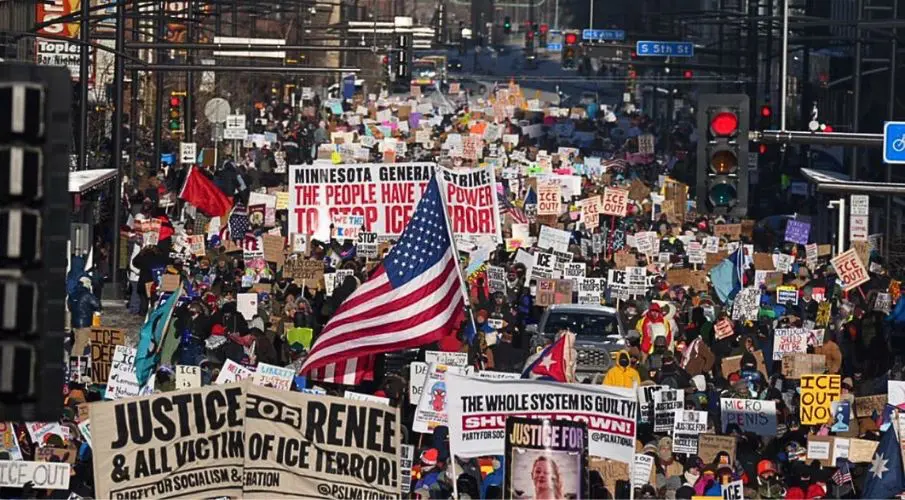
For weeks, Minneapolis has been the scene of one of the most intense domestic political confrontations in the United States. Federal authorities are carrying out extensive immigration enforcement operations, courts are overwhelmed, and streets have become sites of protest. In the midst of this situation, the city has been officially nominated for the 2026 Nobel Peace Prize. The initiative came from The Nation, a long established progressive US magazine founded in 1865. At the end of January, the editorial team published its letter to the Norwegian Nobel Committee and publicly declared its intention to propose Minneapolis. In the letter, the nonviolent resistance of the population against the intensified immigration policy of President Donald Trump is cited as the decisive reason. Elected officials, clergy and labor unions had called for peaceful demonstrations. Tens of thousands followed that call despite freezing temperatures. On the streets, the chant rang out: “No hate, no fear - immigrants are welcome here.”
The justification refers not only to protests. Residents delivered food to neighbors who, out of fear of arrest, no longer left their homes. Others organized financial support for people who could not temporarily report to work. The editors describe this mutual aid as an expression of democratic responsibility and civil society strength. The nomination was formally submitted by Jon Wiener, professor emeritus of history at the University of California, Irvine. University professors belong to the group of individuals authorized under the statutes to nominate candidates for the Nobel Peace Prize. Receipt of the nomination was confirmed by the Nobel Committee.
Whether Minneapolis is the first city ever to be nominated cannot be determined. The names of nominees remain confidential for fifty years. It is known only that since 1901 a total of 143 Nobel Peace Prizes have been awarded, including 31 to organizations, but none to a municipality. Whether the prize ultimately goes to Minneapolis remains open. The nomination itself, however, sets a signal. An American city is named not for diplomacy or international treaties, but for public assembly, mutual aid and peaceful protest. At a time when immigration policy is being enforced with massive force, another image stands alongside it: citizens invoking their rights and standing up for one another.
Updates – Kaizen News Brief
All current curated daily updates can be found in the Kaizen News Brief.
To the Kaizen News Brief In English


Ein ganz wunderbares Zeichen!
Trump dürfte toben.
Wie man die Linken, Irren, Inlandsterroristen für einen Friedensnobelpreis nominieren kann.
Wo er ihn doch mehr verdient, als jeder Andere.
….das wäre der Hammer, wenn das wirklichkeit würde …