
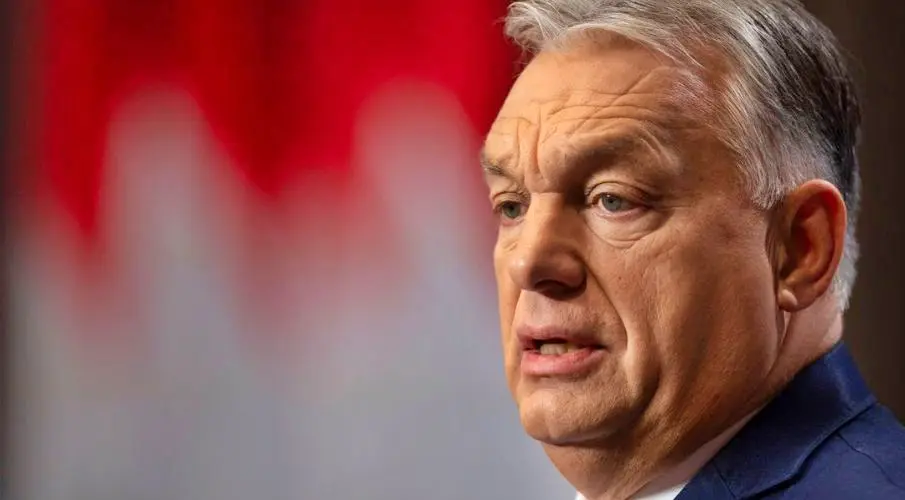
Hungary is taking its case to the European Court of Justice and openly positioning itself against the European Union’s course of phasing out Russian gas imports. With its lawsuit against the REPowerEU regulation, Budapest is escalating a conflict that has long extended beyond energy issues and cuts deep into the EU’s political architecture. In Budapest, the decision from Brussels is not understood as a climate policy step, but as a direct intervention in national sovereignty and social stability. Foreign Minister Péter Szijjártó justifies the legal action by pointing to the country’s energy security. Without Russian oil and Russian natural gas, he argues, Hungary could neither guarantee reliable supply nor maintain state-capped household energy prices. The government thus deliberately links energy policy to social policy promises – a central element of Viktor Orbán’s domestic political strategy for years.
Legally, Budapest is targeting a sensitive point. Szijjártó argues that a complete import ban on Russian gas could only be decided through the formal sanctions instrument, which requires unanimity among all member states. The regulation now adopted, by contrast, was passed by qualified majority and therefore violates fundamental procedural principles. In addition, Hungary invokes the principle of energy solidarity, which guarantees each member state the right to choose its own energy sources. From the Hungarian perspective, the EU regulation undermines precisely this principle. The timing of the lawsuit is politically delicate. Szijjártó himself acknowledges that proceedings before the European Court of Justice can take one to two years. A potential ruling would thus fall into a phase of political uncertainty. Parliamentary elections are scheduled in Hungary for April 12, and for the first time in years the governing party’s hold on power is seriously threatened. Polls put the pro-European Tisza Party under Péter Magyar ahead, while Fidesz has lost significant support. The lawsuit therefore also functions as a signal to the domestic electorate: Budapest is standing up to Brussels, whatever the cost.
The EU, for its part, has clearly staked out its position. At the end of January, the Council formally adopted the regulation for a gradual exit from Russian pipeline gas and liquefied natural gas. Transition periods are intended to cushion existing contracts, but with fixed end dates. Short-term LNG contracts expire at the end of April 2026, pipeline gas by mid-June of the same year. Long-term LNG agreements end at the beginning of 2027, long-term pipeline contracts no later than September 2027. Hungary and Slovakia voted against the regulation, while Bulgaria abstained. Behind the dispute lies a fundamental shift in Europe’s energy dependence. Before Russia’s attack on Ukraine, the EU covered around forty percent of its gas demand with supplies from Russia. By 2025, that share had fallen to about thirteen percent. For many member states, the exit is already a reality. For Hungary, however, which relies heavily on Russian supplies and has aligned its infrastructure accordingly, it represents a profound rupture.
The lawsuit thus exposes a central conflict: how far European integration extends when national dependencies are unevenly distributed. While Brussels views the exit from Russian gas as a strategic necessity, Budapest sees it as a political imposition with social consequences. Energy thus once again becomes an instrument of power – not only vis-a-vis Moscow, but also within the Union.
Whether Hungary will succeed in court remains open. Even if the lawsuit fails legally, it already serves a purpose. It shifts the debate, delays decisions, and marks a red line. The dispute over Russian gas is therefore not only a matter of contracts and deadlines, but another fault line in the relationship between an increasingly centralized EU and member states defending their national room for maneuver.
Updates – Kaizen News Brief
All current curated daily updates can be found in the Kaizen News Brief.
To the Kaizen News Brief In English


Und Putin klatscht in die Hände.
Sein Quertreiber Orban breastfeeding die EU, wieder einmal.
Der Angriffskrieg dauert Jahre.
Ungarn hatte viel Zeit, wie andere Staaten auch, sich um Alternativen, vor allem der Reduzierung fossiler Energie zu kümmern.
Aber das ist Orban zu woke. Klimawandel bestreitet er genau wie Trump.
Außerdem muss er doch Putin die Füße küssen.
Diese Einstimmigkeitsregel war die dümmste Entscheidung bei der Gründung der EU.
Es gibt NIE Einstimmigkeit.
Eine 3/4 Mehrheit, so funktioniert Demokratie.
So Tanzania ein Abweichler der EU auf der Nase rum.
Erpresst mit seiner „Zustimmungsstimme“ die EU in Bezug auf Gelder.
Die EU muss jetzt endlich alle Hebel in Bewegung setzen, um Irban so gut, wie möglich unter den geltenden Regeln, kalt zu stellen.
Bevor noch mehr Staaten abdriften und sich dieses Fenster schließt.
Aber wahrscheinlich hocken sie auf ihren Stühlen und hoffen, dass sich das Problem mit der Wahl erledigt.
Tja und wenn nicht?
Russland und auch Orban haben kein Interesse an fairen Wahlen. Ihnen geht es um Machterhalt.
Deswegen sollten die EU Politiker ihre Hintern hochbekommen und etwas unternehmen.
Sonst heißt es am 13. April „oh Orban hat tatsächlich wieder gewonnen… was nun“
Wieso schmeißt man den Orban nicht raus oder sperrt ihm die Gelder? Ich kann das nicht verstehen.
…das regelwerk der eu ist zu komplex und man hat in einigen fällen, zb eben solch einer, nicht weiter gedacht, als bis zur nächsten türe …
…ja putin wird ein tänzchen machen …