
The attack by Ukrainian drones on the tanker Qendil in the Mediterranean was not an isolated incident, but a glimpse into a web of camouflage, personnel shifts, and informal structures. On board the vessel, which was targeted in December, two Russian nationals had previously served as security personnel whose résumés go far beyond what civilian shipping would explain. Both were shaped by military backgrounds, both came from structures that Moscow officially prefers to keep separate, but which in practice are closely intertwined.
One of the men had previously served in a GRU special unit. He returned from Syria in early 2024, a theater that for years has functioned as a hub of Russian mercenary activity. His tax records showed no regular state payments, a detail that points to private structures. The second man was directly linked to the Wagner Group. He had served in Syria, was temporarily dismissed for disciplinary reasons, and later returned. Since the start of Russia’s full scale invasion of Ukraine, he repeatedly appeared in occupied territories. Both boarded the Qendil in September 2025, shortly before the ship left the port of Ust Luga. Notably, they left the vessel again before the drone attack. Equally notable is that they were the only crew members without maritime degrees or seafaring qualifications. Previous voyages along the same route through the Suez Canal and the Gulf of Aden had taken place without armed escorts. Against this background, the reference to piracy protection appears contrived.
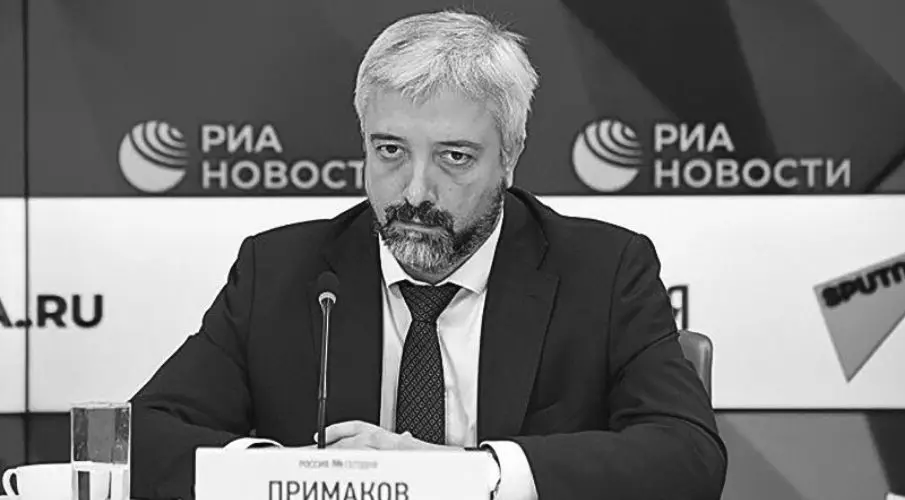
But this is not an isolated phenomenon, as investigations show. Civilian tankers from the so called shadow fleet are not only used to transport oil beyond sanctions, but also for reconnaissance. Routes through dangerous waters provide a convenient justification for additional personnel on board. Western and Ukrainian services have long reported that such ships can observe military infrastructure or serve as platforms for technical equipment. The attack of December 19, 2025, more than two thousand kilometers from Ukrainian territory, marked a new reach in this confrontation. Parallel to these maritime activities, a second strand becomes visible that shows how military networks transition into civilian and cultural structures. Yevgeny Primakov Jr., head of the state agency Rossotrudnichestvo, openly confirmed that so called Russian Houses in several African countries were opened by a well known private military company. The organization was not named, but its identity leaves little doubt. Fourteen of these facilities are located in Africa, further agreements have been concluded.

Primakov stated that several former members of this company now work directly for his agency. He praised their skills, their local knowledge, and their efficiency under constrained conditions. To expand this cooperation, it would be necessary to adjust legal pathways or find additional support through foundations and friendly organizations. The statement is remarkably candid. It describes how military experience is seamlessly transferred into state funded cultural and influence work.
Officially, these houses are considered centers for exchange and humanitarian cooperation. In practice, they are part of a strategy that combines military presence, political influence, and a civilian facade. In the Central African Republic, for example, a key figure behind these facilities simultaneously headed structures of the Wagner Group. Because of these connections, he was sanctioned by the United States, the European Union, and Canada. He described himself as a cultural ambassador, but admitted that at the request of the local government he had also disarmed armed groups.
For years, Wagner mercenaries worked closely with governments in countries such as Mali and the Central African Republic, officially to combat extremist groups. After the death of Wagner founder Prigozhin, Moscow replaced the Wagner brand with the so called Africa Corps of the Ministry of Defense. Many of the fighters, however, remained the same. The structures changed their names, not their personnel. This creates a picture that goes beyond individual incidents. At sea, camouflaged tankers secure economic and military interests. On land, cultural centers create hubs for influence and logistics. In between, the same actors switch roles, sometimes as guards, sometimes as cultural intermediaries, sometimes as fighters. The attack on the Qendil made this network visible. It shows that civilian surface and military purpose have long since merged. And that the separation between state, private, and cultural elements in Russia’s foreign policy increasingly exists only on paper.
Updates – Kaizen News Brief
All current curated daily updates can be found in the Kaizen News Brief.
To the Kaizen News Brief In English


Schon vor dem Zerfall der UDSSR war es üblich, dass geheime KGB Agenten mit an Bord von Schiffen waren.
Damals mehr um Überläufe oder Kontaktaufnahme mit dem Westen zu verhindern.
Auch diese Häuser in Afrika, von der breiten Öffentlichkeit nicht wahrgenommen, gibt es schon länger.
Das wurde in der Serie „Homeland “ richtig gut dargestellt. Natürlich mit dem Schuss filmischer Freiheit.
👍