
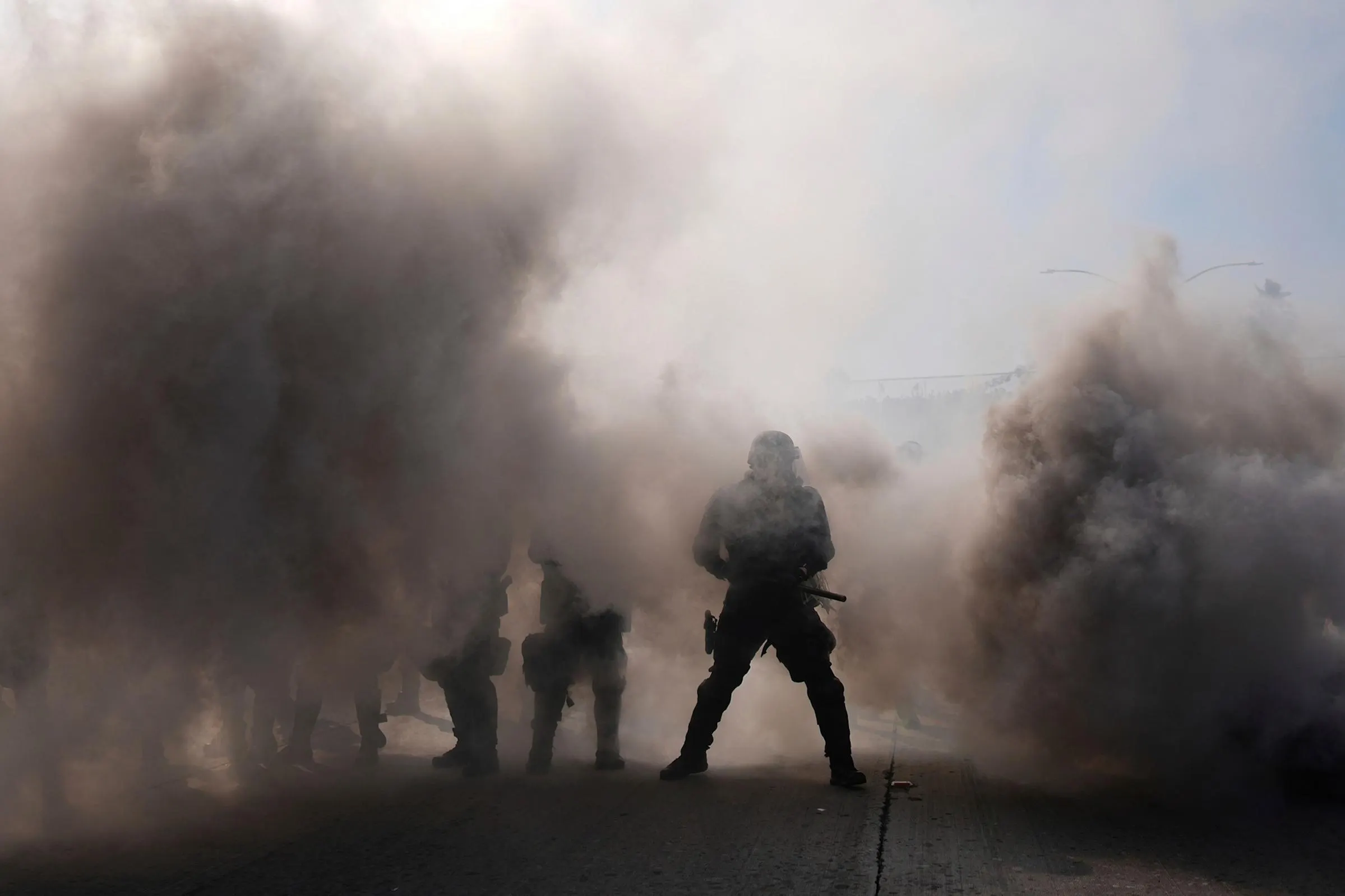
The Supreme Court of the United States has stopped Donald Trump. On Tuesday, the justices denied the administration permission to deploy National Guard troops in the greater Chicago area to support the ongoing deportation offensive. The attempt by the president to send soldiers into yet another Democrat-led metropolis thus failed. It is one of the rare defeats for Trump since his return to the White House. Specifically, the court rejected the government’s emergency request to overturn a decision by U.S. District Judge April Perry, who had already blocked the deployment of the National Guard. An appeals court had also previously declined to intervene. The Supreme Court took more than two months before making clear that, at this early stage, the government had not identified any legal authority that would allow the military to enforce laws in Illinois.

The decision is not a final judgment, but it carries significant weight. It is likely to affect other lawsuits challenging Trump’s attempts to deploy military forces in American cities. Three justices, each of them a sensation in their own right - Samuel Alito, Clarence Thomas, and Neil Gorsuch - publicly dissented. Justice Brett Kavanaugh agreed with blocking the Chicago deployment, but made clear that he would allow the president more leeway in possible future scenarios.
For Trump, the outcome is unusual. Since January, he had scored multiple victories before the Supreme Court in emergency proceedings. The conservative-leaning court had allowed him to bar transgender people from the military, claw back billions of dollars in congressionally approved spending, take a more aggressive approach against migrants, and fire the leaders of independent federal agencies. The setback now is all the more striking. In Illinois, the decision was welcomed. Governor JB Pritzker called it a victory for the state and the country. American cities and communities, Pritzker said, should not have to live in fear of masked federal agents demanding papers, judging people by how they look or sound, and facing the constant possibility that the military could be deployed onto their streets.
The White House pushed back. Trump’s spokeswoman Abigail Jackson said the president had activated the National Guard to protect federal personnel and property from violent unrest. The administration, she said, would stick to that line regardless of the decision from Washington. The federal government had argued that the troops were necessary to enforce federal immigration laws and suppress resistance. Judge Perry found no basis for that claim. In Illinois, she said, there was neither evidence of an impending rebellion nor any indication that protests had interfered with the deportation crackdown. She initially blocked the deployment for two weeks and, in October, extended the ban indefinitely while the Supreme Court reviewed the case.

In the western suburb of Broadview, where an ICE facility is located, tense protests have recently taken place. Federal agents used tear gas there, including against journalists. Twenty-one demonstrators were arrested, and four police officers were injured. Still, the court saw no reason to deploy soldiers. The planned deployment of around 200 National Guard troops from Texas has since been completely withdrawn. The Illinois case is only one of many. In Washington, D.C., the attorney general of the capital is suing to halt the deployment of more than 2,000 National Guard members. Forty-five states have weighed in there - 23 siding with the administration and 22 supporting the plaintiffs. In Oregon, a federal judge permanently blocked the deployment, and the California troops stationed there were withdrawn. In Tennessee, a court ruled in favor of Democratic local officials who sought to stop the deployment in Memphis. In California, a judge declared the deployment in the Los Angeles area unlawful, without immediately ordering the remaining troops to leave. The administration has appealed several of these decisions.
What remains is a rare and clear signal from Washington: even under Trump, the domestic deployment of the military is not automatic. The courts set limits, even when the president keeps trying to push them further. Well then - it does work. Merry Christmas.
Updates – Kaizen News Brief
All current curated daily updates can be found in the Kaizen News Brief.
To the Kaizen News Brief In English


Danke für Euren Einsatz und Bericht.
Frohe Weihnacht und eine gute Zeit!
ich danke dir und da waren ganz viele tolle menschen dran beteiligt – ich wünsche dir und deiner familie auch frohe weihnachten
Ein kleiner Sensationsgewinn, der durch Eure unermüdliche Arbeit möglich wurde.
Der große Wehrmutstropfen: Es wurde nur der Eilantrag abgelehnt.
Es wurde nur bemängelt das der Einsatz nicht ausreichend klar dargelegt wurde.
Es war eine Entscheidung (6:3, wenn ich es richtig verstanden habe)
Wer weiß, was jetzt hinter den Kulissen um den Marionetten Supreme Court läuft.
Damit Trump im regulären Verfahren doch gewinnt.