
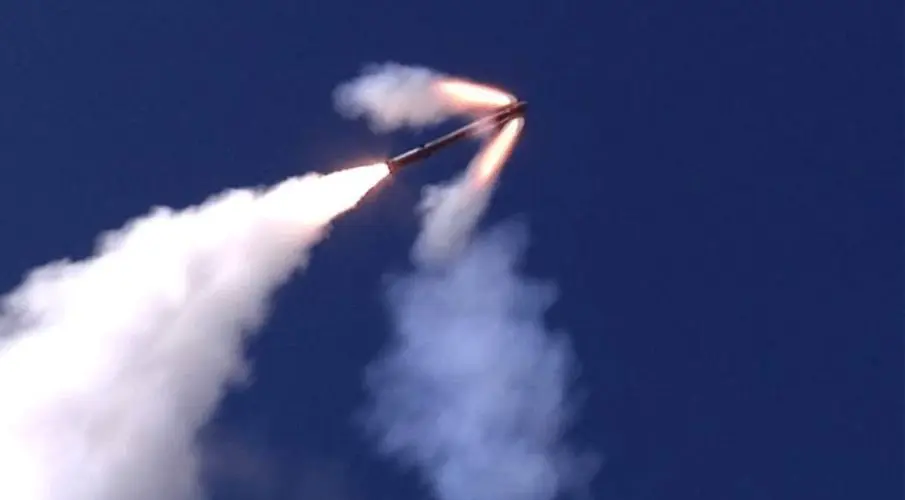
Russia’s defense industry likes to present itself as self sufficient, as a closed system fed by its own raw materials and its own technology. That narrative does not hold up under closer scrutiny. Behind the facade of domestic production lie sensitive dependencies that run deep into chemical and technological processes. These are not spectacular components, not easily visible high tech parts, but catalysts, additives, resins, and specialized equipment without which key production steps simply do not work.
This becomes particularly clear in the production of fuels for missiles and aircraft. Their manufacture relies on complex chemical transformations such as hydrotreatment, cracking, and reforming. These processes are impossible without precisely tuned catalysts. A prominent example is the high calorie fuel Decylin M, used in cruise missiles of the Oniks, Kalibr, and Kh 101 types. It is produced at the Redkino Experimental Plant in the Tver region. The requirements for this fuel are so specific that replacing it with alternatives is considered risky. Decylin M is produced from dicyclopentadiene through catalytic processes that depend on materials Russia long sourced from the West. The production process may involve a cation exchange resin such as Purolite CT 175, a product of the U.S. company Ecolab. Substances like these cannot simply be swapped out, neither in quality nor in the short term.
The dependencies are even more evident in gas chemistry. Methanol, a basic feedstock for many industrial applications, is traditionally produced in Russia from methane. Until very recently, Russian plants preferred to use catalysts from the Danish manufacturer Haldor Topsoe. This technology was regarded as the benchmark for efficiency and stability. A similar picture emerges in ammonia production, which is of particular importance for Russia. Ammonia is the basis for urea, nitric acid, and numerous other products. For the defense industry, nitric acid is especially critical, as it is required for nearly all explosives.
As recently as 2021, new production lines at the chemical company TogliattiAzot were to be built by the Swiss firm Casale. Due to the political situation, commissioning was delayed until 2023. At the same time, ammonia capacity was expanded jointly with KuibyshevAzot, implemented by MET Development, a subsidiary of the Italian group Maire Tecnimont, using licensed technology from Stamicarbon. These projects illustrate how strongly key Russian industries have relied on Western planning, equipment, and processes even in the recent past.
Since the introduction of sanctions, Russia has tried to reduce these dependencies. In some cases with success, in others with considerable risk. Certain technologies have been replicated or reproduced on the basis of earlier licenses. During the construction of a new production line in Nizhnekamsk, for example, it proved possible to replicate an originally Italian furnace reactor for hydrogen production based on technology from Haldor Topsoe. Russian companies have also reported progress with hydrocracking units. A hydrocracking reactor was installed in Ust Luga in 2024, and earlier hydrocracking columns for the Nizhnekamsk facility were ordered from India. In the summer of 2025, the state news agency TASS reported that Tatneft had launched a second hydrocracking unit at the Taneko refinery.
This is precisely where the greatest risks lie. Cracking units must withstand extreme conditions - high pressure, high temperatures, and prolonged exposure to hydrogen, which can make even high quality steel brittle. Manufacturing such reactors requires special alloys, precise fabrication, and years of experience. Even minor defects can drastically shorten their service life. If such a unit fails, it cannot be replaced quickly. Building a new one can take years. Without fully operational cracking capacity, a refinery is unable to produce high octane fuels at its designed output. For the civilian economy this is problematic. For military logistics it can be potentially severe.
Russia has shown in recent years that it can improvise, replicate, and reroute supply chains. But this adaptability has limits. Many of the decisive components come from highly specialized production chains that cannot be fully copied. Dependence on Western chemicals, Western process engineering, and Western know how is not a marginal issue but a structural problem. It does not determine whether missiles can be built at all, but how reliably, in what quantities, and at what cost.
The real vulnerability therefore lies not in a lack of raw materials, but in the inconspicuous links of the production chain. Catalysts, reactors, additives. Things that are not shown at parades. Things that rarely appear in official statements. But it is precisely there that the question is decided of how resilient Russia’s military industry really is over time.
Updates – Kaizen News Brief
All current curated daily updates can be found in the Kaizen News Brief.
To the Kaizen News Brief In English


Sehr interessant.
Darüber erfährt man hier ja leider gar nichts.
Traurig ist nur, dass Russland sehr, sehr viele Sanktionen geschickt umgeht und so trotzdem bestimmte Produkte erhält.
Und mit der unheiligen Allianz Ungarn, Slowenien, Tschechei als Anti-Europa Staaten, die voll auf Russland setzdn, wird es wahrscheinlich noch einfacher.
Und die USA setzen auf Deals, Sanktionen sind nur theoretisch vorhanden.
👍