
Bandar Abbas - 400 million barrels. 32 countries. An emergency mechanism that was originally intended for natural disasters or global supply shocks is now being activated because a military escalation has shaken one of the most sensitive energy corridors in the world. The Strait of Hormuz is effectively only partially passable. Around one fifth of the world’s traded oil flows through this narrow passage. If it becomes unsafe, not only does the oil market come under pressure, but the price structure of entire economies. That is exactly what is happening now.

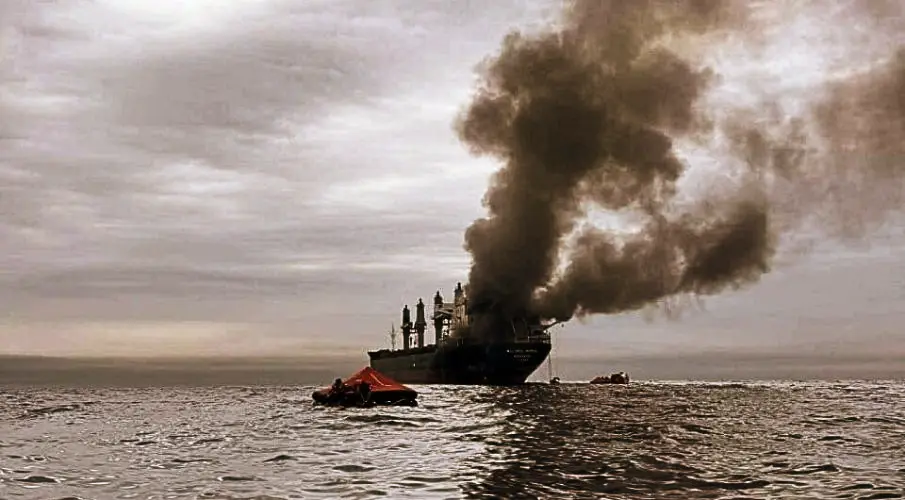
On Wednesday at least three ships were struck in and near the Strait of Hormuz. A British maritime monitoring authority reported impacts by unidentified projectiles. Smoke rose from the tanker “Mayuree Naree, Bangkok.” The Royal Thai Navy released an image of the damaged vessel. Iran claimed responsibility for the attack. With that, the energy corridor is not only politically contested but physically under fire. Meanwhile markets react immediately. Insurers raise premiums, shipping companies review routes, traders factor in risk surcharges. Oil prices shoot up, fall with every hint of de escalation, rise again with every qualification. It is a market hanging on political sentences.

Severe damage to the Mayuree Naree, Bangkok from Iranian attacks
The release of the 400 million barrels is intended to stabilize supply. It is meant to prevent panic from turning into real shortages. But strategic reserves do not replace a functioning transport artery. They buy time. Nothing more. The real question is political. The military step against Iran was sold as a calculated intervention. Now a third of the industrialized world must release oil from emergency stockpiles to contain the consequences. What began as a demonstration of strength is now forcing 32 states into a collective crisis response.

Gas pump prices are already rising. Transportation costs are climbing. Inflation is under renewed pressure. Lower income households in particular bear the burden because energy accounts for a disproportionately large share of their expenses. The effect is not abstract. It appears on every gas receipt. 400 million barrels is an enormous number. But if the Strait of Hormuz remains under attack, that number is finite as well. The world is trying to stabilize with reserves what was politically destabilized. The longer the uncertainty continues, the clearer it becomes that this crisis was not triggered by markets - but by decisions
Trump’s miscalculation and arrogance are increasingly pushing the world into distress. Strategic reserves are a lifeline. They are not proof of strength but a sign of how costly this decision has become and how necessary it is to stand in the way of this president.
Updates – Kaizen News Brief
All current curated daily updates can be found in the Kaizen News Brief.
To the Kaizen News Brief In English


Ich hoffe ganz Europa wacht endlich auf.
Danke für den Bericht.
…das bleibt zu hoffen und vielen dank