
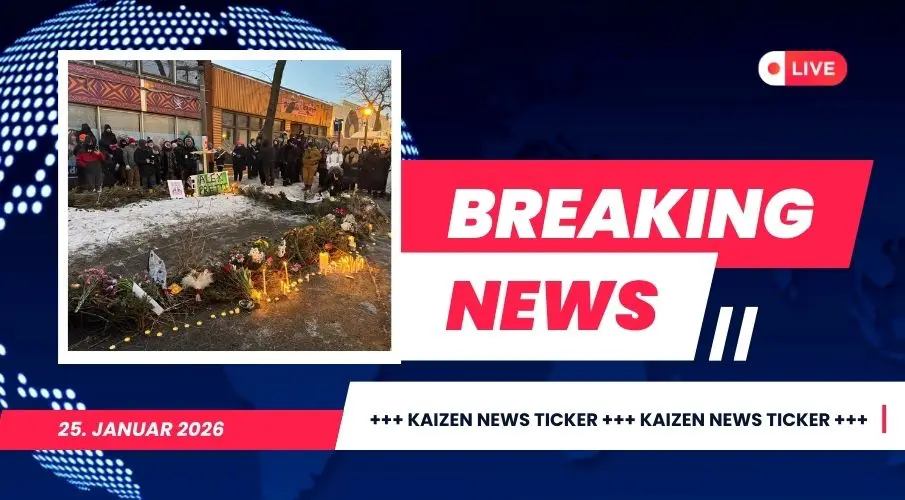
Talks Under Fire!

Diplomacy in the dark. While negotiators met face to face in Abu Dhabi, Russia launched what was likely its most “cynical” attack of the year so far - 396 drones and missiles, deliberately targeting Ukraine’s power grid. The peace framework brokered by the United States did not merely stall, it was effectively blown apart. Millions of people in Kyiv are now without heating in freezing cold, the “Abu Dhabi dream” has turned into a humanitarian nightmare.
Something has begun to move in Abu Dhabi, even if no one is speaking of a breakthrough. Representatives of Ukraine, Russia, and the United States sat together for two days and at least agreed to keep talking. The Ukrainian president spoke of constructive discussions about possible cornerstones for ending the war and announced a next round as early as next week. At the same time, people were dying in Ukraine as a result of Russian attacks. In Kyiv, one person was killed and several injured, while in Kharkiv drones struck residential areas and wounded dozens. While parameters are negotiated in air-conditioned rooms, the war continues to strike without pause.
The talks nevertheless mark a turning point, because for the first time representatives of the current US administration sat at the same table simultaneously with Kyiv and Moscow. Military and economic issues were discussed, including the possibility of a ceasefire ahead of a comprehensive agreement. One of the most sensitive questions remains unresolved: the future of the Zaporizhzhia nuclear power plant occupied by Russia. Power distribution yes, control unresolved. Washington is pushing for a central role in monitoring and securing a possible peace process. American control is being openly discussed. At the same time, it remains clear that key points of conflict are unresolved, above all the question of the occupied territories. Moscow continues to insist on a withdrawal of Ukrainian troops from annexed regions. That missiles and drones struck precisely during these talks is not a coincidence, but part of the reality of this war. The Ukrainian foreign minister said the attacks do not only hit people, but also the negotiating table. Hope and destruction continue side by side.
Charles Barkley on the death of Alex Pretti!
Charles Barkley, former professional basketball player in the North American league and now a long-time television commentator, has spoken out about the death of Alex Pretti and used unusually clear words. He said the situation was frightening and sad and would end badly if no one took responsibility. It had already ended twice in death, and two people had died for no comprehensible reason. Barkley made clear that this was not about political camps, but about adult action in an escalating situation. If no one intervened, the spiral would continue to turn. His words were directed explicitly at decision-makers, not at the streets. This was about human lives, not about asserting power. That well-known voices like Barkley are saying these sentences publicly shows how deep the shock now runs.
The mayor of Minneapolis contradicts and exposes Washington
“Today we have once again lost a neighbor from Minneapolis after multiple ICE agents beat him and shot him dead. How many more people must die or be shot before this stops? President Trump, I call on you to put the American people and this American city first and withdraw ICE”
Anyone who speaks about Minneapolis today is no longer speaking only about a city. Jacob Frey is speaking about a relationship that has broken down. About trust that has been systematically squandered. And about a federal government that no longer protects, but attacks. The narrative from Washington that the operations of the immigration agency are necessary measures for security does not hold up to the reality on the ground. It is false. And it is dangerous. Minneapolis knows crises. When the Interstate 35W bridge collapsed into the Mississippi during rush hour in 2007, thirteen people were killed and dozens injured. The city was shaken. But at that moment, party politics played no role. A Republican president came to a democratically shaped city not to divide, but to help. Criticism of his policies existed, but it receded. It was about rescue, stabilization, rebuilding. Cities could rely on the federal government being at their side in an emergency.
This principle held for a long time. Later as well, under Democratic and Republican administrations alike. In North Minneapolis, the city, police, federal agencies, and prosecutors worked together to curb violence. Not for ideological reasons, but out of responsibility. This cooperation saved lives. It worked because it was based on mutual respect.
Today, none of that remains.
Since the Trump administrations, democratically governed large cities have experienced a different reality. By 2020 at the latest, it became clear how deep the rupture is. After the murder of George Floyd, the situation escalated. The president at the time fueled violence instead of dampening it, while at the same time refusing urgently needed disaster aid. The message was unmistakable: this city is on its own. When two people were now again killed in Minneapolis by an operation of the immigration agency, there was no longer shock. No disbelief. Instead, bitter expectation. The past weeks had shown where the course was heading. Pregnant women were taken away on open streets. Heavily armed officers arrested individuals in libraries and shopping centers. Even after the fatal shot, the operations continued, up to the use of chemical irritants at a public school.
What makes these operations so dangerous is not only the violence itself. It is the subsequent twisting of the facts. The claim that it was self-defense. The classification of the victim as a terrorist. Public statements that the person killed had allegedly behaved aggressively. Video footage tells a different story. It shows a mother who wanted to leave the scene, not an attacker. But instead of allowing clarification, the federal government blocks investigations at the state level.
This is no longer only about a single case. The government demands that the country believe that a militarized agency brings security. In reality, it is about exclusion. About the stigmatization of migrants - and of all those who show solidarity or are simply present. The unspoken warning is clear: those who look, those who help, those who stay, lose the protection of the law. Minneapolis serves as a demonstration. The city shows how little consideration the federal government has for urban spaces and their residents. Combined with the open disregard for democratic rules, this creates a threat that extends far beyond Minnesota. It targets the foundation of the republic.
And yet, it is precisely in the cities that the answer lies. Not in grand words, but in everyday life. In functioning neighborhoods. In declining violence. In housing that remains affordable. In a city that does not pit newcomers, long-time residents, and recent arrivals against each other, but carries them together. In small businesses that show that migration is not a burden, but a strength. Cities are currently on the front lines of a dark chapter. But they are also the ones who can point the way out. Not through lecturing, but through example. Whoever proves that solidarity works undermines the lie at its foundation. And that is precisely the real threat to those who rely on fear.
The weapon that was not used
Kristi Noem claims that Alex Pretti approached ICE with a weapon. What is missing from this account is decisive. Pretti had a valid permit to carry. He was allowed to possess that weapon. That was not a crime, not a violation, not an exceptional situation. What is also suppressed: he did not draw this weapon against officers at any point. He did not threaten, did not raise it, did not use it. And what is consistently left out: at the moment the shots were fired, he no longer had this weapon on him. Instead, footage shows a man with one hand raised, a phone in the other, in a situation that was already under control. There can be no talk of self-defense here. Self-defense presupposes an acute danger. Anyone who shoots an unarmed person is not reacting out of necessity, but making a decision. This decision was not made by chance, it was politically secured, rhetorically prepared, and subsequently justified. The claim of a threat does not serve clarification, but exoneration. It shifts responsibility, it obscures sequences, it distorts images. What remains is a dead man and a narrative that does not hold without these omissions. Minneapolis knows this. And more and more people see it.
Fear rides along

Svetlana lives in Shebekino and survived an attack carried out by a repeat offender. The perpetrator is Alexei Kostrikin, a man convicted of violent crimes who had been recruited for the war.
In Russia’s border regions, a condition has taken hold that shapes the daily lives of many women and turns every movement into a calculation. Since the start of the war, thousands of soldiers have been deployed to places like Belgorod and Shebekino, many with criminal records, many with the knowledge that little will happen to them. Anyone leaving their apartment in the morning does not know whether they will return without being followed, threatened, or attacked. The case of the woman from Shebekino, who was strangled and abused by an armed soldier, does not stand for an isolated incident, but for a pattern. The perpetrator was known, armed, freely moving about, and should long ago have been monitored. Instead, he was able to kill and rape again just hours later.
The fear does not end on the street. It sits on trains, in compartments, in corridors. Women avoid rail travel because soldiers appear in groups, drink, harass, and invoke their past at the front as if it were a free pass. Those who object are insulted, those who seek help are ignored. The state message is unmistakable: whoever wears a uniform stands above the law. Added to this is a system that does not punish violence, but postpones it. Criminal proceedings are frozen, sentences suspended, perpetrators sent back to the front. Crimes do not disappear, they are deferred. What remains are traumatized women, destroyed lives, and a society that learns to look away. In Belgorod, violence is no longer an exceptional state. It is part of the daily routine.
He served
Alex Pretti was an intensive care nurse at a VA hospital and cared for veterans in their final hours. A video shows him at a memorial ceremony, paying last respects to a deceased veteran, calm, focused, respectful. It was published by the son of this veteran, not as a political gesture, but as a remembrance of a man who took responsibility seriously. The father of this man had heard Pretti’s words before he died and passed them on as a charge: to carry on the good fight. Pretti was not an activist. He was someone who stayed when others left, who was there when life withdrew. That it was precisely he who was now killed by state violence cannot be separated from this. It shows the full imbalance of a system that honors care as long as it is quiet, and destroys lives as soon as someone becomes visible. In this video, there is no hero on a stage. There stands a human being who did his duty. And that is exactly what makes it unbearable.


Pretti war ein Held.
Ein stiller und empathischer Held.
Der Menschen an erste Stelle setzte, ihnen half, für sie da war.
Ein Held dessen Leben von einem faschistischen Terroregime (anders kann man es nicht mehr bezeichne ) ausgelöscht wurde.
Zig Kugeln, ein paar Sekunden …. und er war ermordet.
Und die Regierung tut alles um diese sinnlose Tat zu rechtfertigen/zu vertuschen.
Wie schon bei Renee Good
… beides gute menschen und gleich wie jemand auch war, das geht gar nicht was mittlerweile passiert
Russlands Terror in der Ukraine.
Uniform steht über Recht, Gesetz und Moral.
Besonders häufig sind Frauen das Ziel.
Macht durch (sexuelle) Gewalt.
Von Typen die eigentlich feige Würstchen sind.
USA/Minnesota Ukraine/besetzte Gebiete.
Wie der Staatsterror sich doch gleicht 😟
einfache fakten: witkoff war 7x in moskau, 0x in kiew = ende der recherche
Diese Trilateralen Gespräche sind eine Farce.
Da ist nichts konstruktiv.
Man ist keinem Frieden näher als vor Monaten.
Ob man in Abu Dhabi zusammen sitzt oder nicht.
Russland beharrt auf seinen Maximalforderungen, wie seit Jahren.
Und bombt täglich weiter, sogar mit mehr Intensität.
Aber Europa schaut „begeistert“ auf die Gespräche, die den „Frieden näher bringen“
Wacht auf!
Putin macht, was er immer macht. Paar Brotkrumen werfen, alle stürzen sich darauf und er tötet weiter.
Trump hat das auch gelernt. Worst Case androgen, bisschen zurück rudern und die Gegenseite freut sich und spricht von Erfolg.
Sind die alle so naiv und blind?
Oder ist es halt wegschauen und hoffen „das es sich regelt“.
Erschreckend wie wenig Rückgrat due Regierungen haben.
..einfach ein grosser witz auf dem rücken der ukraine
Frey und Barkley sprechen es deutlich aus.
Schutz, Recht und Gesetz gilt nur noch für Loyalisten.
Demokraten sind grundsätzlich Feinde.
Menschen die ihr constitutional Right auf freie Meinungsäußerung und Demonstrationen nutzen sind inländische Terroristen, die man grundlos ermorden darf, ohne Konsequenzen zu fürchten.
Der Pro-Life March.
Wo sind diese Fanatiker, wenn es um das Leben von Schwangeren und ihren ungeborenen Kindern geht?
Wenn Schwangere Frauen abgeführt werden und nicht adäquat versorgt werden.
Wo bleibt da der so fanatics represent Schutz des ungeborenen Lebens?
Damit entlarvt man die Scheinheiligkeit dieser Fanatiker.
Jetzt zieht der Wintersturm über die USA.
Es wird Tote geben, Schäden in Millionenhöhe.
Hilfe wird es dann, wenn ûberhaupt, nur für republikanische Staaten und Gemeinden geben.
Auch da wird Trump, wie üblich, nur spalten und Öl ins Feuer gießen.
Schade, dass ihm Mar-a-Largo nicht unterm Hintern weg friert.
👍